Arctic sea ice crisis: world leaders must cut emissions to curb Arctic heating
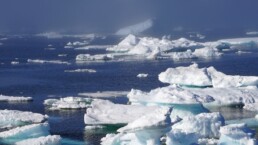

Responding to reports that the annual freeze of the Laptev Sea is delayed, and is being driven by prolonged heat in northern Russia and the intrusion of Atlantic waters into the Arctic, the Clean Arctic Alliance reiterated its call to world leaders to take urgent action to slow Arctic heating ahead of this month meeting of the International Maritime Organization’s Marine Environment Protection Committee (MEPC 75), calling for at least a 60% global greenhouse gas emissions, and a 90% cut to black carbon emissions in the Arctic. [1,2].
“As we all know, what happens in the Arctic doesn’t stay in the Arctic – and the changes rapidly impacting the Arctic will have repercussions for all of us. The Clean Arctic Alliance is calling on world leaders to take urgent action to curb Arctic heating, by accelerating national and regional policies and practices that will fulfill the goals of the Paris Agreement, especially that of limiting the increase in temperature to 1.5 degrees Celsius – requiring an at least 60% reduction in climate emissions by 2030, something to which the European Parliament has already agreed upon”, said John Maggs, Senior Policy Advisor at Seas at Risk – a Clean Arctic Alliance member, and president of the Clean Shipping Coalition [3].
“Science shows that the planet has not experienced CO2 levels this high for three million years [4]. As the slow start to this winter’s freezing of the Laptev Sea is demonstrating, and with global mean temperatures already showing an increase of 1.1° Celsius and the Arctic heating twice as much, unless urgent and collective action is taken, a 2° Celsius increase will prove a disaster to human health and wellbeing, our economies and the environment”, said Dr Sian Prior, Lead Advisor to the Clean Arctic Alliance.
“As well as reducing carbon dioxide (CO2) emissions, every effort must be made to reduce emissions of short-lived climate forcers such as methane and black carbon – most dramatically in the Arctic, where black carbon emissions must be cut by over 90%”, added Prior. “At a time when the global mantra is to reduce emissions, it is unacceptable that in the shipping sector, emissions of black carbon are actually growing.”
“The loss of sea ice not only allows for greater access to the Arctic and its resources by ships and maritime industries, but it also lengthens the time over which ships can operate in the Arctic. These activities drive an increase in the risks to the Arctic, its communities and its wildlife – risks of heavy fuel and distillate oil spills, increased black carbon emissions, increased underwater noise, and discharges of greywater and scrubber wastes”, continued Prior.
Recently published work by the International Maritime Organization (IMO), the UN body responsible for regulating international shipping, shows that globally shipping black carbon emissions have grown by 12 per cent between 2012 and 2018 [5], while work from the International Council on Clean Transportation found that in the Arctic black carbon emissions from the Arctic shipping fleet grew by 85 per cent in only four years between 2015 and 2019 [6].
The Clean Arctic Alliance is calling on world leaders to take the following urgent action to slow the impacts of global heating on the Arctic:
- Show leadership by example, by accelerating national and regional policies and practices that will fulfill the goals of the Paris Agreement, especially that of limiting the increase to 1.5 degrees Celsius – requiring an at least 60% reduction in emissions by 2030.
- Through the International Maritime Organization, adopt mandatory measures to reduce ship speed to effect deep immediate reductions in climate emissions from ships.
- Agree an effective and credible International Maritime Organization regulation which bans the use and carriage of heavy fuel oil by Arctic shipping from January 2024 – without exemptions or waivers for any vessels. See: Clean Arctic Alliance Slams Proposed Arctic Shipping Regulation as Full of Dangerous Loopholes.
- Support a mandatory International Maritime Organization regulation requiring ships to switch from heavy fuels to distillate fuels (or other cleaner fuels) in the Arctic, and install efficient particulate filters in vessels, in order to reduce black carbon emissions by over 90% in the Arctic region, where black carbon emissions are especially damaging.
IMO Virtual Meeting – MEPC 75 – November 2020
The Clean Arctic Alliance, which comprises 21 international non-profit organisations, is campaigning for a robust and effective International Maritime Organization (IMO) ban on the use and carriage of heavy fuel oil (HFO) by shipping in the Arctic, while advocating for shipping to decrease its climate impact, particularly through reductions in black carbon emissions.
However, the ban currently under development by the IMO, if adopted, will be a ban in name only. The draft Arctic HFO ban regulation will be discussed during a meeting of the IMO’s Marine Environment Protection Committee from 16-20 November 2020 (MEPC75), which will be the first MEPC meeting held virtually.
During the meeting:
- NGOs will draw attention to the inadequate impact and effectiveness of the draft regulation banning the use and carriage of heavy fuel oil (HFO) by ships in Arctic waters.
- Recently published work indicates that loopholes in the draft regulation mean that only 30% of HFO carriage and 16% of HFO use would be banned when the regulation comes into effect as proposed in 2024, and incredibly, that it is likely that the amount of HFO carried and used in the Arctic will increase following the ban taking effect.
- Despite the dramatic changes occuring in the Arctic due to global warming, the risk to the Arctic from emissions of black carbon from shipping is not likely to be addressed at MEPC 75. The Clean Arctic Alliance will however continue to push for the development and adoption of an MEPC Black Carbon resolution which would set out recommended interim measures pending completion of IMO work to identify and implement one or more Black Carbon abatement measures.
“In light of the inadequacies identified during its recent webinar, the Clean Arctic Alliance does not support the International Maritime Organization (IMO) Arctic HFO regulation (or ban) as currently drafted and is calling on IMO Member States to modify the draft regulation before it is approved”, said Prior. “It is essential that the ban on HFO use and carriage as fuel in the Arctic is ‘fit for purpose; and enters into force quickly and provides the Arctic with the level of protection that it so desperately and urgently needs”.
Under the draft IMO Arctic HFO regulation, exemptions and waivers will allow 74% of HFO-fueled ships to continue using HFO in the Arctic until mid-2029. As a result, only 30% of HFO carriage and 16% of HFO use will be banned under the current proposal and it is likely that the amount of HFO carried and used in the Arctic will actually increase following the ban taking effect in 2024.
In addition, according to legal advice provided to the Clean Arctic Alliance, the waiver raises some serious concerns. The regulation is not flag-neutral, and this will have negative environmental consequences. It will result in lower environmental standards in Arctic territorial seas and exclusive economic zones than in the Arctic high seas areas, and create a two-tier system of environmental protection and enforcement. It could also maintain the risk of a catastrophic HFO spill in Arctic waters and fail to address trans-boundary pollution risks.
Source: Seas at Risk



Related News.

Connected Fleets under Siege: Navigating Geopolitical Cyber Threats and Modern Maritime IT
An exclusive CSN interview between Adonis Violaris and Dr Matthew Maheras As commercial shipping becomes ever more digitally integrated, the industry…
InterManager warns enclosed space deaths demand urgent industry action
InterManager has called for urgent industry action on enclosed space safety after its latest research highlighted persistent failures in procedures,…

ATPI Greece marks 50 years at the heart of global crew changes
Five decades supporting the Greek and global shipping community 35% of ATPI’s marine business now managed from Greece More than 130 professionals…
Euroseas announces a new time charter contract for its 2001-built 2,556 teu Feeder Containership, M/V EM Corfu, and the sale of its sister vessel, M/V Evridiki G
Euroseas an owner and operator of container carrier vessels and provider of seaborne transportation for containerized cargoes, announced a new…
Possible further delay to road transport’s inclusion in EU ETS causes serious concern
Interferry, the global trade association representing the ferry shipping industry, is raising serious concerns over the current state of EU Emissions…

ABP appoints new head of commercial for Humber
Associated British Ports, the UK’s largest port operator, has appointed Sandrine Lagrost as its new Head of Commercial for the Humber, joining the…
Commodity Radar | Spotlight: Bauxite – Week 43.2026
The final quarter of 2026 is expected to see softer bauxite flows Chinese front-loading is expected to have run its course, pointing to softer…
Japan IMO attempt to weaken the IMO Net-Zero Framework
Japan has put forward a proposal to the International Maritime Organization to remove the Net-Zero Fund and put shipping companies in control of…

xclusiv S&P Report 19th October 2026
Pls find below the [xclusiv] S&P Report 19th October 2026 [xclusiv] 2026_10_19

Glencore achieves land access for the Coroccohuayco project at Antapaccay
Antapaccay, a Peruvian entity controlled by Glencore, has completed the access agreements required for the last blocks of land to unlock the…
Subscribe to our newsletter!
if you dont want to swim alone in the ocean of news, sign up for the newsletter, and you will receive daily all the important news of world shipping!
