We can make deep sea shipping zero emission – and it wouldn’t even be that costly


While seaborne transportation is the most energy efficient way to move goods and raw materials, the shipping industry is still a large contributor to the world’s emissions of greenhouse gases. In the face of major climate challenges, we have little time to lose. The students in this year’s summer-intern program share our optimistic outlook for the industry and concluded that the green transition could cost less than many may think.
As part of Klaveness Combination Carriers’ (KCC) ongoing concept study of zero-emission solutions, we engaged four summer interns from the Norwegian University of Science and Technology (NTNU) Petter Nordby, Sindre Hestmo, Jon Magnus Moen, and Helle Jensen. Their task was to explore different zero emission concepts and find the best zero emissions solution for KCC’s current combination carrier designs without reducing their transportation capacity or trading flexibility.
First deep-sea zero emission combination carrier concept
After working on the project over the summer, the students shared their findings at the Norwegian Shipowners Association this week presenting two potential concepts.
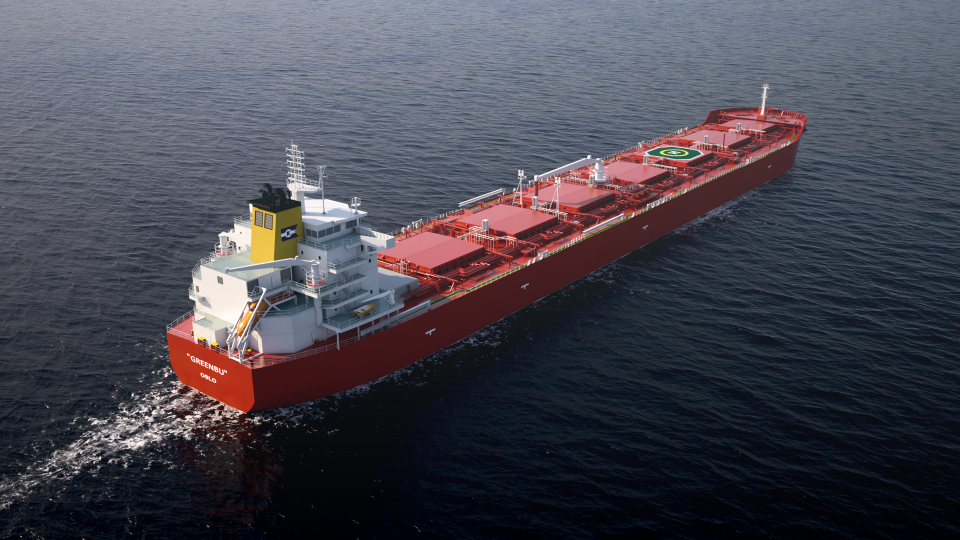
Illustration: A “GREENBU” at sea running on methanol
Concept 1: Ammonia as an energy carrier in the future
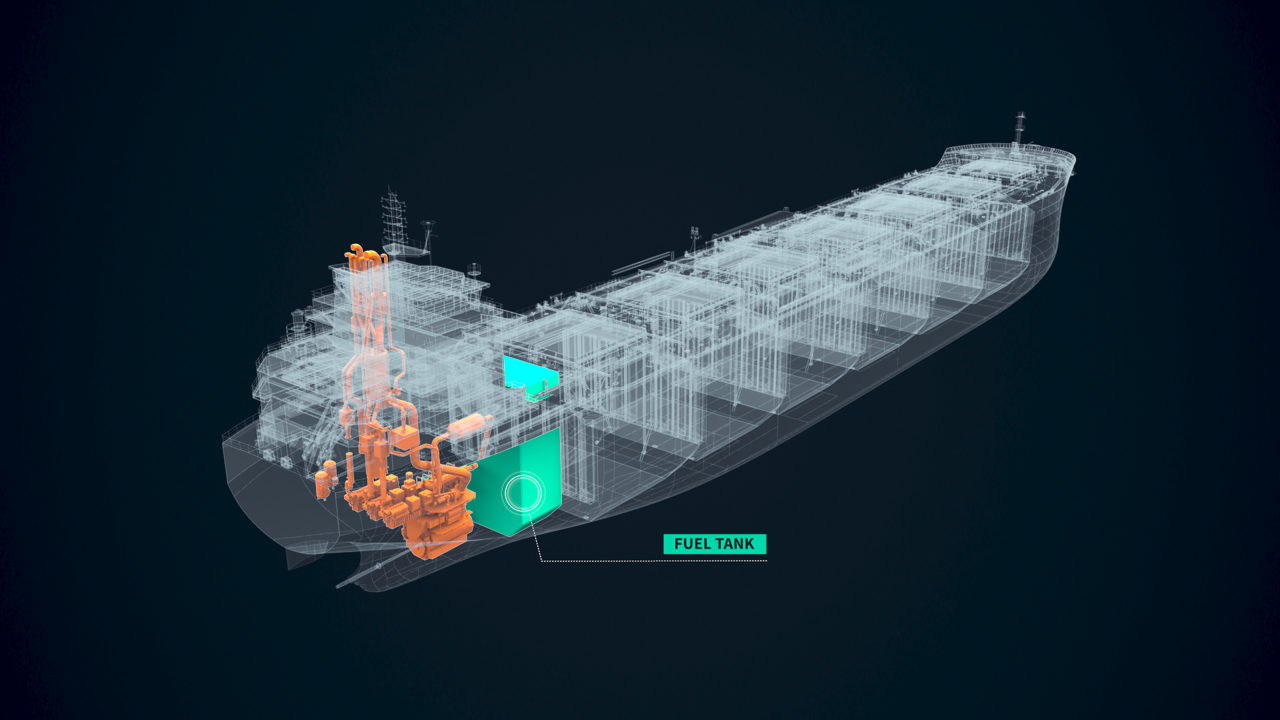
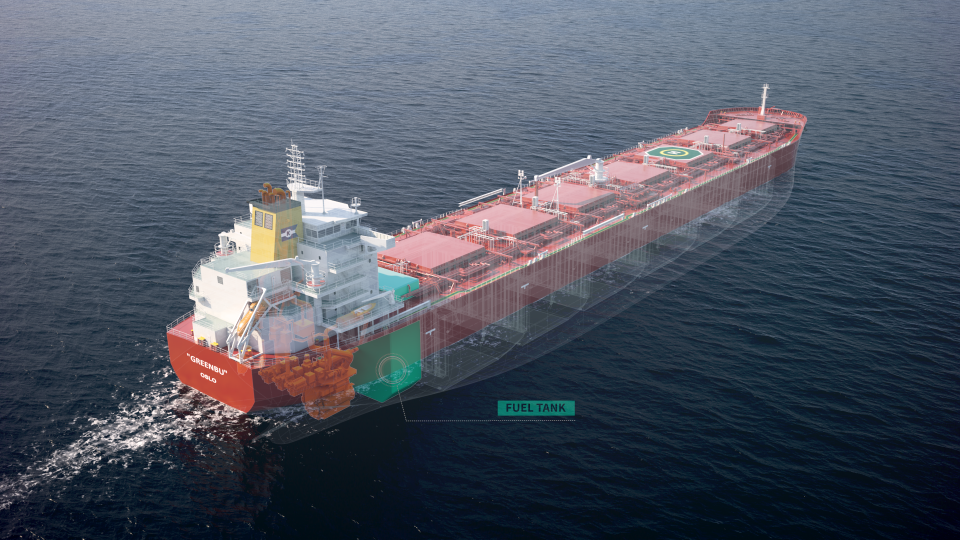
Ammonia would be the energy carrier in the first concept they investigated, based on using future ammonia fueled internal combustion engines, only requiring small modifications to the machinery system from today’s trading vessel. As a fuel, ammonia has no carbon and no direct CO2 emissions. The challenge with such a solution was identified as the low flexibility for fuel tank location due to safety and need for cooling, however tank technology and class rules are likely to develop on this front over the next years.
Concept 2: An even more futuristic methanol solution
The second concept design, and perhaps even more futuristic, was a vessel sailing on methanol as an energy carrier and converted to energy through fuel cells. This would give large flexibility for tank location, but a need for storage of both fuel and CO2. This concept design required larger modifications to the machinery system when compared to the vessel running on ammonia. The collected CO2 in the tank would be re-used at the next methanol bunkering, making this solution free of CO2 emissions. Such a solution could also be net CO2 negative depending on how the methanol is created, as the vessel catches and stores it onboard.
A common factor for both fuels is that they can be produced solely by green energy in the future.
Can we afford it?
The transition to zero emission fuels could potentially become expensive, which in turn may make shipowners, governments and other relevant stakeholders more reluctant to invest in and try out new technologies and fuel types. To illustrate the likely costs for end-users the students used the example of a car.
In order to build a car, you would need a certain amount of aluminum, which require raw materials to carried by sea. With rising fuel prices, a large car (consisting of a substantial amount of aluminum) would not increase in price by more than approximately 30 USD, most likely, a whole lot less.
The students said, “we realized that zero emissions doesn’t have to be expensive for the end user, even with more expensive fuel types such as ammonia or methanol which were the two options we explored.” They added, “To make this happen is important that there is a drive towards collaboration across sectors, industries and governments– creating incentives from a bottom-line perspective to make it happen”.
What does the future of shipping look like?
The students are optimistic about the future of zero emission shipping. They believe KCC’s CLEANBU concept is a large step in the right direction towards decarbonizing the maritime industry, minimizing ballast on their voyages by combining shipments of wet and dry cargoes But more is needed and they believe the industry can achieve much more through collaboration and government regulation aimed at speeding up this process.
They agree, “There are viable alternatives out there, zero emission technologies are just around the corner, and reducing GHG emissions to zero would most likely not be too costly to do – at least not for the end user. But to pull it off, politicians, regulators and policymakers must act swiftly and come together and agree on how they can best support this change through appropriate initiatives, regulations and incentives”.



Related News.
Navigating the Multi-Orbit Era: In Conversation with Intellian’s Jon Harrison at SMM 2026
At SMM 2026 in Hamburg, the rapid evolution of maritime satellite communications took centre stage. Across the exhibition halls, discussions among…
Cyprus ports need joint energy and investment strategy, shipping agents chief says
Cyprus needs a coordinated strategy for shipping, energy and environmental protection to support port investment and modernisation, Cyprus shipping…

MASO Public Affairs introduces MASO Regulatory Intelligence
A new subscription service helping businesses understand what is changing and what it means for them MASO Public Affairs introduces MASO Regulatory…
Anglo-Eastern helps turn CMBTECH’s ammonia ambition into an operational reality
From early feasibility study and risk-based design to newbuilding supervision, crew readiness and technical management, Anglo-Eastern drew on its…
Escalation of attacks threatens to derail recovery in Middle East oil exports
World oil demand is forecast to fall by 2.5 mb/d y-o-y in 4Q26 and 2.6 mb/d on average in 2026. As the Iran war manifests itself through restricted…
New study finds shipping pays twice its share to EU ETS earmarked revenues should triple to help build market for sustainable fuels and technologies
Shipping is responsible for around 10% of EU ETS emissions but pays almost 20% of the ETS bill. Unlike other sectors, it has never received free…

MSARC strengthens maritime mass rescue readiness through training and national live exercise off Dakar, Senegal
Joint MSARC–FHAS programme combines three days of SAR training with a national multi-agency live exercise The Maritime Search and Rescue Council ,…
Sogese report deliveries are still being delayed as container freight rates fluctuate
FOR IMPORTERS Spot rates into the Mediterranean are back at January levels, Far East to Europe reliability sits at pandemic lows, and nearly…
Glencore begins trading on Australian Securities Exchange
Glencore has begun trading on the Australian Securities Exchange under the ASX code GLC. Gary Nagle, Glencore’s CEO, said it was an exciting day for…
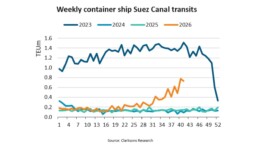
BIMCO Shipping Number of the Week
Suez Canal container ship transits exceed 50% of pre-disruption levels "During the first two weeks of October, weekly container ship capacity…
Subscribe to our newsletter!
if you dont want to swim alone in the ocean of news, sign up for the newsletter, and you will receive daily all the important news of world shipping!
