Castrol – Global leader in lubricants for wind energy
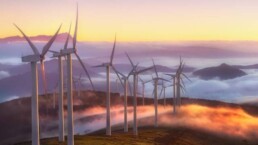

Driven by support from various governments, wind energy has grown rapidly since 2000. As a result, global lubricant demand in the wind energy industry has increased in line with the growth in total installed wind energy capacity. From 2008 to 2019, the global wind energy installed capacity grew at a CAGR of 16.6%, and lubricant consumption grew by a CAGR of 13%, shows Kline’s recently published Lubricants for Wind Turbines: Global Market Analysis and Opportunities study.
As the industry matures, governments are phasing out monetary incentives and emphasizing supporting legislation such as renewable energy targets, grid priority, and land allocations. In the aftermath of the COVID-19 pandemic, government policies to jumpstart economies will put more pressure on finances; this may accelerate the phasing out of monetary incentives. The industry will have to learn to stand on its own.
To learn more about this changing market, ACCESS our recently held webinar, Outlook for Wind Turbine Lubricant Demand in the Current Economic Environment.
Currently, OEMs are experiencing tough market conditions due to the phase-out of subsidies. Senvion, a German wind turbine manufacturer, filed for bankruptcy in April 2019. Nordex recently announced a merger with the Spanish renewable energy company, Acciona Windpower. In emerging markets, Suzlon—the largest OEM in terms of cumulative capacity installed in India—is now on the brink of bankruptcy. The capital expenditure of wind power projects has also dropped by 10% to 15% after the transition from feed-in tariffs to reverse auctions.
The wind energy sector is dominated by a few global players, and OEM ties are increasingly important. The supply base for lubricants used in wind turbines is also largely consolidated in the hands of a few key companies. Global majors such as Castrol, ExxonMobil, and Shell are present in almost all markets. The study shows that Castrol is the global leader in the lubricants market for wind energy with a supply footprint covering all major regions.
“To succeed in this business, suppliers need to have a proven track record of products meeting OEM’s performance requirements, the ability to demonstrate cost savings, and OEM tie-ups,” comments Milind Phadke, Vice President, Energy at Kline. “Castrol leads the market due to a strong product portfolio and tie-ups with such OEMs as Vestas and Siemens Gamesa, giving the company access to their first-fill and warranty fill business. This gives Castrol a strong position in Europe, North America, and India, along with a global leadership position.”
Srikanth Visvanathan, Global Marketing Director for Castrol Commercial Vehicles and Industrial, says: “Our leading position in wind, with 33% of the market, reflects our commitment to providing innovative lubricants and service solutions. With BP and our affiliate Onyx Insight, we can provide improved efficiency, lower downtime, and lower the levelized cost of energy for our customers.”
“We are the trusted supplier for thousands of wind turbine OEMs and wind farm operators worldwide, from first-fill through the entire working life, providing them with the ultimate lubricants and optimized service solutions that help extend the asset life. Castrol’s combination of industry experts and suite of wind solutions is designed to drive the success of the wind sector, delivering high-grade lubricants, advanced analytics, and expert training to upskill wind technicians.”
Observing the rapid growth in the industry, new participants are trying to enter this market. These include mid-tier lubricant companies with a presence in the synthetics business. However, new suppliers face several entry barriers, including a rigorous approval process, a good track record as a supplier, and a performance history of new product development. The industry is risk-averse, and this results in an extension of warranties and the use of the same products outside the warranty period.
Despite the reduction in government support, the wind energy sector continues to receive support. Germany is likely to support local OEMs—Siemens Gamesa, Enercon, and Nordex—which have a strong global footprint. Governments are unlikely to withdraw complete support for the wind energy industry, as this will be difficult politically. However, they may reduce their support by decreasing the quantum of subsidies that they currently provide. Monetary subsidies will be replaced with favorable legislation (as in Germany), such as renewable energy targets, grid priority, and land allocations.
As per the GWEC outlook for spring 2020, new installations should grow at a CAGR of 4.1%, from60.4 GW in 2019 to 73.4 GW in 2024. As a result, total installed wind energy capacity is estimated to grow at a CAGR of 9.1% over the forecast period to reach 1,005.0 GW by 2024 from 650.1 GW in 2019. While not as strong as in previous years, the growth in new installations will continue to drive growth in the lubricants market. Besides the growth, other factors, including green image and high-margin business for lubricant marketers, will attract lubricant suppliers.



Related News.

Navigating the Multi-Orbit Era: In Conversation with Intellian’s Jon Harrison at SMM 2026
At SMM 2026 in Hamburg, the rapid evolution of maritime satellite communications took centre stage. Across the exhibition halls, discussions among…
Cyprus ports need joint energy and investment strategy, shipping agents chief says
Cyprus needs a coordinated strategy for shipping, energy and environmental protection to support port investment and modernisation, Cyprus shipping…

MASO Public Affairs introduces MASO Regulatory Intelligence
A new subscription service helping businesses understand what is changing and what it means for them MASO Public Affairs introduces MASO Regulatory…
Anglo-Eastern helps turn CMBTECH’s ammonia ambition into an operational reality
From early feasibility study and risk-based design to newbuilding supervision, crew readiness and technical management, Anglo-Eastern drew on its…

Escalation of attacks threatens to derail recovery in Middle East oil exports
World oil demand is forecast to fall by 2.5 mb/d y-o-y in 4Q26 and 2.6 mb/d on average in 2026. As the Iran war manifests itself through restricted…
New study finds shipping pays twice its share to EU ETS earmarked revenues should triple to help build market for sustainable fuels and technologies
Shipping is responsible for around 10% of EU ETS emissions but pays almost 20% of the ETS bill. Unlike other sectors, it has never received free…

MSARC strengthens maritime mass rescue readiness through training and national live exercise off Dakar, Senegal
Joint MSARC–FHAS programme combines three days of SAR training with a national multi-agency live exercise The Maritime Search and Rescue Council ,…
Sogese report deliveries are still being delayed as container freight rates fluctuate
FOR IMPORTERS Spot rates into the Mediterranean are back at January levels, Far East to Europe reliability sits at pandemic lows, and nearly…
Glencore begins trading on Australian Securities Exchange
Glencore has begun trading on the Australian Securities Exchange under the ASX code GLC. Gary Nagle, Glencore’s CEO, said it was an exciting day for…
BIMCO Shipping Number of the Week
Suez Canal container ship transits exceed 50% of pre-disruption levels "During the first two weeks of October, weekly container ship capacity…
Subscribe to our newsletter!
if you dont want to swim alone in the ocean of news, sign up for the newsletter, and you will receive daily all the important news of world shipping!
