250,000 tonnes of shipping CO2 emissions saved thanks to machine learning insight
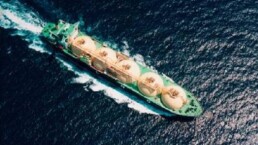

Maritime engineers have trained an energy shipping app to save over a quarter of a million tonnes of CO2 emissions by applying machine learning to its predictive system.
Researchers from the University of Southampton and Shell Shipping and Maritime have developed a digital dashboard that helps captains respond to changing sea conditions.
The Just Add Water, or JAWS, app interprets depths and angles of a ship known as the draught and trim to optimise the amount of fuel and power needed in any given situation.
A new machine learning model was introduced through the partners’ Centre for Maritime Futures, which is spearheading digital and technological advances for safer, cleaner and more efficient shipping.
Engineers trialled the system on a fleet of over a dozen 300m-long liquefied natural gas (LNG) carriers for 12 months, cumulatively recording the saving of 250,000 tonnes of CO2 emissions, equivalent to a fuel saving of $90 million.
The new modelling technique was developed by postgraduate research student Amy Parkes during her PhD in the Maritime Engineering research group, where her time has been divided between Southampton and Shell.
“LNG carriers have a large surface area so wind, waves and current can make a huge difference to the amount of power required in a journey,” Amy says. “These ships can be high or low in the water, at different angles in the water and have different levels of fouling, which impacts the amount of energy used for them to move around.
“Shell collects an enormous amount of data from these vessels and this app is designed to monitor and adapt to these variables to save power without changing the ship’s overall speed.”
Early iterations of the app calculated heat maps using an averaging system before Amy automated and advanced the process using modelling techniques optimised during her PhD research.
“Through machine learning, it is now possible to analyse data from previous deployments and predict upcoming ones based on past settings, creating a process that is much more user friendly,” she says. “This is only possible because of the ability to gather more accurate data at a much faster rate.
“Once the technology has developed further, we intend for the dashboard to monitor the ship state alongside weather conditions and make adjustments autonomously.”
Amy presented findings from app research at the AI UK conference run by The Alan Turing Institute in June. Her PhD project, which is supervised by Professor Dominic Hudson and Dr Adam Sobey, is due to be completed in November.
The Centre for Maritime Futures was officially launched last autumn following a gift of £1.5m from Shell Shipping & Maritime, the largest corporate gift in the University’s history. It is building a sustainable programme of research in four key themes while developing the best engineers and technologists for the maritime industry, through MSc and PhD projects alongside continued professional development.



Related News.

Navigating the Multi-Orbit Era: In Conversation with Intellian’s Jon Harrison at SMM 2026
At SMM 2026 in Hamburg, the rapid evolution of maritime satellite communications took centre stage. Across the exhibition halls, discussions among…
Cyprus ports need joint energy and investment strategy, shipping agents chief says
Cyprus needs a coordinated strategy for shipping, energy and environmental protection to support port investment and modernisation, Cyprus shipping…

MASO Public Affairs introduces MASO Regulatory Intelligence
A new subscription service helping businesses understand what is changing and what it means for them MASO Public Affairs introduces MASO Regulatory…
Anglo-Eastern helps turn CMBTECH’s ammonia ambition into an operational reality
From early feasibility study and risk-based design to newbuilding supervision, crew readiness and technical management, Anglo-Eastern drew on its…

Escalation of attacks threatens to derail recovery in Middle East oil exports
World oil demand is forecast to fall by 2.5 mb/d y-o-y in 4Q26 and 2.6 mb/d on average in 2026. As the Iran war manifests itself through restricted…
New study finds shipping pays twice its share to EU ETS earmarked revenues should triple to help build market for sustainable fuels and technologies
Shipping is responsible for around 10% of EU ETS emissions but pays almost 20% of the ETS bill. Unlike other sectors, it has never received free…

MSARC strengthens maritime mass rescue readiness through training and national live exercise off Dakar, Senegal
Joint MSARC–FHAS programme combines three days of SAR training with a national multi-agency live exercise The Maritime Search and Rescue Council ,…
Sogese report deliveries are still being delayed as container freight rates fluctuate
FOR IMPORTERS Spot rates into the Mediterranean are back at January levels, Far East to Europe reliability sits at pandemic lows, and nearly…

Glencore begins trading on Australian Securities Exchange
Glencore has begun trading on the Australian Securities Exchange under the ASX code GLC. Gary Nagle, Glencore’s CEO, said it was an exciting day for…
BIMCO Shipping Number of the Week
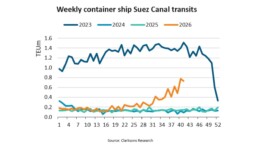
Suez Canal container ship transits exceed 50% of pre-disruption levels "During the first two weeks of October, weekly container ship capacity…
Subscribe to our newsletter!
if you dont want to swim alone in the ocean of news, sign up for the newsletter, and you will receive daily all the important news of world shipping!
