Stories from the sea: why we need to move from the Risk Rating to the Safety Score
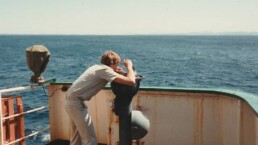

RightShip is moving from a Risk Rating to a Safety Score in September 2020. In this blog post, Australasia manager Hayden Latchford shares stories from his time at sea and explores the need for this change.
I spent time at sea in the 1980s and 1990s, so I know first-hand the challenges that seafarers face. Although we have made progress, there are still hurdles to overcome. It can be way too easy to make the same mistakes. We need to be clearer as an industry to how we can improve safety and stop these accidents and potential accidents from occurring.
One experience that still haunts me is from my time as a cadet. I was sailing on a product tanker and a regular job was to overhaul the tank washing machines in the cargo tanks. They had a gear box and we had to change the oil.
On this day I was to enter the cargo tank with the bosun and chief officer. The tank had previously carried jet fuel, and had been gas freed and the atmosphere tested. However it only been given a quick wash. We entered the tank and each of us went to a different tank washing machine.
I was up near the top of the tank and started feeling unwell, a bit like being drunk, with noises echoing weirdly. I did what was required, and got out as soon as I could, but I nearly passed out in there. The bosun and C/O also got out without incident, but we all agreed we had just cheated death.
Even though we had performed all the safety checks, the training we had been through was key to us recognising the dangerous situation we found ourselves in. We’re still seeing deaths at sea from enclosed space entries going wrong, especially when short cuts are taken.
There are no safety shortcuts
Too often, a member of a crew might have a task in mind and say, “I don’t need to do all the checks” – it’s these situations where people can become unstuck. Our Safety Score covers Port State Control. They check whether safety requirements are being followed, if rescue from enclosed spaces drills have been conducted and whether the safety management system in place is working effectively.
The Safety Score also encompasses incidents and their close out, and we are looking for and rewarding those who learn lessons from these events, implement strong preventative actions and strengthen their safety management systems.
Putting ship owners and crew in control of safety
As the name suggests, the Safety Score is a measure of the vessel’s safety standard.
Ultimately, we want ship owners and crews to be motivated to improve the conditions that directly impact all workers on each voyage. That’s why the Safety Score is calculated based only on factors that are controlled by the operator. These factors measure their performance, and the performance of the vessel. In cases where improvements are required, we can give a very clear indication of what needs to be fixed. A ship owner is no longer impacted by the results of others. Instead, they are able to take responsibility and independently improve their score.
Aligning how the industry and RightShip interpret these results will provide much better understanding and acceptance of explanations, and therefore give operators a clear path to excellence.



Related News.

Navigating the Multi-Orbit Era: In Conversation with Intellian’s Jon Harrison at SMM 2026
At SMM 2026 in Hamburg, the rapid evolution of maritime satellite communications took centre stage. Across the exhibition halls, discussions among…

Cyprus ports need joint energy and investment strategy, shipping agents chief says
Cyprus needs a coordinated strategy for shipping, energy and environmental protection to support port investment and modernisation, Cyprus shipping…

MASO Public Affairs introduces MASO Regulatory Intelligence
A new subscription service helping businesses understand what is changing and what it means for them MASO Public Affairs introduces MASO Regulatory…

Anglo-Eastern helps turn CMBTECH’s ammonia ambition into an operational reality
From early feasibility study and risk-based design to newbuilding supervision, crew readiness and technical management, Anglo-Eastern drew on its…

Escalation of attacks threatens to derail recovery in Middle East oil exports
World oil demand is forecast to fall by 2.5 mb/d y-o-y in 4Q26 and 2.6 mb/d on average in 2026. As the Iran war manifests itself through restricted…

New study finds shipping pays twice its share to EU ETS earmarked revenues should triple to help build market for sustainable fuels and technologies
Shipping is responsible for around 10% of EU ETS emissions but pays almost 20% of the ETS bill. Unlike other sectors, it has never received free…

MSARC strengthens maritime mass rescue readiness through training and national live exercise off Dakar, Senegal
Joint MSARC–FHAS programme combines three days of SAR training with a national multi-agency live exercise The Maritime Search and Rescue Council ,…

Sogese report deliveries are still being delayed as container freight rates fluctuate
FOR IMPORTERS Spot rates into the Mediterranean are back at January levels, Far East to Europe reliability sits at pandemic lows, and nearly…

Glencore begins trading on Australian Securities Exchange
Glencore has begun trading on the Australian Securities Exchange under the ASX code GLC. Gary Nagle, Glencore’s CEO, said it was an exciting day for…

BIMCO Shipping Number of the Week
Suez Canal container ship transits exceed 50% of pre-disruption levels "During the first two weeks of October, weekly container ship capacity…
Subscribe to our newsletter!
if you dont want to swim alone in the ocean of news, sign up for the newsletter, and you will receive daily all the important news of world shipping!
