Accelerating decarbonisation can place shipping ahead of the curve says Captain Unni, CEO & Founder, Synergy Group
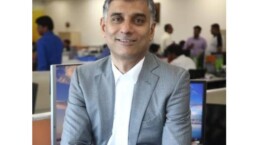

Shipping should urgently implement a range of short-term efficiency gains to reduce carbon emissions while also embracing more radical long-term sustainability challenges if it wants to get ahead of the regulatory curve, believes Captain Rajesh Unni, CEO and Founder of Synergy Group, one of the world’s leading ship managers.
Speaking yesterday during ‘The Path To Decarbonisation’ session of the 10th Annual Capital Link Operational Excellence in Shipping Forum, Captain Unni said in the short-term there were ample, achievable “low hanging fruit’” efficiency gains that would make shipping more sustainable.
For example, improvements in Energy Efficiency Design Index (EEDI) plans and in vessel Ship Energy Efficiency Management Plans (SEEMP) offer the potential to reduce emissions in the short-term, while also creating opportunities for those partners with the technical expertise to help ship owners navigate the technological and regulatory challenges.
“I think there are still low-hanging fruits we can capitalise on in the short-term, including EEDI (Energy Efficiency Design Index), which we’ve done a lot of work on, plus SEEMP,” Captain Unni told delegates.
“We need to look at Negawatts – negative watts – because we need to look at how to save energy rather than using it.”
He also called on the International Maritime Organization (IMO), which is targeting a reduction of at least 50% in greenhouse gas emissions by 2050 compared to 2008 levels, to create a regulatory framework that better encourages decarbonisation innovation and provides incentives to increase the range of sustainable options open to vessel owners and operators.
Illustrating the lack of options currently available, Captain Unni said achieving the IMO aim of cutting carbon emissions by 40% by 2030 with an Aframax tanker currently burning heavy fuel oil left few alternatives aside from using LNG as a fuel, alongside some means of exhaust gas recovery and/or carbon capture.
“I feel carbon capture is an inevitable short-term solution, but IMO needs to come up with a more credible plan before 2023 in the short term,” added Captain Unni.
“IMO has set broad guidelines when what perhaps we want is a more robust, more thermo-dynamic framework that maps the entire carbon cycle; that gives access to people to make detailed problem statements and then find potential solutions.”
Captain Unni believes that as the world recovers from coronavirus, pressure for shipping to take radical steps on the path to sustainability will increase and should be heeded. He sees a range of potential emission reductions paths available to owners and managers that can be implemented ahead of an inevitable shift to more sustainable fuels in the future. For example, ship designs and construction can be made more efficient and less wasteful to reduce emissions over the life cycle of the ship, port operations can be made more efficient, and technology and digitalisation can help vessels reduce fuel consumption.
“For companies like us, who look at ourselves as a technical thought partners, decarbonisation is a huge opportunity,” said Captain Unni.
“We’ve invested a lot of time and resources in this over the last 3-4 years because the impact of new regulations is going to be multi-faceted. It’s going to affect infrastructure. There will be retrofits and new designs. It will be about competency and the workforce, processes and new business models, and better training.
“And then it’s also about creating awareness and acceptance that this is something we need to collectively do for a sustainable future.”
Synergy’s own investment in decarbonisation research focuses on a range of areas where emissions reductions are feasible. “There have been several approaches to decrease drag by using air-lubrication and results have shown that 100% effective lubrication can bring about a 28% drag reduction,” said Captain Unni. “What we’re trying to do is remove fouling by providing stabilised nanobubbles using an electro-chemical reaction.
“We’ve also been working on speed optimization with leading container lines and we’ve achieved 90% (or 9%) fuel optimization over 200 SMARTship voyages which is close to 8,000 tonnes of CO2. So small achievable steps are possible before we target the long-term.”
Captain Unni added: “Decarbonisation is a huge challenge and opportunity. I am very positive about it as a ship manager and, personally, because I genuinely think this is the right thing to do. If we do it right, we’ll get there.”



Related News.
Navigating the Multi-Orbit Era: In Conversation with Intellian’s Jon Harrison at SMM 2026
At SMM 2026 in Hamburg, the rapid evolution of maritime satellite communications took centre stage. Across the exhibition halls, discussions among…
Cyprus ports need joint energy and investment strategy, shipping agents chief says
Cyprus needs a coordinated strategy for shipping, energy and environmental protection to support port investment and modernisation, Cyprus shipping…

MASO Public Affairs introduces MASO Regulatory Intelligence
A new subscription service helping businesses understand what is changing and what it means for them MASO Public Affairs introduces MASO Regulatory…
Anglo-Eastern helps turn CMBTECH’s ammonia ambition into an operational reality
From early feasibility study and risk-based design to newbuilding supervision, crew readiness and technical management, Anglo-Eastern drew on its…
Escalation of attacks threatens to derail recovery in Middle East oil exports
World oil demand is forecast to fall by 2.5 mb/d y-o-y in 4Q26 and 2.6 mb/d on average in 2026. As the Iran war manifests itself through restricted…
New study finds shipping pays twice its share to EU ETS earmarked revenues should triple to help build market for sustainable fuels and technologies
Shipping is responsible for around 10% of EU ETS emissions but pays almost 20% of the ETS bill. Unlike other sectors, it has never received free…
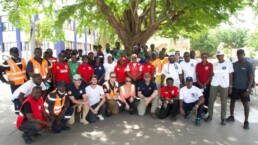
MSARC strengthens maritime mass rescue readiness through training and national live exercise off Dakar, Senegal
Joint MSARC–FHAS programme combines three days of SAR training with a national multi-agency live exercise The Maritime Search and Rescue Council ,…
Sogese report deliveries are still being delayed as container freight rates fluctuate
FOR IMPORTERS Spot rates into the Mediterranean are back at January levels, Far East to Europe reliability sits at pandemic lows, and nearly…
Glencore begins trading on Australian Securities Exchange
Glencore has begun trading on the Australian Securities Exchange under the ASX code GLC. Gary Nagle, Glencore’s CEO, said it was an exciting day for…
BIMCO Shipping Number of the Week
Suez Canal container ship transits exceed 50% of pre-disruption levels "During the first two weeks of October, weekly container ship capacity…
Subscribe to our newsletter!
if you dont want to swim alone in the ocean of news, sign up for the newsletter, and you will receive daily all the important news of world shipping!
