ESPO proposes a two-step approach on the new EU Transport Strategy
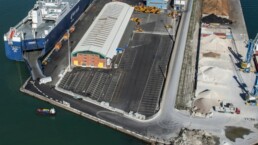

The current global health crisis will require more than a “business as usual” update of Europe’s Transport Strategy
Since 2011, Europe has been facing numerous new challenges and has defined new policy ambitions. However, the health crisis the world is facing today risks to radically overturn current realities, assumptions and strategies. Our economy and life is affected in almost all its aspects and while we can hope for a quick recovery it is clear that we will not be returning to business as usual.
Since the start of the COVID-19 crisis, Europe’s ports have been doing everything possible to ensure the continuity of their operations and thus the security of supply. European ports have activated contingency plans to ensure that ports remain fully operational during this crisis. More than ever, European ports have been demonstrating their role as essential and critical infrastructures, playing a crucial role in the supply of necessary goods.
While ports are ready to embrace and adapt to a changed reality, it is at this moment still unclear how long the current major disruption of Europe’s economy and society will last, how severe the impacts will be, or what efforts will be needed to come to a “new normal” scenario. Although many ports are already feeling the impact of the slowdown of the global economy, the real, tangible impact for the entire port sector will only become clear as from the second quarter of this year.
ESPO therefore believes that in the absence of any insight on the duration and impact of the current crisis, it is, at this moment, impossible to set the ground for a long-term EU Transport Strategy.
ESPO proposes a two-step approach:
European ports believe that Europe’s first priority must now be to develop a restart and recovery plan which helps to overcome this crisis. It should develop the measures and instruments for Europe’s recovery to put the European economy and society back on track as soon as possible, while guaranteeing this happens in a safe way.
In the absence of a vaccine or treatment, an essential part of the short-term recovery measures has to be focused on re-starting economic activities, including transport, and societal behaviour, based on co-existence with the COVID-19 virus. Measures will be necessary to limit the risks of spreading the virus, among others by developing the necessary plans for enabling a 1.5 meter economy and society.
Moreover it will be important that existing policies and financial instruments for infrastructure projects in ports, in particular CEF, can be further strengthened to ensure that resilient sectors such as the port sector can rebound quickly after the crisis and pursue already planned investments. Advancing planned CEF calls could in that sense be a way of boosting investments in ports and allowing ports to further play their role as engines of growth.
During this first phase, the impact of the crisis and the recovery measures on both the European and national budgets must be evaluated in order to have a realistic picture of the available budget for implementing new ambitions and strategies.
In a second phase, as soon as the crisis situation stabilises, and the “new normal” sets in, the discussion should start on a new Transport Strategy, which will set the long-term goals, ambitions and initiatives for the European transport sector. The Strategy should integrate the consequences of and lessons learned from this crisis and should build on the new post-crisis reality.
While successful and proven policies, such as Europe’s Transport Infrastructure policy, should not be radically put into question because of this crisis and while ambitions addressing important challenges such as climate change should remain untouched, it is clear that the current COVID-19 crisis will require answers to new challenges and questions:
- Is the critical role of transport, ports and strategic supply chains sufficiently ensured in Europe’s transport policy?
- Will social distancing in transport be a short-term measure or part of the “new normal”?
- Which of the current urgency measures enabling contactless transport and using digital solutions should be further developed and become part of a long-term transport strategy?
- Is the security of digitalisation processes sufficiently ensured if home and smart working is further developed?
- Are new supply chain patterns emerging, are reshoring and diversification of suppliers part of the “new normal”?
- Will health checks and border controls be part of the long-term transport strategy or remain just a crisis response measure?
- What is the impact of the new health and economic strategies on port infrastructure and investment projects?
ESPO and its members are happy to start the reflection with all stakeholders and EU decision makers in view of formulating clear answers to all these questions and setting the ground for a truly forward looking sustainable, connected, efficient and resilient transport system.
Source: espo.be



Related News.

Navigating the Multi-Orbit Era: In Conversation with Intellian’s Jon Harrison at SMM 2026
At SMM 2026 in Hamburg, the rapid evolution of maritime satellite communications took centre stage. Across the exhibition halls, discussions among…
Cyprus ports need joint energy and investment strategy, shipping agents chief says
Cyprus needs a coordinated strategy for shipping, energy and environmental protection to support port investment and modernisation, Cyprus shipping…

MASO Public Affairs introduces MASO Regulatory Intelligence
A new subscription service helping businesses understand what is changing and what it means for them MASO Public Affairs introduces MASO Regulatory…
Anglo-Eastern helps turn CMBTECH’s ammonia ambition into an operational reality
From early feasibility study and risk-based design to newbuilding supervision, crew readiness and technical management, Anglo-Eastern drew on its…

Escalation of attacks threatens to derail recovery in Middle East oil exports
World oil demand is forecast to fall by 2.5 mb/d y-o-y in 4Q26 and 2.6 mb/d on average in 2026. As the Iran war manifests itself through restricted…
New study finds shipping pays twice its share to EU ETS earmarked revenues should triple to help build market for sustainable fuels and technologies
Shipping is responsible for around 10% of EU ETS emissions but pays almost 20% of the ETS bill. Unlike other sectors, it has never received free…
MSARC strengthens maritime mass rescue readiness through training and national live exercise off Dakar, Senegal
Joint MSARC–FHAS programme combines three days of SAR training with a national multi-agency live exercise The Maritime Search and Rescue Council ,…
Sogese report deliveries are still being delayed as container freight rates fluctuate
FOR IMPORTERS Spot rates into the Mediterranean are back at January levels, Far East to Europe reliability sits at pandemic lows, and nearly…
Glencore begins trading on Australian Securities Exchange
Glencore has begun trading on the Australian Securities Exchange under the ASX code GLC. Gary Nagle, Glencore’s CEO, said it was an exciting day for…
BIMCO Shipping Number of the Week
Suez Canal container ship transits exceed 50% of pre-disruption levels "During the first two weeks of October, weekly container ship capacity…
Subscribe to our newsletter!
if you dont want to swim alone in the ocean of news, sign up for the newsletter, and you will receive daily all the important news of world shipping!
