ExxonMobil Reduces 2020 Capex by 30%, Cash Opex by 15%; Maintains Long-Term Outlook
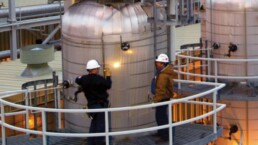

ExxonMobil said today it is reducing its 2020 capital spending by 30 percent and lowering cash operating expenses by 15 percent in response to low commodity prices resulting from oversupply and demand weakness from the COVID-19 pandemic.
Capital investments for 2020 are now expected to be about $23 billion, down from the previously announced $33 billion. The 15 percent decrease in cash operating expenses is driven by deliberate actions to increase efficiencies and reduce costs, and includes expected lower energy costs.
“After a thorough evaluation of the impacts of the pandemic and market conditions, we have worked closely with business partners to plan and execute capital adjustments that preserve long-term value, maximize cost efficiency, and put us in the strongest position when market conditions improve,” said Darren Woods, chairman and chief executive officer of Exxon Mobil Corporation.
“The long-term fundamentals that underpin the company’s business plans have not changed — population and energy demand will grow, and the economy will rebound. Our capital allocation priorities also remain unchanged. Our objective is to continue investing in industry-advantaged projects to create value, preserve cash for the dividend and make appropriate and prudent use of our balance sheet.”
ExxonMobil continues to monitor market developments and can exercise additional reduction options if required. As market conditions evolve, the company will continue evaluating the impacts of decreased demand on its 2020 production levels as well as longer-term production impacts.
The largest share of the capital spending reduction will be in the Permian Basin, where short-cycle investments can be more readily adjusted to respond to market conditions, while preserving value over the long term. Reduced activity will affect the pace of drilling and well completions until market conditions improve. Importantly, the reductions will not compromise the scale, functional excellence and cube development advantages that are maximizing resource recovery and value in the Permian.
Developing the numerous world-class deepwater discoveries offshore Guyana remains an integral part of ExxonMobil’s long-term growth plans. Current operations onboard the Liza Destiny production vessel are unaffected, and startup of the second phase of field development remains on target for 2022, with the Liza Unity production vessel currently under construction. As the company waits for government approval to proceed with a third production vessel for the Payara development, some 2020 activities are now being deferred, creating a potential delay in production startup of six to 12 months.
A final investment decision for the Rovuma liquefied natural gas (LNG) project in Mozambique, expected later this year, has been delayed. ExxonMobil continues to actively work with its partners and the government to optimize development plans by improving synergies and exploring opportunities related to the current lower-cost environment. The Coral LNG development continues as planned.
Globally, ExxonMobil anticipates industry refinery output will decline in line with demand and available storage, and it will maintain the ability to return to normal operations as demand recovers. Timing of expansion plans for select downstream and chemical facilities across the company’s portfolio will be adjusted to capture efficiencies, slow spending pace and better align with a return in commodity demand.
Despite the reductions, ExxonMobil expects to meet its projected investment of $20 billion on U.S. Gulf Coast manufacturing facilities made in its 2017 Growing the Gulf initiative. The company also expects to reach its proposed U.S. investment of $50 billion over five years announced in 2018.
“While COVID-19 has had a significant impact on the global economy, we are confident that trade, transportation and manufacturing will recover,” said Woods. “ExxonMobil continues to invest in the projects that will position us to support economic recovery and capture value for our shareholders.”
To minimize risks presented by COVID-19 and maintain operations, ExxonMobil has implemented enhanced cleaning procedures and modified work practices at sites around the world.
The company is maximizing production of products critical to the global response, including isopropyl alcohol, which is used to manufacture hand sanitizer, and polypropylene, which is used to make protective masks, gowns and wipes. ExxonMobil is also supporting efforts to redesign and accelerate production of reusable face masks and shields to help alleviate the shortage for medical workers and first responders.
“I’m proud of our company’s response efforts,” said Woods. “On our offshore platforms, in our refineries, at our lubes and chemical plants and throughout our facilities worldwide, our people are getting the job done and meeting the world’s needs for our products while protecting themselves and others. I commend our organization for their continued focus during these difficult circumstances.”



Related News.

Navigating the Multi-Orbit Era: In Conversation with Intellian’s Jon Harrison at SMM 2026
At SMM 2026 in Hamburg, the rapid evolution of maritime satellite communications took centre stage. Across the exhibition halls, discussions among…
Cyprus ports need joint energy and investment strategy, shipping agents chief says
Cyprus needs a coordinated strategy for shipping, energy and environmental protection to support port investment and modernisation, Cyprus shipping…

MASO Public Affairs introduces MASO Regulatory Intelligence
A new subscription service helping businesses understand what is changing and what it means for them MASO Public Affairs introduces MASO Regulatory…
Anglo-Eastern helps turn CMBTECH’s ammonia ambition into an operational reality
From early feasibility study and risk-based design to newbuilding supervision, crew readiness and technical management, Anglo-Eastern drew on its…

Escalation of attacks threatens to derail recovery in Middle East oil exports
World oil demand is forecast to fall by 2.5 mb/d y-o-y in 4Q26 and 2.6 mb/d on average in 2026. As the Iran war manifests itself through restricted…
New study finds shipping pays twice its share to EU ETS earmarked revenues should triple to help build market for sustainable fuels and technologies
Shipping is responsible for around 10% of EU ETS emissions but pays almost 20% of the ETS bill. Unlike other sectors, it has never received free…

MSARC strengthens maritime mass rescue readiness through training and national live exercise off Dakar, Senegal
Joint MSARC–FHAS programme combines three days of SAR training with a national multi-agency live exercise The Maritime Search and Rescue Council ,…
Sogese report deliveries are still being delayed as container freight rates fluctuate
FOR IMPORTERS Spot rates into the Mediterranean are back at January levels, Far East to Europe reliability sits at pandemic lows, and nearly…

Glencore begins trading on Australian Securities Exchange
Glencore has begun trading on the Australian Securities Exchange under the ASX code GLC. Gary Nagle, Glencore’s CEO, said it was an exciting day for…
BIMCO Shipping Number of the Week
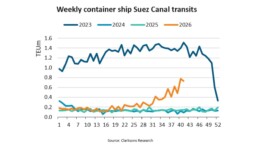
Suez Canal container ship transits exceed 50% of pre-disruption levels "During the first two weeks of October, weekly container ship capacity…
Subscribe to our newsletter!
if you dont want to swim alone in the ocean of news, sign up for the newsletter, and you will receive daily all the important news of world shipping!
