Coronavirus: Let’s keep ships moving, ports open and cross-border trade flowing
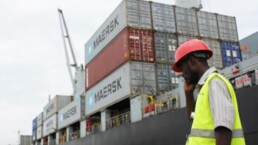

As the world battles the coronavirus pandemic, the global maritime transport industry is playing a critical role in the response.
A call by the industry to all governments to keep maritime trade moving by allowing commercial ships continued access to ports worldwide and by facilitating the rapid changeover of ships’ crews should not go unheeded.
Around 80% of global trade is transported by commercial shipping, which moves the world’s food, energy and raw materials, as well as manufactured goods and components, according to UNCTAD statistics.
This includes vital medical supplies, which are sorely needed at this time, and items that are necessary for the preservation of many jobs in manufacturing – without which modern society cannot function.
In this time of global crisis, it is more important than ever to keep supply chains open and to allow maritime trade and cross-border transport to continue.
This means keeping the world’s ports open for ship calls and the movement of ships’ crews with as few obstacles as possible.
Transit needs to be facilitated, too. Landlocked countries need access to food and medical supplies through neighbouring countries’ seaports.
Shipping and ports hold the world economy together. They connect countries, markets, businesses and people, on a scale not otherwise possible.
A vast array of goods and commodities are transported by sea to meet the demands of industrial and manufacturing sectors, energy needs, as well as business and consumer requirements.
These range from raw materials such as coal and iron ore, oil, gas carried as bulk, to manufactured goods of intermediate and finished products carried in containers.
Facing the current pandemic, cross-border movements of relief goods such as food and medical supplies will increase dramatically.
Restrictions on trade and cross-border transport may interrupt needed aid and technical support. It could disrupt businesses and have negative social and economic effects on the affected countries.
Governments should therefore continue to facilitate movement of not only relief goods, but goods in general, to minimize the negative impact of the COVID-19 outbreak.
To ensure that vital goods reach consumers and hospitals in destination countries, responsible agencies should coordinate and cooperate within and among countries so that indispensable goods reach the populations in coastal and landlocked countries alike.
At the extraordinary G20 Leaders Summit on the COVID-19 pandemic, which meets virtually this week, world leaders should embrace the call made by the shipping industry to keep maritime trade moving by allowing continued access to ports worldwide and the rapid changeover of ships’ crews.
Support seafarers and port operators, take measured steps
Amidst the current outbreak, seafarers have come under increased checks and scrutiny in various ports.
Many port states have imposed local regulations, travel and quarantine restrictions, precluding free access to seafarers. Some operators have suspended crew changes aboard ships to lessen their social interactions.
While observing necessary health protocols, ports should treat seafarers as key workers and afford them the same flexibilities currently given to aircrew and health workers in boarding and leaving ships, as some 100,000 shipping crew members need to change shift every month.
Port operators also need to be ready given the potential risks to public health and the economy, if their key role in the transit of goods is affected by the spread of the virus.
Port workers are facing the danger of contracting COVID-19, and many ports are not ready if a critical mass of workers become sick.
In several ports – especially in hard-hit regions like Europe – goods in transit are already affected, and essential medicine and equipment are being held up.
Without functioning ports, cargoes including those with life-saving supplies cannot be transported to where they are needed.
As they meet virtually this week, G20 leaders have an important opportunity to protect the free movement of all goods by affirming the smooth functioning of their shipping, ports and transit industries.
All available technological trade and transport facilitation solutions should be used to reduce the burden posed by COVID-19 on maritime and cross-border trade.
We cannot afford to compound the health and economic challenge facing us.
Source: United Nations Conference on Trade and Development (UNCTAD)



Related News.

Navigating the Multi-Orbit Era: In Conversation with Intellian’s Jon Harrison at SMM 2026
At SMM 2026 in Hamburg, the rapid evolution of maritime satellite communications took centre stage. Across the exhibition halls, discussions among…
Cyprus ports need joint energy and investment strategy, shipping agents chief says
Cyprus needs a coordinated strategy for shipping, energy and environmental protection to support port investment and modernisation, Cyprus shipping…

MASO Public Affairs introduces MASO Regulatory Intelligence
A new subscription service helping businesses understand what is changing and what it means for them MASO Public Affairs introduces MASO Regulatory…
Anglo-Eastern helps turn CMBTECH’s ammonia ambition into an operational reality
From early feasibility study and risk-based design to newbuilding supervision, crew readiness and technical management, Anglo-Eastern drew on its…

Escalation of attacks threatens to derail recovery in Middle East oil exports
World oil demand is forecast to fall by 2.5 mb/d y-o-y in 4Q26 and 2.6 mb/d on average in 2026. As the Iran war manifests itself through restricted…
New study finds shipping pays twice its share to EU ETS earmarked revenues should triple to help build market for sustainable fuels and technologies
Shipping is responsible for around 10% of EU ETS emissions but pays almost 20% of the ETS bill. Unlike other sectors, it has never received free…

MSARC strengthens maritime mass rescue readiness through training and national live exercise off Dakar, Senegal
Joint MSARC–FHAS programme combines three days of SAR training with a national multi-agency live exercise The Maritime Search and Rescue Council ,…

Sogese report deliveries are still being delayed as container freight rates fluctuate
FOR IMPORTERS Spot rates into the Mediterranean are back at January levels, Far East to Europe reliability sits at pandemic lows, and nearly…

Glencore begins trading on Australian Securities Exchange
Glencore has begun trading on the Australian Securities Exchange under the ASX code GLC. Gary Nagle, Glencore’s CEO, said it was an exciting day for…
BIMCO Shipping Number of the Week
Suez Canal container ship transits exceed 50% of pre-disruption levels "During the first two weeks of October, weekly container ship capacity…
Subscribe to our newsletter!
if you dont want to swim alone in the ocean of news, sign up for the newsletter, and you will receive daily all the important news of world shipping!
