MSC confirms long-standing commitment to reducing CO2 emissions
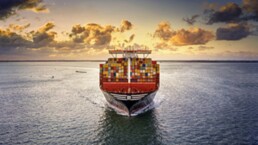

MSC Mediterranean Shipping Company, a global leader in shipping and logistics, is strongly committed to further reducing CO2 emissions and supporting longer term goals to fully decarbonise shipping and ensure it is a truly sustainable industry.
Young, green fleet
While continuously increasing its TEU (twenty-foot equivalent unit, the size of a regular container) capacity to meet the growing demand, MSC operates a modern, green fleet and is investing heavily in low-carbon technologies and extensive new-build and retrofit programmes to boost performance and minimise our environmental impact. For example, MSC’s fleet improvement program has resulted in a 13% reduction in CO2 emissions per transport work* in 2015-18. Furthermore, the latest newbuilding additions to the fleet – led by MSC Gülsün, the largest container ship in the world – has introduced a new class of sustainable container shipping, with the lowest carbon footprint by design, at 7.49 grams of CO2 emissions to move 1 ton of cargo 1 nautical mile.
* The figure of 13% relates to MSC’s Energy Efficiency Operational Indicator (EEOI). EEOI is a tool set out in the IMO Guideline MEPC.1/circ.684, and is defined as the ratio of mass of CO2 emitted per unit of transport work (unit = gr CO2/Tons cargo/miles)


Source: MSC
MSC’s position on reporting CO2 emissions
MSC fully supports reporting CO2 emissions transparently and precisely in the European Union (EU) Monitoring, Reporting and Verification (MRV) system, as mandated by EU legislation. It is however vital that the raw data reported in the system are analysed accurately and take operational realities fully into account, to give a realistic picture of the related emissions.
In this respect, a recently published report by Transport and Environment (T&E) offers an incomplete analysis of these data and therefore does not give an accurate picture of the emissions from the shipping sector. In particular, the T&E analysis fails to take a number of operational aspects of MSC’s services fully into account, and thus does not offer a complete assessment of our role and impact in terms of emissions.
Furthermore, CO2 emissions should be compared on an equal basis. The analysis by T&E focuses on emissions in the EU and, if it is to be fully comparable across shipping lines and industries, should only take into account emissions which actually occurred in the geographical area of the EU.
According to an MSC analysis of its own operational records, only 40-45% of the 11 million tons of emissions reported in the MRV were actually in the EU. To accurately assess MSC’s role in the decarbonisation of shipping, it is vital to take the following points into account:
- Shipowners are mandated to report consumption and CO2 emission data for voyages starting and terminating in EU ports (including voyages between EU ports). These emissions are calculated based on the last port of call before entering EU or the first port of call after leaving EU. As an example, a ship carrying fruits from the Caribbean to Northern Europe and back needs to report emissions for the whole distance of the trip, even though only part of it takes place in the EU. As a result, the actual emissions in the EU for this particular ship may be up to 65% less than is recorded in the MRV. This is particularly relevant for a global company such as MSC, which operates in all the world’s major shipping lanes.
- MSC performs its own feedering services, which means these vessels are also included in our total carbon footprint. These smaller feeder vessels transfer containers between larger ships and smaller ports. Other carriers using third party feeders are not held accountable for those emissions. By outsourcing such services, container lines are able to report much lower emission figures, as it is the shipowners’ responsibility to report the emissions in the MRV.
- MSC is continuously improving energy efficiency and thus mitigating greenhouse gas (GHG) emissions. The Energy Efficiency Operational Indicator (EEOI) gives a reliable indication of a ship’s environmental performance and the ratio of CO2 emissions per ton of cargo MSC moves is among the lowest in the industry. The T&E report ranks MSC as the third most efficient shipping line based on real-world operational efficiency. However, the figure 19.92 included in the report differs significantly from MSC’s own data produced using third-party verified methodology. The global EEOI figure for MSC in 2018 was 14.56 indicating that the gap between this verified figure and the one included in the report is unrealistic. Based on this MSC could rank even higher in the efficiency scale.
Greenest form of cargo mass transport
International shipping, which is already one of the most regulated global industries, facilitates the way we live our lives today. 90% of the goods we use and consume are transported in container ships, including food, fruit, medicines and electronics.
Container shipping is the world’s most carbon-efficient form of transporting goods – far more so than road or air transport.


For example, transporting a shipload of board games for Christmas between Marseille and Rotterdam would produce 2.6 tons CO2 emissions if carried by sea (1 ship). If carried by road, we would need 60 trucks to transport the same amount of board games and the total emissions would jump to 11.5 tons.
MSC plays a crucial role in achieving global economic development and prosperity for many nations and communities. With over 40 years’ experience, we are proud of our role in driving the global economy, connecting people and goods, and our efforts to do all this in a way that is socially inclusive and sustainable. The evolving regulatory landscape and rising expectations of customers, stakeholders and investors present challenges to the shipping industry but are also a positive force that drives progress and creates a shift towards an even more sustainable business.
MSC remains fully supportive of decarbonising the shipping industry. At the same time, it recognises that some major breakthroughs, especially in fuel and propulsion technologies, are needed to shift the industry towards a zero-carbon future.



Related News.

Navigating the Multi-Orbit Era: In Conversation with Intellian’s Jon Harrison at SMM 2026
At SMM 2026 in Hamburg, the rapid evolution of maritime satellite communications took centre stage. Across the exhibition halls, discussions among…

Cyprus ports need joint energy and investment strategy, shipping agents chief says
Cyprus needs a coordinated strategy for shipping, energy and environmental protection to support port investment and modernisation, Cyprus shipping…

MASO Public Affairs introduces MASO Regulatory Intelligence
A new subscription service helping businesses understand what is changing and what it means for them MASO Public Affairs introduces MASO Regulatory…

Anglo-Eastern helps turn CMBTECH’s ammonia ambition into an operational reality
From early feasibility study and risk-based design to newbuilding supervision, crew readiness and technical management, Anglo-Eastern drew on its…

Escalation of attacks threatens to derail recovery in Middle East oil exports
World oil demand is forecast to fall by 2.5 mb/d y-o-y in 4Q26 and 2.6 mb/d on average in 2026. As the Iran war manifests itself through restricted…

New study finds shipping pays twice its share to EU ETS earmarked revenues should triple to help build market for sustainable fuels and technologies
Shipping is responsible for around 10% of EU ETS emissions but pays almost 20% of the ETS bill. Unlike other sectors, it has never received free…

MSARC strengthens maritime mass rescue readiness through training and national live exercise off Dakar, Senegal
Joint MSARC–FHAS programme combines three days of SAR training with a national multi-agency live exercise The Maritime Search and Rescue Council ,…

Sogese report deliveries are still being delayed as container freight rates fluctuate
FOR IMPORTERS Spot rates into the Mediterranean are back at January levels, Far East to Europe reliability sits at pandemic lows, and nearly…

Glencore begins trading on Australian Securities Exchange
Glencore has begun trading on the Australian Securities Exchange under the ASX code GLC. Gary Nagle, Glencore’s CEO, said it was an exciting day for…

BIMCO Shipping Number of the Week
Suez Canal container ship transits exceed 50% of pre-disruption levels "During the first two weeks of October, weekly container ship capacity…
Subscribe to our newsletter!
if you dont want to swim alone in the ocean of news, sign up for the newsletter, and you will receive daily all the important news of world shipping!
