New DNV GL class notation helps to boost LPG as ship fuel
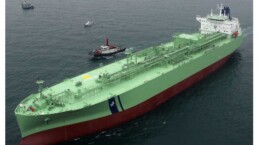

As the maritime industry looks to reduce emissions to air and work towards the International Maritime Organization’s (IMO) greenhouse gas reduction strategy, alternative fuels are coming to the fore. Classification society DNV GL, recognizing that, with the exception of LNG, international regulations for such fuels are absent, developed new class rules and a class notation “Gas fuelled LPG” for using liquefied petroleum gas (LPG) as fuel in anticipation of growing industry interest. A respective announcement was made today at Marintec trade fair in China.
Except for liquefied natural gas, currently all gases and low-flashpoint fuels are subject to the ‘alternative design approach’, which means that they may be used if their safety, reliability and dependability of the systems can be shown to be equivalent to those achieved by new and comparable conventionally fuelled main and auxiliary machinery. This can be a time-consuming and costly process and may impede the uptake and expansion of lower emission alternative fuels.
“With the new rules and class notation, we want to offer owners interested in LPG a straightforward path towards compliance with the alternative design approach mandated by the IGF Code,” said Geir Dugstad, Director of Ship Classification & Technical Director at DNV GL – Maritime. “As the fuel environment within the maritime industry becomes more diverse, it is essential that we continue to broaden the enabling rules and regulation to support these new choices.”
The rules and notation are based on DNV GL’s rules for ships using LNG as fuel but account for the differences in properties and phases between LPG and LNG. The “Gas fuelled LPG” notation covers internal combustion engines, boilers and gas turbines for both gas-only and dual-fuel operations. It also includes requirements for the ship’s fuel supply, considering all aspects of the installation from the bunkering connection up to and including the LPG consumers (main and auxiliary engines, boilers, etc.).
LPG as a fuel can lower a vessel’s emissions to air, both in terms of greenhouse gases and other pollutants. It virtually eliminates sulphur emissions and reduces GHG output by approximately 17 per cent compared to burning HFO or MGO. LPG could also act as a bridging fuel to ammonia, as the materials used for LPG tanks and systems is, in most cases, suitable for ammonia. With advanced planning, the adjustments needed for a switch to ammonia from LPG could also be minimized.



Related News.

Highly successful conclusion of the 2nd CSN Northern European Crewing Conference in Hamburg: Crewing 5.0 in Focus
We are delighted to report the highly successful conclusion of the 2nd CSN Northern European Crewing Conference, which took place on the 22nd of…

Dualog launches secure messaging for ship and shore
Dualog has launched Dualog Chat, a secure messaging service built for shipping. The first service in Workspace by Dualog, Chat gives crews and shore…
India and the Widening Tanker Freight Squeeze
This week’s Tanker Market Monitor tracks India’s return to Iraqi supply as Gulf oil movements recover amid persistent shipping risk. Yanbu is…
Star Bulk announces strategic partnership with Hermes World Maritime
Star Bulk Carriers Corp. (the "Company" or "Star Bulk") (Nasdaq & Euronext Athens: SBLK), today announced that it has entered into a strategic…

Thai Cave Rescue Diver Chris Jewell to Bring Lessons in Risk and Safety to IMCA Global Summit
The International Marine Contractors Association (IMCA) will launch its new strategy to 2030 as hundreds of offshore leaders and technical…

Port call optimisation pilot projects reveal significant emissions savings potential
Commercial ships spend between 4% and 6% of their operating year waiting outside ports. That idle time is one of the clearest inefficiencies in…
Port Houston celebrates Historic Project 11 Milestone
Houston Ship Channel expansion strengthens safety, efficiency, and regional prosperity Port Houston joined federal, state, and local elected…

Global VLCC Spot Earnings rise to $805,000/Day
Clarksons Research, the data and analytics arm of the Clarksons Group, continue to track and monitor shipping activity and markets impacted by the…

IMO adopts frameworks to assess marine geoengineering research activities
New guidance will help governments evaluate marine geoengineering research proposals to ensure they are safe for the environment. The…
BIMCO adopts addendum to support investments in retrofit projects
The shipping industry is working to improve fuel efficiency and ship performance to address decarbonisation requirements, new regulations and rising…
Subscribe to our newsletter!
if you dont want to swim alone in the ocean of news, sign up for the newsletter, and you will receive daily all the important news of world shipping!
