Interferry: UK should learn from the EU’s Maritime ETS experiences

Following the 20 November EU-UK Summit, Interferry, the association representing the ferry industry worldwide, warns against using maritime ETS revenues to prop up national budgets instead of funding the sector’s green transition.
Interferry welcomes the ambition to harmonize rules between the European Union and the United Kingdom following the EU-UK Summit on 20 November. However, the association urges the UK government not to repeat the mistakes made during the rollout of the EU Emissions Trading System (ETS) for maritime transport.
“The UK must take note of Europe’s harsh awakening and resist the temptation to casually add maritime ETS revenues to its national treasury. Up until now, EU ETS funds have largely been used to prop up national budgets rather than support actual decarbonization. While the ferry sector is well aware of its role to facilitate the decarbonization of maritime transport, drawing large amounts of money from the sector and expecting it to be self-sufficient in financing current and future decarbonization is misguided, much as the rest of Europe has recently realized”, said Johan Roos, Interferry’s Director of Regulatory Affairs and added:
“The implementation of the EU ETS was done in three phases, somewhat softening the substantial financial blow on operators. The UK should mirror this approach.”
In their 20 November Joint Statement, EU and UK leaders welcomed the conclusion of negotiations to link their respective Emissions Trading Systems – an agreement aimed to take effect from 2028 that will allow mutual recognition of allowances and exempt goods from respective Carbon Border Adjustment Mechanisms. While regulatory alignment is a positive step toward reducing trade friction, Interferry stresses that the EU is currently working to undo significant economic damage that the EU ETS has inflicted on intra-EU trade.
Under the current European framework, the ferry sector alone is obliged to pay approximately 1 billion Euro per year into the system. During the on-going revision of the EU ETS, there seems to be strong support from most stakeholders that money collected from the maritime sector should be put to use to support the decarbonization of that sector, e.g. through subsidies for green fuels and proliferation of high-capacity charging points for all-electric ships – primarily ferries.
Interferry’s warning echoes concerns raised by the UK Chamber of Shipping in connection with the 20 November reset talks. The Chamber emphasized that shipping serves as the vital physical link between the UK and its largest trading partner, warning that unaligned or purely punitive ETS compliance costs ultimately pass through to UK imports, exports, supply chains, and consumers.



Related News.

Planet awarded contract expansion with European Defense and Intelligence Customer
Planet Labs PBC, a leading provider of daily data and insights about change on Earth, today announced a contract expansion with a European defense…
BlackSky acquires EpochGeo to expand Real-Time Intelligence Capabilities with AI-Enabled RF, Signals and Multi-Source Analytics
Acquisition brings new U.S. and International defense customers and advanced multi-source analytics and fusion technology to expand the company’s…

IBM recognised as a Leader in the 2026 Gartner® Magic Quadrant™ for Data and Analytics Governance Platforms
Data governance now matters to more users and more teams across the business, not only those who manage data. As organisations rely on data for…

SAP completes aquisition of TechWolf
SAP announced it has completed the acquisition of TechWolf, provider of a leading AI work intelligence platform. TechWolf is expected to become an…
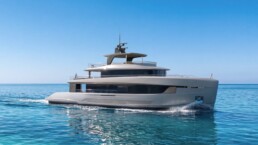
Bellini Eternal 36 ushers in the Italian shipyard’s Superyacht Era
It measures 36 meters in length, with a range of more than 4,000 nautical miles and a solid steel-and-aluminum construction. Bellini Eternal 36 marks…
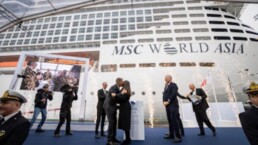
MSC Cruises and Chantiers de l’Atlantique celebrate delivery of MSC World Asia
MSC World Asia joins MSC Cruises' fleet as its 24 ship and the latest evolution of the innovative World Class platform. Built with more than 500…

Poland’s additional national requirements distort competition says Danish Shipping
Poland has introduced a national survey requirement for smaller foreign-flagged vessels operating in Polish waters. This creates significant…

Battery Vessels could help electrify most of Global Shipping Emissions
Battery-electric ships are economical only if the pack is cycled frequently, so they have been confined to short-sea, ferry and harbour vessels…

Mintra and Ledgid explore collaboration to connect Maritime digital identity, learning and workforce development
Mintra® and LEDGID are exploring opportunities to bring together complementary capabilities in digital learning, maritime training, professional…

World Shipping Council calls for global agreement on shipping emissions as industry investment surpasses $200 billion USD
The World Shipping Council (WSC) is calling on governments to agree on binding global greenhouse gas regulations for international shipping without…
Subscribe to our newsletter!
if you dont want to swim alone in the ocean of news, sign up for the newsletter, and you will receive daily all the important news of world shipping!
