K-Shipbuilding shaken by China even in High Value-Added Vessels
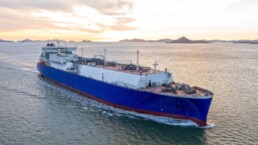

China Wins 93 Ultra-Large Container Ship Orders Versus South Korea’s 6, Undercutting a Core Stronghold while LNG Carrier Orders Still Lead for South Korea, But China’s Rapid Gains and Wider Market Share Gap Raise Alarm
According to Clarkson Research, a British shipbuilding and shipping market analysis agency, on Nov. 24, China won orders for a whopping 93 vessels in the global ultra-large container ship (15,000 TEU or more) market from January to October this year, while South Korea only managed to secure 6 vessels.
Converting this into market share yields a shocking report card of 94% for China and 6% for South Korea. If South Korea fails to secure additional orders under this trend, it will record the lowest order market share in the recent 5 years (2022 to 2026).
Ultra-large container ships, the flagship vessel type of global trade, are the second most expensive high value-added vessels after LNG carriers. As of the end of October, the newbuilding price for a 22,000 to 24,000 TEU class vessel reaches $240,000,000. This is a field where South Korea (21 vessels) held the upper hand over China (16 vessels) just a few years ago in 2023, but the tide has completely turned this year.
In fact, in the bidding wars of major global shipping companies, the three major domestic shipbuilders (HD Hyundai Heavy Industries, Hanwha Ocean, and Samsung Heavy Industries) have suffered consecutive defeats to China. The winner of the order battle for 12 ultra-large container ships placed by France’s CMA-CGM, the world’s third-largest shipping company, last year was also China’s Yangzijiang Shipbuilding, not the domestic Big 3.
Threat Even to the LNG Carrier Market, Called a ‘Home Turf’
A bigger problem is that even the LNG carrier market, the core of high value-added vessels, is facing a fierce pursuit by China.
Of the 76 large LNG carrier orders worldwide from January to October this year, South Korea secured 44 vessels (57.9%) to maintain the lead, but China swept up a whopping 32 vessels (42.1%). This is a figure that surged more than 10 times compared to China’s total LNG carrier order volume (3 vessels) last year, and the market share gap with South Korea narrowed to a mere 15.8%p difference.
The domestic industry is somewhat downgrading the increase in China’s LNG carrier orders, stating, “A significant number are internal projects associated with China’s own shippers,” but concerns are growing that if Chinese-made LNG carriers delivered in the future are proven to be flawless in actual operation, global shipping companies could massively and more rapidly defect to China.
Shadow of the ‘Selective Order Strategy’ vs China’s Low-Price Offensive and Quality Improvement
Regarding the background of domestic shipbuilders receiving such a sluggish report card, the industry diagnoses that complex causes have acted.
First, as domestic shipbuilders have already amply secured more than 3 years of work (order backlog) through aggressive orders over the recent 2 to 3 years, they are concentrating their capabilities on relatively more profitable LNG carriers to efficiently utilize limited construction slots (docks). In other words, the analysis is that the shortage of docks and the profitability-oriented selective strategy led to the decrease in ultra-large container ship orders.
At the same time, the remarkable improvement in the competitiveness of the Chinese shipbuilding industry is cited as a major cause. Beyond a simple avoidance phenomenon, it cannot be overlooked that the quality of the Chinese shipbuilding industry has improved to an extent incomparable to the past.
Lastly, Yang Jong-seo, a visiting professor at the Department of Naval Architecture and Ocean Engineering at Seoul National University, pointed out, “Although China’s labor costs have also risen compared to the past, they are maintaining overwhelming price competitiveness based on continuous and full support from the government,” adding, “Unless the price gap narrows, it will be difficult for South Korea to maintain its advantage.”
In reality, China is carrying out large-scale expansions to break away from the focus on mid-sized vessels and enter the high value-added vessel market. Hudong-Zhonghua Shipbuilding under the China State Shipbuilding Corporation (CSSC) has expanded a new dock and is about to start operation, and Hengli Heavy Industry and others are introducing an unconventional method of building vessels in advance and then selling them, while rapidly breaking down eco-friendly and high value-added technological barriers, such as being on the verge of delivering the world’s first ammonia-propelled bulk carrier.
Market Share Gap with China Surges from 19%p to 62%p in 5 Years
Amid this trend, the market share gap between the two countries in the entire global shipbuilding order market has widened dramatically. According to Clarkson Research, the order market share gap between South Korea and China was at the 19%p level just in 2021, but as of January to October this year, the gap between China (77%) and South Korea (15%) has expanded more than threefold in 5 years to a whopping 62%p.
Experts warn that the sluggishness of the shipbuilding industry may not end simply as a crisis for a single industry but could lead directly to a crisis in national security and the maritime logistics supply chain. This is because the weakening of the domestic shipbuilding industry’s foundation can be a fatal blow even in terms of security infrastructure, which must timely procure and maintain naval power in case of an emergency.
Domestic shipbuilders are staking their lives on improving their constitution to overcome the crisis. First, they are devoting efforts to securing source technologies for future zero-carbon vessels, including small modular reactor (SMR) propelled vessels, and are also accelerating the introduction of robots to maximize productivity and bridge the cost gap with China. For instance, HD Hyundai has presented a goal to introduce 3,000 robots into its shipyards by 2030.
However, voices are loud that there is a clear limit to defending against China’s offensive backed by massive capital solely through the efforts of individual companies. The industry and academia agree that omnidirectional and multidimensional support at the government level is urgent, such as expanding smart vessel empirical test zones, easing regulations related to new technologies, and providing practical financial support.
In some quarters, arguments are raised that a strategic collaboration system among the three major domestic companies is needed to counter rapidly growing Chinese shipbuilders, but the view also persists that realistic constraints are significant due to the interests and competitive dynamics of each company. Now that the reputation of a high value-added shipbuilding powerhouse is shaken, it is a golden time for the private sector, government, and academia to put their heads together and prepare an effective breakthrough.
Source: BusinessKorea



Related News.

Poland’s additional national requirements distort competition says Danish Shipping
Poland has introduced a national survey requirement for smaller foreign-flagged vessels operating in Polish waters. This creates significant…

Battery Vessels could help electrify most of Global Shipping Emissions
Battery-electric ships are economical only if the pack is cycled frequently, so they have been confined to short-sea, ferry and harbour vessels…

Mintra and Ledgid explore collaboration to connect Maritime digital identity, learning and workforce development
Mintra® and LEDGID are exploring opportunities to bring together complementary capabilities in digital learning, maritime training, professional…

World Shipping Council calls for global agreement on shipping emissions as industry investment surpasses $200 billion USD
The World Shipping Council (WSC) is calling on governments to agree on binding global greenhouse gas regulations for international shipping without…

What happened to the ITF whistleblower’s complaint?
In January 2026, a whistleblower complained that International Transport Workers’ Federation (ITF) General Secretary Stephen Cotton had manipulated…

Growing regulatory scrutiny puts seafarer wellbeing firmly on maritime safety agenda, VIKAND warns
Seafarer wellbeing is coming under greater regulatory scrutiny as international rules and guidance increasingly recognise crew health and welfare as…

Good Times Bad Times the Premium Stays with the Strait
In October, we wrote that if the transfer network off Oman kept pace, Gulf crude would carry China's refill and keep drawing tonnage east,…

Allied Weekly Market Review Week 47
Pls find below the Allied - Weekly Market Review - Week 47 ALLIED - Weekly Market Report- Week 47


Climate TRACE releases September 2026 Emissions Data
Climate TRACE reported that global greenhouse gas (GHG) emissions for the month of September 2026 totaled 4.7 billion tonnes CO₂e. This remains…
Subscribe to our newsletter!
if you dont want to swim alone in the ocean of news, sign up for the newsletter, and you will receive daily all the important news of world shipping!
