Global patchwork of shipping decarbonization rules looms after COP31 collapse, warns PortXchange
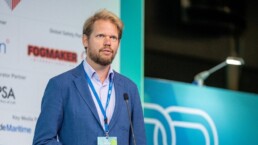

With the IMO’s Net-Zero Framework back on the table from November 30, the organization’s authority as shipping’s global regulator is on the line
Maritime emissions tracking and reducing specialist PortXchange has warned that shipping is heading for a costly patchwork of national and regional climate rules unless International Maritime Organization (IMO) member states adopt the Net-Zero Framework next week, after the UN climate summit in Antalya collapsed without a deal.
COP31 closed on 22 November without a final text, the first time since 2009 the annual summit has failed to agree, after Saudi Arabia and other oil producers forced fossil fuel language out of the draft. Eight days later, IMO member states meet for MEPC 85 (30 November to 3 December), with the resumed extraordinary session on 4 December expected to decide the framework’s fate. The last attempt, in October 2025, was postponed by 57 votes to 49 after the United States threatened tariffs, visa restrictions and port fees against countries backing the framework.
“COP and the IMO are watching the same film,” said Sjoerd de Jager, Managing Director and Co-Founder of PortXchange. “A handful of countries whose economies run on oil and gas are blocking what most of the world has already said it wants. At COP they deleted the words. At the IMO, they went further and threatened the trade of anyone who voted the other way.”
The delay is already costing the transition. The UCL Energy Institute and Getting to Zero Coalition’s Climate action in shipping 2026 report calls last year’s failure to adopt the framework “the single most transition-regressive event” in its five years of tracking. The share of tonnage on order that can run on scalable zero-emission fuels fell from 9.5% to 5.7%, while conventional-only ships rose from 54% to 61% of the orderbook. Even if it is adopted next week, the framework cannot take effect before 2029.
The Global Maritime Forum counts 84 active green shipping corridors worldwide, yet only four have reached the stage where vessels, infrastructure or fuel plants are actually being built or operated. The cost gap between conventional and low-carbon fuels is the main brake.
“Nobody on the water is short of ambition. Owners are electrifying barges, trailing hydrogen-derived fuels and asking the IMO, again and again, for clear rules,” said de Jager. “What kills most corridors between pilot and operation is the operating cost: someone has to pay the premium on green fuel and electricity. The Net-Zero Framework is the only measure on the table built to close that gap worldwide and a few governments are holding it back while the rest of the industry pays for it.”
Without a global deal, countries and regions will keep writing their own rules. The EU already applies its ETS and FuelEU Maritime to ships, and the Netherlands and Spain have added national obligations on marine fuel suppliers. Since July, the UK has run a separate carbon price, the UK ETS, on domestic voyages and on emissions while ships of 5,000 GT and above are in UK ports. Every extra layer adds compliance work for operators trading across borders and pushes cost and cargo from one market to the next. The UK Chamber of Shipping has asked for any extension of the UK ETS to international voyages to wait until the IMO completes its Net-Zero Framework negotiations, so the December 4 decision will also shape how far that patchwork spreads in UK waters.
“If member states walk away again on 4 December, the IMO’s authority as shipping’s global regulator takes a hit it may not recover from,” said de Jager. “What replaces it is a patchwork of regional carbon prices and fuel rules and ships cross every border, so this industry will pay for that fragmentation more than any other.”
PortXchange is urging ports and operators to act whatever the vote. Synchronizing arrivals so ships slow down at sea instead of waiting at anchor cuts fuel burn straight away. At the Port of Algeciras, real-time port call coordination through PortXchange’s Synchronizer cut idle time per vessel arrival and departure by nearly 40% and avoided an average of 32.9 tonnes of CO2 per port call. Measuring emissions call by call with EmissionInsider then shows where shore power and other investments will make the biggest difference.
“Member states have one job on 4 December: adopt the framework as it stands,” de Jager said. “Another year of delay is a decision too and the industry will remember who took it.”
He also set a challenge for the industry itself: “Stop waiting for London. Every port and every operator can cut emissions this year with data and tools that already exist. If governments won’t lead, the industry has to and the companies that move now will be ready for whatever rules finally arrive.”



Related News.

Poland’s additional national requirements distort competition says Danish Shipping
Poland has introduced a national survey requirement for smaller foreign-flagged vessels operating in Polish waters. This creates significant…

Battery Vessels could help electrify most of Global Shipping Emissions
Battery-electric ships are economical only if the pack is cycled frequently, so they have been confined to short-sea, ferry and harbour vessels…

Mintra and Ledgid explore collaboration to connect Maritime digital identity, learning and workforce development
Mintra® and LEDGID are exploring opportunities to bring together complementary capabilities in digital learning, maritime training, professional…

World Shipping Council calls for global agreement on shipping emissions as industry investment surpasses $200 billion USD
The World Shipping Council (WSC) is calling on governments to agree on binding global greenhouse gas regulations for international shipping without…

What happened to the ITF whistleblower’s complaint?
In January 2026, a whistleblower complained that International Transport Workers’ Federation (ITF) General Secretary Stephen Cotton had manipulated…

Growing regulatory scrutiny puts seafarer wellbeing firmly on maritime safety agenda, VIKAND warns
Seafarer wellbeing is coming under greater regulatory scrutiny as international rules and guidance increasingly recognise crew health and welfare as…

Good Times Bad Times the Premium Stays with the Strait
In October, we wrote that if the transfer network off Oman kept pace, Gulf crude would carry China's refill and keep drawing tonnage east,…

Allied Weekly Market Review Week 47
Pls find below the Allied - Weekly Market Review - Week 47 ALLIED - Weekly Market Report- Week 47


Climate TRACE releases September 2026 Emissions Data
Climate TRACE reported that global greenhouse gas (GHG) emissions for the month of September 2026 totaled 4.7 billion tonnes CO₂e. This remains…
Subscribe to our newsletter!
if you dont want to swim alone in the ocean of news, sign up for the newsletter, and you will receive daily all the important news of world shipping!
