NGOs welcome Greenland Scrubber Ban, urges IMO, other Arctic Countries to follow lead
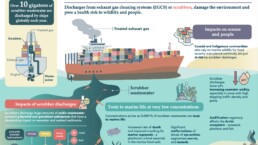

Responding to news that the Parliament of Greenland (Inatsisartut) has directed the government (Naalakkersuisut) tointroduce a ban on discharges from highly polluting ‘scrubbers’ from shipping within Greenland’s internal and territorial waters, Dr Kaare Press-Kristensen, senior advisor on air quality & climate at Green Global Future said:
“The decision by Greenland’s Parliament to ban scrubber discharges – a de facto ban on the use of scrubbers by ships operating in its internal and territorial waters – is an important step towards cleaner shipping, and a clear signal for other countries to do the same in their waters to reduce toxic air and water pollution.”
“Greenland can go further with greening Arctic shipping – parliament member Justus Hansen from the Greenlandic party Demokraatit has called on Greenland to create a ‘green shipping corridor’ – where only marine gas oil (MGO) can be used – between Nuuk and Reykjavík, to further protect human health and the marine environment”, added Press-Kristensen.
Greenland will ban open loop scrubbers from July 1st, 2027, and closed loop scrubbers from July 1st, 2029 in inland waterways and territorial seas. Theadopted proposal says that ”Naalakkersuisut is directed to introduce a ban, effective from 1 July 2027, on discharges from open-loop exhaust gas cleaning systems within Greenland’s port areas, internal waters, and territorial waters. From 1 July 2029, the ban on the discharge of exhaust gas cleaning water will apply to all systems.”
Greenland’s ban on scrubbers — also known as Exhaust Gas Cleaning Systems (EGCS) — follows a Danish ban which came into effect on July 1st, 2025. It was proposed by Greenlandic parliament member Justus Hansen of the Demokraatit party, who is known to fight for environmental issues to protect nature and thereby fishing and hunting, which are the basis of Greenlandic culture.
Scrubbers, or exhaust gas cleaning systems, are an end-of-pipe equipment compliance mechanism employed to remove sulphur from exhaust emissions of ships by giving the flue gas a shower and emitting the smokewater directly to the sea, to allow them to continue burning highly polluting fuels like heavy fuel oil.
Greenland’s ban is designed to reduce both waterborne and airborne pollution from shipping in territorial seas without slowing down maritime trade. Greenland’s ban aligns with that of Denmark, which also banned scrubber discharges, along with other ambitious Nordic countries like Sweden andFinland that have similar bans in territorial seas, and with an OSPAR recommendation agreed in 2025. Under this agreement, the fifteen contracting parties of the OSPAR Convention, including Norway, Iceland, the UK, Ireland, France, Spain, and Portugal, will also begin phasing in scrubber discharge bans.
“International Maritime Organization members should pay attention to the mounting momentum towards banning scrubbers, and follow Greenland’s lead by enacting a global ban on scrubber wastewater discharges, starting with protecting the sensitive waters of the Arctic”, said Dr Sian Prior, Lead Advisorto the Clean Arctic Alliance. “Scrubbers simply offer a loophole for ships to continue burning the most polluting fuels – instead of using widely available cleaner fuels such as marine gas oil. The ongoing use of polluting fuels in the Arctic results in high emissions of toxic particle pollution, including black carbon, to the atmosphere and also the transfer of pollution directly to the marine environment.”
“The Clean Arctic Alliance calls for Iceland, Norway and Canada to follow Greenland by enacting bans in their territorial seas, and for all Arctic states to support the upgrading of the OSPAR recommendation to a decision in 2027 which will protect territorial seas throughout the northeast Atlantic, including in the Arctic”, added Prior.
“There is no safe threshold for scrubber discharge, and for that reason, scrubbers should be banned from Canadian waters”, said Andrew Dumbrille,Special Advisor to the Clean Arctic Alliance and Co-Director of the Canadian NGO Equal Routes. “Transport Canada should pay attention to what Greenland and other countries have achieved, then act on its own findings and the overwhelming consensus across the country by moving with urgency to safeguard Canada’s oceans and communities.”
“Greenland’s decision recognizes the simple reality that scrubbers don’t eliminate pollution, they move it from the air into the water”, said Dr Sam Davin, Lead Specialist at WWF-Canada. “In Canada, where scrubber discharges remain legal, a recent WWF-Canada report found that ships equipped with scrubbers discharge more than 198 billion litres of polluting wastewater into the ocean every year, including more than 27 billion litres in marine protected areas. Despite representing only a fraction of the fleet, scrubber-equipped vessels account for 98% of all polluting ship waste discharged in Canadian waters.”
“Four Nordic countries to the east and west of Iceland have banned scrubber water discharges in territorial seas, now Iceland must follow their lead by taking domestic action to implement the OSPAR ban”, said Arni Finnsson, Board Chair at the Iceland Nature Conservation Association. “To protect people’s health and the marine environment, Iceland must also support Greenland’s suggestion to establish an Arctic corridor between Nuuk and Reykjavík where ships will only use marine gas oil (MGO), the cleanest of the conventional shipping fuels.”



Related News.
Global study finds Cyprus ranks SEVENTH and set for $1.1 billion AI GDP boost
Cyprus beats India and New Zealand to come SEVENTH in major AI study – with potential €1.1 billion GDP boost and youth jobs opportunity Some 86% of…
Global shipping’s trillion dollar climate bill according to Zero Carbon Analytics
A new study by Zero Carbon Analytics finds that emissions from international shipping cost the global economy around USD 963 billion between 1990…

Keeping Children Safe Online at Sea Seafy® earns friendly WiFi Certification across 26 vessels
Seafy becomes Friendly WiFi’s first partner in the maritime sector, helping protect kids from harmful content online. Friendly WiFi is delighted…
ShipManager joins Star Information Systems to accelerate the maritime industry’s transition to cloud
CFARER, a DNV Company selects Star Information Systems as the longterm home for ShipManager and its cloud future Star Information Systems (Star)…
Seafarer experience must shape maritime technology, initial STEER Project report finds
New research finds technology can shift rather than remove risk as The Nautical Institute, with support from Lloyd’s Register Foundation, calls for…

New LR service targets cargo disruption when trade routes fail
New LR Advisory service helps ports, governments and logistics operators respond to disruption, protect critical cargo flows and strengthen trade…
DORIC WEEKLY INSIGHT 06 NOVEMBER 2026
Please find below the DORIC Market Insight for the week ending 06th November 2026. Weekly Report 06.11.2026
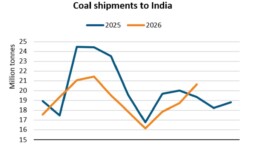
BIMCO Shipping Number of the Week
Coal shipments to India drop 7%, but limited recovery may lie ahead "Between January and October, coal shipments to India dropped 7% y/y due to the…
Hapag-Lloyd marks 20 years in South Africa and targets further growth
South Africa has become a cornerstone of Hapag-Lloyd's business in Africa Hapag-Lloyd surpasses 1 million TEU in Africa for the first time in its…
Subscribe to our newsletter!
if you dont want to swim alone in the ocean of news, sign up for the newsletter, and you will receive daily all the important news of world shipping!
