Mediterranean and Black Sea countries adopt 11 binding decisions to sustainably manage their fisheries
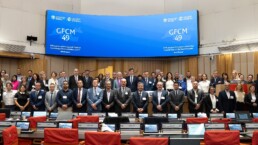

Twenty-five countries met this week in Rome to advance the sustainable exploitation of key stocks and promote responsible aquaculture across the region.
The members of the General Fisheries Commission for the Mediterranean (GFCM) of the Food and Agriculture Organization of the United Nations (FAO) reviewed the latest scientific advice and adopted 11 binding recommendations and 2 resolutions, for sustainable fisheries and aquaculture in the region.
“The future of the Mediterranean and the Black Sea depends on countries working together, ” said
Eyüp Mümtaz Tiraşin, GFCM Chairperson. “The decisions regarding fisheries and aquaculture adopted this week demonstrate that regional cooperation can deliver concrete results. This is essential as the region faces rapidly warming seas and rising demand for aquatic foods.”
Progress drives new commitments for multiple fisheries
The Commission agreed to upgrade multiannual management plans for key Mediterranean species, by converting them into long-term adaptive management plans, marking a major step towards the long-term sustainability of fisheries. The management plans cover common dolphinfish – considered sustainably exploited and for which new fishing opportunities were agreed upon – across the Mediterranean basin, deep-water red shrimp in the Strait of Sicily, Ionian Sea and Levant Sea, as well as European hake and deep-water rose shrimp in the Strait of Sicily.
“The Algerian fishers are very pleased to be able to start fishing for common dolphinfish,” declared Cherif Telli, First Vice President of the Algerian Chamber of Fisheries and Aquaculture, referring to the fact that this is the first time a quota for this species has been set.
“This will allow our fishers to diversify their catches and increase their income to improve their socioeconomic situation, while respecting the sustainability of Mediterranean fish stocks.”
In addition, a new multiannual management plan covering five demersal species in the Adriatic Sea was endorsed for the next seven years. It aims to consolidate the gains already achieved under the previous management plan, with increased biomass for all five species and sustainable levels of exploitation reached for four of them – namely red mullet, European hake, common sole, as well as Norway lobster in certain areas of the Adriatic Sea.
The six new recommendations will expand the GFCM framework of long-term management plans, adding to those already implemented for European eel and red coral across the Mediterranean, anchovy and sardine in the Adriatic Sea, blackspot seabream in the Alboran Sea and turbot in the Black Sea.
The Commission adopted a recommendation reflecting the adaptive nature of the blackspot seabream management plan in the Alboran Sea, reducing the 2027 quotas and fishing effort with respect to 2026. It also adopted new quotas for small pelagic fisheries in the Adriatic Sea. For turbot gillnet fisheries in the Black Sea, a new 360 mm mesh size was introduced alongside the existing 400 mm mesh size, subject to the mandatory use of porpoise alerting devices to deter cetacean bycatch.
A transparent and effective compliance framework supports a level playing field
After a full year of implementation, the Commission reviewed the results of the new compliance assessment scheme, which was strengthened to align with practices applied by other regional fisheries management organizations.
“For the first time this year, the newly established GFCM compliance assessment scheme provided a detailed picture of compliance by contracting parties with their obligations, including catch limits established under management plans, quotas, reporting and monitoring and control measures”, said Neil Ansell, Chairperson of the Compliance Committee. “Where shortcomings are identified, the scheme provides a structured collaborative framework for agreeing on follow-up measures and assistance for improving future compliance.”
Beyond compliance assessment, the Commission advanced regional cooperation on key monitoring, control and surveillance (MCS) tools, including vessel monitoring systems and joint inspections schemes. Furthermore the Commission agreed to strengthen information exchange through the operationalization of the MCS Portal and supported the launch of the GFCM-Lex regional repository of national fisheries and aquaculture legislation towards broader public access.
Together, these measures promote more harmonized and effective implementation of GFCM decisions and help ensure a level playing field across the Mediterranean and the Black Sea.
New guidelines advancing fish welfare and addressing aquaculture gear waste With marine and brackish aquaculture now accounting for more than 45 percent of aquatic food production in the Mediterranean and the Black Sea (The State of Mediterranean and Black Sea Fisheries 2025), the Commission adopted new measures to support the sustainable development of the sector. To promote more responsible farming practices and advance fish welfare standards across the region, countries endorsed a resolution on guidelines on marine finfish welfare in aquaculture, building on the work carried out through the University of Crete as part of the Mediterranean Marine Finfish Aquaculture Demonstration Centre (MMF-ADC)
In parallel, the Commission adopted guidelines on abandoned, lost or discarded aquaculture gear, developed by the GFCM Technical Advisory Group on Innovation and Technology. These guidelines aim to prevent gear loss, improve reporting and recovery, and promote reuse and recycling, supporting efforts to reduce the environmental impact of aquaculture across the region.
Setting the course for the next decade of regional cooperation
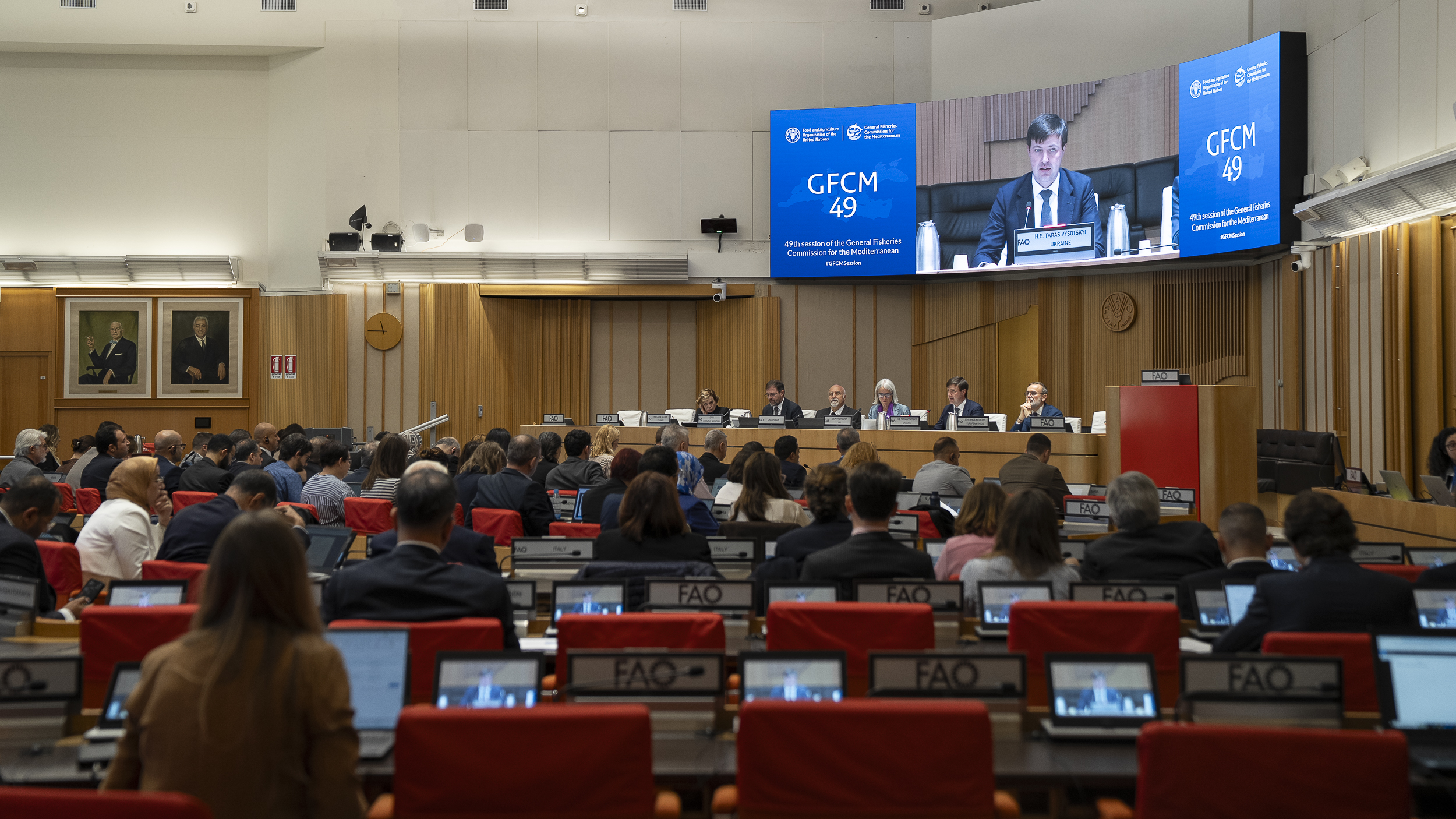
2027 will be a milestone year for the GFCM, marking its 75th anniversary and 50th annual session, to be hosted by Türkiye. A decade after the signature of the MedFish4Ever Ministerial Declaration, countries will come together in 2027 to shape a renewed regional vision for sustainable fisheries and aquaculture through a new ministerial declaration. Momentum for this process was evident during the session’s high-level segment, where Taras Vysotskyi, Minister of Agrarian Policy and Food of Ukraine and Carla Jazzar, Ambassador and Permanent Representative of the Republic of Lebanon to FAO, presented their national roadmaps. Twelve countries and observers also contributed, highlighting the collective momentum needed for achieving a sustainable future for our seas.
“The evidence shows that when we are ambitious and act together, we are effective, ” said Costas Kadis, European Commissioner for Fisheries and Oceans, outlining the path towards the new declaration. “Through the GFCM, we have a strong and trusted framework for action. We can, and must, protect our common sea and build a more resilient future for the communities that depend on it.”



Related News.
Where Cyprus fits in the India–Europe Maritime Corridor
On 6 October, the Cyprus Ports Authority joined shipping, logistics and government representatives in New Delhi to work on the India–Middle…

Boluda Shipping signs agreement to acquire Samskip joining forces to build europe’s leading short-sea network
Boluda Shipping and Samskip have signed an agreement under which Boluda Shipping will acquire Samskip, including all its assets and operations.…

European gas touches €100 for first time since 2022 energy crisis as consumers, industry feel the pain
Europe's benchmark natural gas contract briefly touched €100 per megawatt hour (MWh) on Wednesday as disruptions to Middle East shipping…

South Korea targets Autonomous Ship Dominance
South Korea’s seas are set to become smarter with artificial intelligence. The government plans to secure fully unmanned autonomous navigation vessel…
Valenciaport awards the contract for the elevated seafront promenade at the Port of Valencia’s Marina
The aim of this project is to improve the elevated walkway on the northern breakwater at La Marina. The project, with a budget of €2,257,841.15 (VAT…

MOL holds FY2026 Safe Operation Liaison Meeting for Shipowners and Ship Management Companies
Mitsui O.S.K. Lines, announced that on October 27, it held the FY2026 Safe Operations Liaison Meeting in Osaka for Japanese and overseas shipowners…

DORIC WEEKLY INSIGHT 30 OCTOBER 2026
Please find below the DORIC Market Insight for the week ending 30 October 2026. Weekly Report 30.10.2026

ABP acquires leading Humber port logistics player Global Shipping Services
Associated British Ports , the UK’s largest port operator, is delighted to announce it has acquired Global Shipping Services , a leading provider of…

Ballast Water: BIMCO seeks clearer guidance for ships facing challenging water quality
BIMCO has co-sponsored a submission to MEPC 85 making the case for revising the IMO guidance related to ballast water management for…

Port of Long Beach Terminals add extended gate hours
Shippers will have even more ways to move cargo and access container terminals at the Port of Long Beach, thanks to extended gate hours offered…
Subscribe to our newsletter!
if you dont want to swim alone in the ocean of news, sign up for the newsletter, and you will receive daily all the important news of world shipping!
