Danica urges Shipping Industry to manage crew turnover, not just retention


Shipping companies need to pay as much attention to managing crew turnover as they do to retaining seafarers if they are to maintain safe and efficient vessel operations, according to Henrik Jensen, founder and CEO of Danica Crewing Specialists.
Speaking ahead of this week’s Crew Connect Global 2026 in Manila (20-22 October), Mr Jensen warned that while retaining experienced seafarers remains a priority, changing attitudes towards employment mean shipowners and managers must accept that some crew turnover is inevitable and be better prepared to manage it.
“Having a stable crew pool makes a significant difference to the safe and efficient operation of a vessel. Experienced crews who know the ship, its equipment and each other are less likely to make mistakes, helping prevent accidents, damage and costly disruption,” he said.
“Shipping companies understandably invest heavily in retention, but even those offering excellent employment conditions will lose crew members. We also need to think about how we manage these changes when they happen.”
Mr Jensen explained that traditional retention strategies, including competitive salaries, bonuses, insurance, pensions and promotion opportunities, have largely been built around the expectations of older generations, who tend to value stability and long-term employment.
However, younger seafarers are often more willing to explore new opportunities, even when satisfied with their existing conditions, a trend he believes will become more significant as they progress through the ranks.
“Younger people are generally more open to trying something different. With competition for skilled workers across many industries, we cannot expect everyone to stay with the same employer indefinitely,” he explained.
Mr Jensen believes shipping companies should focus on making it easier for new crew members to familiarise themselves with onboard equipment, procedures and working practices.
“Every time something goes wrong onboard, there is a tendency to introduce another procedure or checklist. Over the years, these requirements build up and systems become increasingly complicated, leaving new crew members with an enormous amount of information to absorb, often without enough time to do so properly.”
He recommends reviewing safety and quality management procedures at least annually to remove outdated or unnecessary requirements, while ensuring familiarisation focuses on the practical instructions relevant to each seafarer’s role.
Digital systems and artificial intelligence could also help crew members find and understand relevant procedures more quickly, while greater standardisation of equipment and regulations would make moving between vessels easier. Mr Jensen pointed to differences between manufacturers’ ECDIS systems as an example of unnecessary complexity.
“We should be making it easier for people to join a new vessel and become familiar with its systems without compromising safety,” he said.
“Of course, we must continue doing everything we can to retain good seafarers, but we also need to accept that some turnover is unavoidable. If we want safe and efficiently operated vessels, we need to manage both retention and the movement of crew. The two must go hand in hand.”



Related News.

Beyond Technical Skills: WISTA Cyprus explores the human side of leadership
WISTA Cyprus hosted The Art of Leadership & Emotional Mastery, an interactive workshop held on 15 October at the Alasia Hotel in Limassol,…
The human cost of sending merchant mariners into war zones extends far beyond the immediate danger of missiles and drones. It raises a harder question: who is really protecting the seafarer?
Who protects the seafarer? I have spent much of my professional life at sea. I am a Master Mariner. I have stood on the bridge, made decisions…
Loss of bridge control: Human failure is normal – context is key
When bridge control is lost in a functioning system, it can be easy to blame human error. But accidents rarely happen because of one mistake…

Danish Shipping announces the transport of live animals by sea new rules should improve safety for animals, seafarers and the environment
Revised rules on the transport of live animals by sea are being negotiated in the EU. Danish Shipping wants to ensure good animal welfare,…

Japan’s flawed shipping proposal leaves developing countries adrift
A new analysis by Opportunity Green warns governments of the wide-ranging risks posed by Japan’s proposal at the International Maritime Organization…

Intermodal Report Week 42 2026
Pls find below the Intermodal Report - Week 42 2026 Intermodal Report Week 42 2026

Allied Weekly Market Review Week 42
Pls find below the Allied - Weekly Market Review - Week 42 ALLIED - Weekly Market Report- Week 42
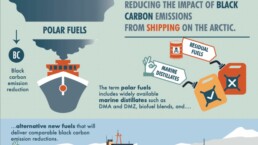
EU Arctic Strategy NGOs welcome EU ambition on on cutting shipping’s Arctic Black Carbon Emissions
Responding to today’s publication of the EU’s Arctic Strategy, which definitively states the EU’s intention to support International Maritime…

The final quarter of 2026 is expected to see softer bauxite flows
Chinese front-loading is expected to have run its course, pointing to softer bauxite flows in 2026 Q4. Global bauxite flows increased by 2.8% y/y…

DP World Foundation and Belewan new container terminal mark groundbreaking of AED 3.7 million school project in Indonesia
Classrooms of Hope initiative expands to Belawan, Medan with a new junior high school designed to provide modern learning facilities and greater…
Subscribe to our newsletter!
if you dont want to swim alone in the ocean of news, sign up for the newsletter, and you will receive daily all the important news of world shipping!
