SAP showcases the autonomous enterprise in caution
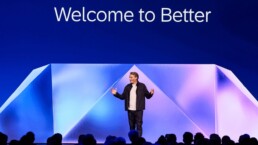

Just five months after promising customers that it would enable them to become AI-native autonomous enterprises, SAP has delivered: showcasing it with on-stage demos and live customers at SAP Connect in Las Vegas.
“It’s time to show you the Autonomous Enterprise in action underpinned by great customer stories,” SAP CEO Christian Klein told his keynote audience at the start of the event.
Klein reminded the audience that SAP introduced the Autonomous Enterprise at its SAP Sapphire conference in May 2026 as “the beginning of better.” Since then, he said, SAP has worked with hundreds of customers to implement Joule Work as the AI engagement layer for the Autonomous Enterprise.
A new UI for AI
“This month, we are rolling out Joule Work for all customers,” Klein said, describing it as a new UI for AI. He noted that for decades, users had to learn how SAP worked, but with Joule Work, SAP learns how people work. “From now on, the more than 400 million SAP users can talk in their own language to SAP, and Joule Work gets the job done.”

Klein explained that Joule Work is based on three pillars: conversations, where users ask questions and delegate tasks to agents; spaces, which display content, insights, and shared work; and Joule Studio, where customers extend Joule or build agents tailored to their own processes.
He called SAP’s deep business and data context its “secret sauce.” That context includes SAP Knowledge Graph, which maps more than 7 million data fields, 50 million tables, more than 50,000 public and private APIs, 400 data products, and extensive process knowledge. “That’s why Joule doesn’t guess,” he said.
SAP’s 110,000 employees are already using Joule to perform hundreds of thousands of tasks every day, he shared: “We are already seeing productivity gains in central functions like HR, finance, and procurement of over 20% and even bigger gains in more complex analytical and planning tasks.”
SAP Autonomous Suite
Klein then turned his attention to the SAP Autonomous Suite, the second layer in the Autonomous Enterprise. The suite initially covers five domains: finance, procurement, supply chain, human resources, and customer experience. SAP Autonomous Suite is designed for work where a good answer is insufficient and “the right answer” is required every time, he said.
“LLMs are probabilistic and only give you the most likely answer,” Klein said. He contrasted that probabilistic approach with SAP’s embedded agents. Because the agents operate within deterministic application workflows, they use the same data, follow the same rules, and leave the same audit trail as the applications themselves. Customers can choose the level of autonomy appropriate to each process, retaining human approval where risk is high and allowing greater automation for routine work.
Since SAP Sapphire, Klein said SAP has created more than 20 Joule Assistants and over 200 Joule Agents, and is aiming for more than 400 agents by year-end. “But the real story isn’t the number of agents. It’s the business outcomes they deliver,” he said.
SAP Business AI Platform
“These agents can only understand your business so well because of the SAP Business AI Platform,” Klein said. “The platform gives customers the best frontier model for every agentic use case, the deepest out-of-the-box business context and SAP-managed governance.”
Building on Klein’s remarks, Manoj Swaminathan, president and chief product officer of SAP Autonomous Suite, described the SAP Business AI Platform as the infrastructure that enables the Autonomous Enterprise. The platform is organized around three capabilities: building agents, contextualizing them with business data, and governing how they operate.
Swaminathan explained how the context layer makes agents more accurate. Joule Studio spans no-code and professional development and offers access to more than 70 models, a strategy he said reduces lock-in and controls token costs.
“Joule Studio is natively integrated with our context layer,” he said. “So, the agents you build are more accurate, faster to deploy, and more efficient to run. Our knowledge graph is the map with the processes, data flows, and business tools. The agents find the right processes among thousands and the right information among over 7 million feeds. SAP Business Data Cloud brings that understanding to all your data, one consistent view, the processes, policies, and logic to make it meaningful.”
Swaminathan said no AI can compensate for a broken data model. To help agents understand customers’ business rules, SAP Domain Models are trained on SAP’s code. For predictions, SAP provides two engines grounded in how a customer’s business operates: SAP-RPT, SAP’s model family trained on its business data, and the Prior Labs tabular AI mode
Jerseys from Jersey
During his section of the keynote, Jan Gilg, global president of Customer Success & Americas, used an imaginary startup – “Jerseys from Jersey” – to invite a handful of customers to the stage to answer his questions and validate aspects of SAP’s Autonomous Enterprise strategy.
The customers included Novartis, which is piloting Joule sourcing agents for bid analysis and negotiation support; Morgan Foods, which described a supply-chain transformation built on SAP S/4HANA and SAP Integrated Business Planning; Nestlé, which emphasized the importance of a unified digital core; and SAP customer and partner PwC, which spoke about the value of the Industry AI portfolio from SAP.
Summing up their comments, Gilg noted that the elements of the SAP Autonomous Suite “are more than a collection of functional components. It’s one system working together like connective tissue that provides connectivity, context, and control.”
Gilg also made several product announcements, including the launch of SAP Pay, an embedded payments service that can automatically execute and reconcile supplier payments once an invoice is approved. He also announced SAP’s planned acquisition of TechWolf, a Belgian workforce-intelligence startup designed to help close skills gaps.
Security and governance
In the closing section of the keynote, SAP Chief Security Officer Marielle Ehrmann focused on trust and governance. She noted that ransomware handovers that once took eight hours now take 22 seconds with AI, and while 83% of enterprises use AI daily, only 13% have real visibility into it.
“The biggest threat to companies is not malicious AI; it’s unmanaged AI,” Ehrmann said. To counter that threat, she said every agent should have a verified owner, a risk tier, and scoped access rights, supported by zero-trust checks on identity, purpose, and data sensitivity as well as human oversight.
She emphasized that SAP Business AI Platform incorporates regulatory and localization requirements, applies user authorizations, keeps customer data from being used to train foundation models, and supports three levels of oversight: human-in-the-loop approval, human-on-the-loop monitoring, and human-in-command override authority. “The more autonomously an agent operates, the tighter the oversight applied,” Ehrmann said, calling the principle “freedom within boundaries.”
A clear shift among customers
Wrapping up the keynote, Klein emphasized that trust is key to everything SAP does and has been for over 50 years. “We are delivering the most trusted and governed AI in the industry,” he said, but added, “AI also requires significant change management to ensure it delivers the desired outcomes for your business.”
That is where SAP’s business transformation solutions come in, he said. SAP Signavio measures process value before and after a change to help justify token spending; SAP LeanIX discovers and tracks AI agents; and SAP WalkMe supports user adoption and trust. Klein also highlighted an agent-led migration toolchain. Together, he said, these capabilities mean that the days of multi-million-dollar migration spend are gone
“This is no longer the start of something better. This is better,” Klein told the audience. He described a clear shift among SAP customers: “From manual steps to connected workflows, from reactive decision-making to predictive insights, from humans in spreadsheets to humans in and on the loop–all powered by our AI platform to keep AI accurate, governed, and extensible.”
And, most importantly, Klein said, “Its ready for you today… This is the Autonomous Enterprise.”



Related News.

ONE DAY LEFT until the CSN London Maritime Forum “Shipping: Predicting an Unpredictable Future” – REGISTER NOW
“Shipping: Predicting an Unpredictable Future” REGISTER HERE Date: 13 October 2026 Time: 09:00-15:00 Venue: Marriott Hotel Regent's Park Following…

Eliana Savvidi, General Counsel at InterMaritime Shipmanagement recognised in the Legal 500 GC Powerlist: Greece & Cyprus 2026 for the 6th Consecutive Year
Eliana Savvidi, General Counsel at InterMaritime Shipmanagement Ltd., has been recognised in the Legal 500 GC Powerlist: Greece & Cyprus 2026 –…

Singapore strengthens ship registry capabilities as Registry marks 60 Years
The Singapore Registry of Ships (SRS) is strengthening its capabilities to support a more digital and increasingly multi-fuel shipping sector, as it…
Wallenius Marine takes the next step for wind-powered shipping in new research project
Wind is once again set to become one of shipping’s most important sources of energy. To accelerate this development, Wallenius Marine, together with…
Developing autonomous systems to secure Norwegian ports
As the Norwegian Police Security Service (PST) urges coastal communities to remain vigilant for suspicious activity and raises concerns about…
Hormuz: Normalisation no longer needs to wait for a deal
Kpler is moving away from the assumption that reopening the Strait of Hormuz requires a comprehensive political agreement. Our base case will…

MarinePALS and SEAker to link cadet training records with verified sea service
MarinePALS and SEAker have signed a Philippine distribution agreement to connect digital cadet training records with verified sea service. The…

DP World reaffirms long term partnership with India as executive chairman H.E. Essa Kazim makes first visit
Executive Chairman H.E. Essa Kazim, Group CEO Mr. Yuvraj Narayan and members of the board engage with JNPA leadership to explore opportunities for…

Sarjak Container Lines opens Ahmedabad Office to strengthen its Western India operations
Sarjak Container Lines , part of the Saksham Group of Companies, has expanded its presence in Gujarat with the opening of a new office in Ahmedabad,…
SFL announces sale of four LR2 and three Suezmax tankers, and termination of charters
SFL Corporation announced that it has agreed to sell four 2014- and 2015-built LR2 product tankers and three 2019-built Suezmax tankers, currently on…
Subscribe to our newsletter!
if you dont want to swim alone in the ocean of news, sign up for the newsletter, and you will receive daily all the important news of world shipping!
