Marea Scale Models launches in the UK, using AI-assisted design to accelerate ship model production without compromising craftsmanship
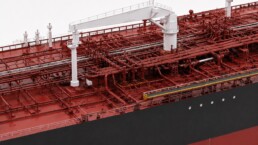

New UK-based maritime model-maker uses proprietary AI-assisted design process, Ai Refloat™, to tackle scaling challenges and reduce production time while preserving traditional detail and craftsmanship.
Marea Scale Models has launched in the UK, bringing its proprietary AI-assisted design process, Ai Refloat™, to the European maritime market. The process has been developed to produce highly detailed & accurate, immediately recognisable maritime scale models more efficiently while preserving the hand-finished detail clients expect.
Already used on the company’s first commercial commissions, Ai Refloat™ addresses a longstanding challenge in maritime model making: reproducing the distinctive features of a full-sized vessel at scale without lengthy manual redesign or unnecessary loss of detail.
Using Ai Refloat™, Marea delivered few commercial ship models to an international maritime client within two months. The commissions included container ships, a bulk carriers and crude oil tankers, each individually assembled, detailed, painted and finished by hand to ensure it remained immediately recognisable as the vessel it represented.
Producing an accurate model involves more than reducing a ship’s dimensions. Railings, deck equipment and structural features that are clearly visible on the vessel itself can become too fine, fragile or indistinct when reproduced in miniature.
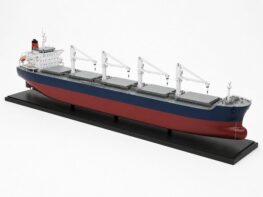
Model makers have traditionally addressed these problems through extensive manual design work, adapting individual features before manufacture begins and sometimes compromising detail where components become too fine or fragile at scale.
Ai Refloat™ enables Marea to create more accurate 3D models at the design stage, preserving vessel-specific features while reducing the manual reworking traditionally required before production.
Marea can reproduce details as fine as 30 microns (0.03mm), allowing features that might otherwise be simplified or lost at scale to be retained in the finished model. This greater precision also reduces the need to compromise vessel-specific details as dimensions get smaller.
“Speed on its own is not the point,” said Rezz Ghanty, Creative Director of Marea Scale Models.
“The purpose of the technology is to remove delays from the parts of the process where they add no value, without taking time away from the finish. The model still has to be completed by hand and judged by eye.
“I did not set out to establish another model-making company. I became interested in a problem the industry has lived with for generations: why should making a vessel smaller automatically mean accepting less of what makes it distinctive?
“Every model presents difficult choices. A railing becomes too fragile, a fitting loses definition, or an important structural feature begins to disappear. Ai Refloat™ allows us to address those problems before production begins rather than correcting them once the model reaches the bench.”
Technology supporting craftsmanship
Ai Refloat™ is used during the design stage. It does not manufacture, assemble or finish models autonomously.
Once the digital design is approved, Marea’s team assembles, paints, details, finishes and applies weathering by hand.
Marea’s Master Model Maker has more than 30 years of bench experience and oversees the surface treatment and final finish of each commission.
“Technology should not replace skilled people,” Ghanty said. “It should allow them to concentrate on the areas where judgement and experience matter most. Our model makers should be refining a finish, correcting a detail and bringing the character of a vessel into the model rather than repeatedly solving the same technical scaling problems.
“The aim is not to make the craft less important. It is to give our model makers more time to apply it.”
Initial focus on merchant shipping
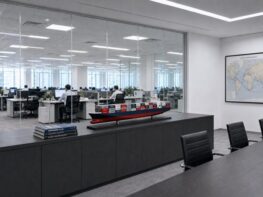
Marea’s initial work focuses on merchant shipping, including container ships, cargo vessels, bulk carriers, crude and product tankers, and VLCCs.
For technical vessels, accuracy can depend on details that are immediately recognisable to the people who operate them. On tankers and gas carriers, features such as manifold arrangements, deck equipment, pipework and containment systems can be critical to whether a model accurately represents the vessel.
Ghanty explores these challenges in greater detail in a recent article on tanker and gas carrier model making, available on the Marea Scale Models website.
Marea’s work is not limited to large display models. The company also produces smaller-format presentation models made from recycled marine waste material, in limited runs of 10 units, allowing shipping companies to mark newbuild deliveries, naming ceremonies, fleet milestones and other significant moments without committing to larger production quantities.
“For the client, the value lies in recognising the vessel immediately,” Ghanty said. “It is not enough for the model to represent the right class of ship. It has to capture the features that make that particular vessel distinct.
“That is where the details matter. They are what give the vessel its identity.”
“We believe maritime model making has reached a point where technology can support craftsmanship without diminishing it,” Ghanty added.
“Our aim is to give clients a more responsive production process while ensuring that every model remains recognisable as the vessel it was commissioned to represent.”



Related News.

Poland’s additional national requirements distort competition says Danish Shipping
Poland has introduced a national survey requirement for smaller foreign-flagged vessels operating in Polish waters. This creates significant…

Battery Vessels could help electrify most of Global Shipping Emissions
Battery-electric ships are economical only if the pack is cycled frequently, so they have been confined to short-sea, ferry and harbour vessels…

Mintra and Ledgid explore collaboration to connect Maritime digital identity, learning and workforce development
Mintra® and LEDGID are exploring opportunities to bring together complementary capabilities in digital learning, maritime training, professional…

World Shipping Council calls for global agreement on shipping emissions as industry investment surpasses $200 billion USD
The World Shipping Council (WSC) is calling on governments to agree on binding global greenhouse gas regulations for international shipping without…

What happened to the ITF whistleblower’s complaint?
In January 2026, a whistleblower complained that International Transport Workers’ Federation (ITF) General Secretary Stephen Cotton had manipulated…

Growing regulatory scrutiny puts seafarer wellbeing firmly on maritime safety agenda, VIKAND warns
Seafarer wellbeing is coming under greater regulatory scrutiny as international rules and guidance increasingly recognise crew health and welfare as…

Good Times Bad Times the Premium Stays with the Strait
In October, we wrote that if the transfer network off Oman kept pace, Gulf crude would carry China's refill and keep drawing tonnage east,…

Allied Weekly Market Review Week 47
Pls find below the Allied - Weekly Market Review - Week 47 ALLIED - Weekly Market Report- Week 47


Climate TRACE releases September 2026 Emissions Data
Climate TRACE reported that global greenhouse gas (GHG) emissions for the month of September 2026 totaled 4.7 billion tonnes CO₂e. This remains…
Subscribe to our newsletter!
if you dont want to swim alone in the ocean of news, sign up for the newsletter, and you will receive daily all the important news of world shipping!
