How the Shipping Sector must respond to UNEP’s Overshoot report


Responding to the publication of the UN Environment Programme report Limiting Overshoot: Navigating exceedance of 1.5°C and pathways towards return, which finds that as “global temperature rise gets set to cross 1.5°C, pushing climate risks and impacts to dangerous new heights, the world must strive to return to below 1.5°C as soon as possible and simultaneously reduce the vulnerability of societies, communities and economies to climate impacts… by acting now to get on an ‘overshoot, peak, and decline’ pathway”, Dr Sian Prior, Lead Advisor to the Clean Arctic Alliance said:
“The shipping sector and International Maritime Organization member states must seize the chance to play their part in halting the rise in global temperatures – getting to net zero emissions means ending the greenhouse gas emissions from burning fossil fuels to power ships – it’s clear the industry needs to rapidly decarbonise.”
“The UNEP Limiting Overshoot report highlights that the near-term necessary global response to quickly slow warming calls for deep emissions cuts, including to methane and other short-lived climate pollutants such as black carbon. These are urgent measures that can and must be taken rapidly to limit overshoot. Slashing shipping emissions of black carbon will have a near instantaneous impact not only on the Arctic, but on the regional and global climate by helping preserve sea ice.”
In response to the UNEP report, António Guterres, Secretary-General of the UN said, “we must make the overshoot as small and short as possible – limiting how high temperatures rise and how long they remain above 1.5°C. That demands an overshoot of ambition: Accelerating the phaseout of fossil fuels and the renewables revolution; Slashing methane pollution”.
About Black Carbon
Black Carbon emissions from ships is one of the longest, unresolved issues running at the IMO. A proposal on polar fuels, co-sponsored by Denmark, Germany, France and the Solomon Islands is currently on the table at the International Maritime Organization. A polar fuel standard would fill an important gap in the IMO’s current regulatory framework, by directly targeting black carbon emissions from ships. This polar fuel measure would require the use of cleaner distillate fuels such as marine gas oil (MGO) and new zero carbon fuels which are beginning to enter the market. It would prevent the use of ultra-low sulphur fuel oils (ULSFOs), or heavy residual fuel oils (HFOs) with scrubbers, which would still be able to be used under an ECA designation. The Clean Arctic Alliance is calling on Arctic and other states to support the measure.
“The Clean Arctic Alliance is calling on other Arctic countries to support Denmark in the creation of this new regulation requiring the use of cleaner maritime fuels in order to protect the Arctic”, added Prior. “It is important that the regulation is applied within the area used as the basis of the Arctic Monitoring and Assessment Programme (AMAP) by the Arctic Council – in order to maintain a level playing field across the whole Arctic since black carbon emissions can be transported hundreds to thousands of kilometres in the atmosphere and when emitted further south can still settle on to Arctic snow and ice.”
Black carbon is a short-lived climate pollutant, produced by the incomplete burning of fossil fuels, with an impact more than sixteen hundred times that of CO2 over a 20 year period. It makes up around 20% of international shipping’s climate impact. Not only does it contribute to warming while in the atmosphere, black carbon accelerates melting if deposited onto snow and ice – hence it has a disproportionate impact when released in and near to the Arctic.

The melting snow and ice exposes darker areas of land and water and these dark patches then absorb further heat from the sun and the reflective capacity of the planet’s polar ice caps is severely reduced. More heat in the polar systems – results in increased melting. This is the loss of the albedo effect.
Declines in sea ice extent and volume are leading to a burgeoning social and environmental crisis in the Arctic, while cascading changes are impacting global climate and ocean circulation. Scientists have high confidence that processes are nearing points beyond which rapid and irreversible changes on the scale of multiple human generations are possible. Scientists say it is now too late to save summer Arctic sea ice, and research has shown that “preparations need to be made for the increased extreme weather across the northern hemisphere that is likely to occur as a result.”
Black carbon also has a negative impact on human health including premature death and harmful effects on the cardiovascular system (heart, blood and blood vessels), and recent research has found black carbon particles in the body tissues of foetuses, following inhalation by pregnant mothers.
The need to reduce emissions of black carbon because of both the climate andhealth impacts has been long recognised. On land, considerable effort has been made to ban dirtier fuels in power stations, to install diesel particulate filters on land-based transport, and to improve the burning of dry wood – all to reduce emissions of black carbon and improve air quality. However, at sea the same efforts have not yet been made.
The report Black Carbon Emissions from Ships in the Arctic 2019 – 2024 provides a comprehensive analysis of tank-to-wake black carbon emissions from Arctic shipping using three geographic definitions: a latitudinal band north of 60oN (excluding the Baltic Sea and Gulf of Alaska), the Polar Code Arctic waters, as well as a broader ecological boundary defined by the Arctic Monitoring and Assessment Programme (AMAP). It estimates black carbon emissions for the years 2019, 2022 and 2024. The report examines the seasonal patterns of Arctic shipping routes, profiling vessel characteristics, fuel consumption by EEZ and vessel type as well as energy use. Historical estimates show how Arctic shipping activity and associated emissions have changed over time, while forecasts reveal how growth in emissions could affect the Arctic, and inform decisions on fuel choices, such as that proposed by PPR 13/6, operational practices and regulatory strategies.
- Black Carbon Emissions from Ships in the Arctic 2019 – 2024
- Black Carbon Emissions from Ships in the Arctic 2019 – 2024 – Greenland
- Summary of fuel use and black carbon emissions from shipping in Greenlandic waters
LNG and Methane
Burning LNG as fuel has a direct impact on the Arctic due to the heating effect of CO2 and methane. Although LNG results in lower emissions of CO2 than oil-based fuels, methane – a powerful greenhouse gas – is leaked into the atmosphere at every stage of the production lifecycle including when used by ships. This means that in most cases LNG powered ships are worse for the climate than conventionally fueled vessels – i.e. ships using oil or distillate fuels such as marine diesel.
Although LNG is often touted as a cleaner alternative to other fossil fuels, it is far from it. LNG is mainly methane, with a warming effect 80 times more powerful than CO2 (over a 20 year period), and is one of the biggest drivers of global heating today. Methane emissions are responsible for 25% of global heating and pack a stronger short-term punch than carbon dioxide. Methane emissions from LNG-fueled ships grew by 150% between 2012 to 2018 (Fourth IMO GHG Study).
When burned, LNG releases methane and other pollutants into the atmosphere. In addition, the process of extracting, processing, and transporting LNG results in methane leakage and can have significant environmental impacts, including habitat destruction and water pollution. In some cases LNG is produced through fracking, which has a wide variety of social, environmental and health impacts, especially in North America.
The health and environmental impacts from burning and using LNG are especially concerning in the Arctic, which is warming four times faster than anywhere else on Earth, and where the fragile ecosystem is already under threat from global heating and other human activities.



Related News.
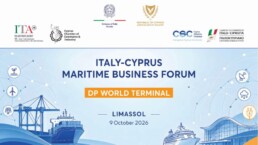
Italy and Cyprus chart a shared course for the blue economy: Italy-Cyprus Maritime Business Forum in Limassol on 9 October
Institutions and businesses from both countries will meet at the DP World Terminal for three sessions on sustainable ports, shipping and maritime…
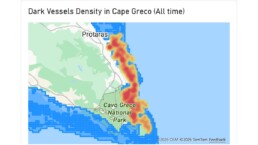
Satellite monitoring reveals recurring vessel activity across three of Cyprus’s marine protected areas
More than two thousand detections at Lady’s Mile, Latsi-Akamas and Cavo Greco within the months of June-August highlight distinct activity patterns…

Shipbuilding Labor talks hit fresh snags after tentative deal rejected
This year’s wage and collective bargaining negotiations in the shipbuilding industry are drifting back into uncertainty just as they appeared to be…

SEA.AI brings Machine Vision to multiple USV platforms at NATO’s REPMUS 2026
Maritime AI specialist demonstrated a shared perception layer across crewed and uncrewed vessels during the Portuguese Navy-led exercise, held in…
Clean tanker markets size up impact of potential US diesel export curbs
HIGHLIGHTS Trump floats diesel export ban amid soaring prices MR tanker demand could fall by 1.35 million b/d Russian diesel exports…
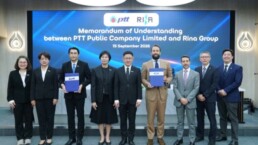
RINA and PTT sign strategic agreements to advance innovation and decarbonization across the energy and maritime sectors
RINA, the inspection, certification and engineering consulting multinational, announces the signing of two Memoranda of Understanding with PTT…

IMEC and The Hood launch Sisterhood Box to support the next generation of female seafarers
The International Maritime Employers’ Council and The Hood Platform have joined forces to launch the Sisterhood Box, a new initiative providing…

The Port Authority and Valencia City Council launch the countdown to the River Mouth Park
The Port Authority of Valencia (APV) and Valencia City Council have reached an agreement on the River Mouth Park setting out the commitments of both…

Newbuild order for two very large ammonia acriers in combination with long term time charters
SFL Corporation announced that it has agreed to build two 93,000 cbm Very Large Ammonia Carriers. The vessels will be able to carry a wide range of…

xclusiv S&P Report 05th October 2026
Pls find below the [xclusiv] S&P Report 05th October 2026 [xclusiv] 2026_10_05
Subscribe to our newsletter!
if you dont want to swim alone in the ocean of news, sign up for the newsletter, and you will receive daily all the important news of world shipping!
