New medical offline tool transforms Germany’s Maritime Medical Handbook into practical, immediate support for crews facing medical incidents onboard

Seafarers facing a medical emergency at sea can now access practical, step-by-step medical guidance directly from their mobile device through MediSea, an offline-capable tool designed to support crew members providing medical care when no doctor is onboard.
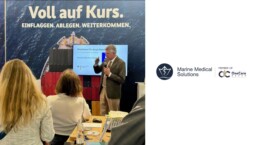
The initiative was presented at SMM in Hamburg on behalf of the German Federal Ministry of Transport and the Maritime Medical Service by Dr Jens Tülsner, CEO of Marine Medical Solutions, part of OneCare Group, and one of the authors behind the project. Part of the wider medical support system established by German-flagged vessels, the project highlights how digitalisation can help bridge the gap between established medical standards and the realities of delivering care onboard a vessel.
Medical emergencies at sea present a fundamentally different challenge to those ashore. There may be no ambulance, hospital or doctor immediately available, leaving a trained seafarer, who remains a medical layperson, responsible for providing initial care, Dr Tülsner said.
MediSea has been developed to put the guidance contained within the Maritime Medical Handbook, the standard reference for medical care aboard German-flagged seagoing vessels, directly into the hands of crews when and where they need it.
Dr Tülsner said: “A medical emergency does not necessarily happen when someone is standing next to the medical handbook. It can happen on deck, in the engine room or in a cabin in the middle of the night, and the person responding may be working under enormous pressure.
“The challenge is therefore not simply having good medical guidance available onboard, but making sure a seafarer can find, understand and act on that guidance quickly. MediSea takes established medical information and makes it accessible at the point where care is actually being delivered.”
Designed specifically for use in stressful situations, MediSea provides clear, visual and step-by-step information in both German and English. It works without an internet connection and incorporates search functionality alongside audio and video guidance, recognising that reading detailed instructions can become more difficult during an emergency.
Crucially, the tool is not intended to replace professional medical advice. Instead, it enables the person providing initial care to find relevant information, understand what action is required and respond appropriately before connecting with professional medical support when necessary.
Dr Tülsner added: “Digital tools should not create the impression that seafarers are expected to become doctors. Their purpose should be to support people who may suddenly find themselves responsible for another person’s health with the clearest possible information until professional medical advice can be accessed.
“Effective medical care at sea depends on the whole system working together, from crew training and the onboard medical chest to trusted guidance and access to Telemedical Maritime Assistance Services. Digitalisation gives us an opportunity to connect those elements more effectively.”
MediSea forms part of this wider medical support system, complementing medical training, onboard equipment, the Maritime Medical Handbook and professional telemedical advice. It is available free of charge, is offline-capable and provides content in English and German.



Related News.
European Shipowners call on MEPs to back Commission proposal to include two Indian yards in the EU ship recycling list
The Environment Committee of the European Parliament votes on 4 November on a motion for resolution objecting to the Commission’s proposal to add two…
Oversea signs commercial agreement with UECC following Successful Pilot
Following a successful pilot onboard Auto Advance, UECC has chosen to enter into a commercial agreement with Oversea. The pilot demonstrates how…

First NABEP Crude Cargo Under U.S. Agreement Arrives in Texas
Shipment of 1 million barrels arrived as NABEP production passes 223,000 barrels of oil equivalent per day. Two tankers carrying 1 million barrels of…
LNG carrier prices fall to $245 million, threatening Korean Shipbuilders’ Margins
Prices for high-value vessels, including liquefied natural gas carriers and ultra-large container ships, have begun to decline despite rising…
Vehicle Carrier Safety Forum publishes new Fire Drill Guidelines for vehicle carrying vessels
The Vehicle Carrier Safety Forum has published new Fire Drill Guidelines for Vehicle Carrying Vessels, providing vessel operators with a practical…
Is an Atlantic Basin crude glut on the cards?
Atlantic crude discounts fail to offset high freight to Asia, raising the risk of a regional glut as VLCC availability tightens. Freight…
The future of trade infrastructure in Europe is connectivity
One year after its inauguration, Rijeka Gateway offers a glimpse into the future of European trade. On 10 September last year,…
Allied – Weekly Market Review – Week 43
Please find below the Allied Weekly Report for Week 43 | 2026 ALLIED - Weekly Market Report- Week 43

Intermodal Report – Week 43 2026
Please find below the Intermodal market report for week 43 2026. Intermodal Report Week 43 2026
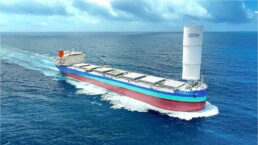
Wind Challenger-Equipped LNG Dual-Fueled Coal Carrier ‘MAIZURU KAZENOMAI’ Delivered
-While Supporting a Stable Energy Supply, Reducing Environmental Impact - Mitsui O.S.K. Lines announced the delivery and entry into service of an…
Subscribe to our newsletter!
if you dont want to swim alone in the ocean of news, sign up for the newsletter, and you will receive daily all the important news of world shipping!
