Germany set for major power-sector overhaul with EEG-2027 and capacity market, says GlobalData
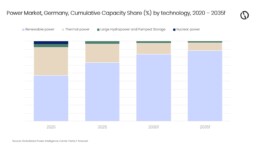

Germany is on the verge of transformative change in its electricity sector, driven by ambitious demand forecasts, sweeping policy reforms, and the accelerating retirement of coal and nuclear power. With increasing demand driven by the electrification of transport, heat, and industry, and renewable capacity surging past 73% by 2025, new policy tools are being put in place. The EEG-2027 reform and the introduction of a modern capacity market are expected to drive foundational changes in the country’s power transition, according to GlobalData, a leading intelligence and productivity platform.
GlobalData’s latest report, “Germany Power Market Trends and Analysis by Capacity, Generation, Transmission, Distribution, Regulations, Key Players and Forecast to 2035”, reveals that the country’s installed renewable capacity is set to rise markedly from approximately 73% in 2025 to nearly 88% by 2035, while generation from renewables is projected to approach 80% over the same timeframe. Offshore wind, solar PV, and onshore wind are expected to emerge as the primary growth engines, even as thermal generation recedes and gas-fired generation gains importance as a flexible backstop.
The capacity market, expected to be fully functional by the end of 2027, is designed to bring reliability and dispatchability into sharper focus. With coal set to be phased out by 2038 and nuclear power already offline as of 2023, Germany is increasingly dependent on this capacity market to avoid gaps in supply and ensure system adequacy. Concurrently, EEG-2027 represents a decisive shift in how renewable generation is remunerated. Fixed feed-in tariffs, once the backbone of Germany’s support for wind, solar, and biomass, are being phased out.
Attaurrahman Ojindaram Saibasan, Power Analyst at GlobalData, comments: “New projects will typically enter the market via competitive auctions or direct marketing arrangements, with smaller-scale installations receiving transitional support or bonuses during the switch. Larger projects must now optimize their generation, location, and operational profile, rather than merely depend on guaranteed compensation, thereby pushing the sector toward market-oriented performance.”
Germany’s electricity demand is also entering a period of rapid growth. Annual consumption, estimated at approximately 466TWh in 2025, is forecast to swell to over 576TWh by 2035, highlighting a critical need for transmission investment. Offshore wind farms in the North Sea and Baltic Sea will require reinforced high-voltage corridors to move power to southern industrial zones. Delays in building and permitting these transmission routes risk renewable output being wasted through curtailment or constrained supply.
Saibasan adds: “Alongside these macro shifts, market dynamics are growing more complex. Negative wholesale prices are already a concern in periods of high wind or solar output when demand is low and they create revenue volatility. As fixed support mechanisms fade, every project must factor in such risks, including exposure to price swings, grid access limitations, and project execution delays. Investors increasingly scrutinize auction rules, the transparency of capacity payments, regulatory certainty, and the timeline for permitting approvals.”
Investment activity is responding accordingly. Solar PV and offshore wind are capturing the largest share of capital flows, while hydrogen infrastructure, flexible thermal generation, storage technologies, and long-distance transmission are important components of the broader investment mix. Total power-sector investment is forecast to climb significantly through the late 2020s, supported by Germany’s legislative targets: achieving at least 80% renewable electricity by 2030, a coal exit by 2038, and climate neutrality by 2045.
Saibasan concludes: “Ultimately, the success of EEG-2027 and the capacity market reform will be judged by Germany’s ability to deliver across four interlinked dimensions: reliability, affordability, market-driven flexibility, and system integration. Regulatory clarity, investment certainty, and infrastructure delivery are critical. If executed in synchrony, these changes promise not only to accelerate the Energiewende but also to position Germany as a benchmark for energy transitions in large industrial economies, proving that moving beyond fixed subsidies toward performance-based, resilient systems is both possible and necessary.”
Source: GlobalData



Related News.

Italy and Cyprus chart a shared course for the blue economy: Italy-Cyprus Maritime Business Forum in Limassol on 9 October
Institutions and businesses from both countries will meet at the DP World Terminal for three sessions on sustainable ports, shipping and maritime…
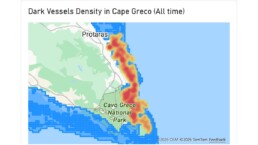
Satellite monitoring reveals recurring vessel activity across three of Cyprus’s marine protected areas
More than two thousand detections at Lady’s Mile, Latsi-Akamas and Cavo Greco within the months of June-August highlight distinct activity patterns…
Shipbuilding Labor talks hit fresh snags after tentative deal rejected
This year’s wage and collective bargaining negotiations in the shipbuilding industry are drifting back into uncertainty just as they appeared to be…

SEA.AI brings Machine Vision to multiple USV platforms at NATO’s REPMUS 2026
Maritime AI specialist demonstrated a shared perception layer across crewed and uncrewed vessels during the Portuguese Navy-led exercise, held in…

Clean tanker markets size up impact of potential US diesel export curbs
HIGHLIGHTS Trump floats diesel export ban amid soaring prices MR tanker demand could fall by 1.35 million b/d Russian diesel exports…
RINA and PTT sign strategic agreements to advance innovation and decarbonization across the energy and maritime sectors
RINA, the inspection, certification and engineering consulting multinational, announces the signing of two Memoranda of Understanding with PTT…
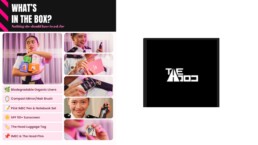
IMEC and The Hood launch Sisterhood Box to support the next generation of female seafarers
The International Maritime Employers’ Council and The Hood Platform have joined forces to launch the Sisterhood Box, a new initiative providing…

The Port Authority and Valencia City Council launch the countdown to the River Mouth Park
The Port Authority of Valencia (APV) and Valencia City Council have reached an agreement on the River Mouth Park setting out the commitments of both…
Newbuild order for two very large ammonia acriers in combination with long term time charters
SFL Corporation announced that it has agreed to build two 93,000 cbm Very Large Ammonia Carriers. The vessels will be able to carry a wide range of…

xclusiv S&P Report 05th October 2026
Pls find below the [xclusiv] S&P Report 05th October 2026 [xclusiv] 2026_10_05
Subscribe to our newsletter!
if you dont want to swim alone in the ocean of news, sign up for the newsletter, and you will receive daily all the important news of world shipping!
