Bencros Marine Fenders introduces independently verified CO₂ savings, certified for the buyer’s own footprint
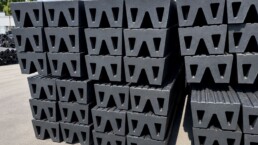

World’s first: Bencros issues Emission Reduction Certificates for fenders made from reprocessed rubber; 13,112 tonnes of CO₂e verified by Bureau Veritas over 2024–2025
Bencros Marine Fenders, the Slovakia-based manufacturer of rubber fenders for ports, tugs and workboats, today announced at the SMM Start-up Night in Hamburg that the CO₂ savings embedded in its fenders are now independently verified and can be transferred to its customers as certified emission reductions. The first certificates go live on 2 September 2026 on the registry of carbon standard Proba.
Bencros manufactures fenders from high quality rejected rubber compounds sourced from tyre factories and industrial rubber production, blended with rubber powder from grinded end-of-life tyres, i.e. high-quality rubber that would otherwise be incinerated or disposed of. In 2024 and 2025 the company reused 5,070 tons of rubber waste in this way. The resulting 13,112 tonnes of CO₂e emission reductions have been verified under Proba’s methodology, with Bureau Veritas acting as independent verification body.
2.6 tonnes of CO₂e traceable savings per ton
For fender buyers, the offer is deliberately simple: the fender itself is unchanged: same specification, same performance. However, each ton of Bencros fender now carries a certified saving of around 2.6 tons of CO₂e compared with a fender made from virgin rubber. Of this, 2.42 tons per ton can be booked directly into the buyer’s own greenhouse gas inventory (Scope 3, Category 1 – Purchased goods and services); the remaining 0.16 tons, from avoided incineration of the waste rubber, is reported separately as a climate contribution. Each certificate is registered under the buyer’s name on the Proba registry, is traceable to the underlying rubber, and can be claimed once.
“This is not an offset,” says Joost Komijn, founder and CEO of Bencros. “An offset is like planting a tree to offset your flight emissions. This saving happens inside the product you actually bought, in your own supply chain, and it comes straight off your own reported footprint. You buy the fender you were going to buy anyway – and with it, the CO₂ saving. It only exists because you bought the fender, and it is not for sale on any market.”
Certificates, pricing and processing
Certificates are priced at EUR 80 per ton of CO₂e saved. The proceeds fund the waste processing itself: the collection, recycling, the homogenisation and quality control that make recycled rubber suitable for fender production, and the independent verification behind each certificate. The first certificates have already been reserved by a Norwegian customer, which purchased fenders together with the associated CO₂ savings. Bencros expects the project to save close to 5,000 tons of CO₂ in 2026 alone.
The certification is not a change of course, but the latest step on the path Bencros has followed for many years: the company has long been actively working on sustainability solutions for the rubber fender industry, from building its production around recovered rubber feedstock to operating a take-back approach for its products. End-of-life fenders can be returned, shredded and blended back into new fender production, further closing the loop.
From 2026, Bencros also supplies reprocessed unvulcanized rubber compound to third-party rubber product manufacturers.



Related News.

Poland’s additional national requirements distort competition says Danish Shipping
Poland has introduced a national survey requirement for smaller foreign-flagged vessels operating in Polish waters. This creates significant…

Battery Vessels could help electrify most of Global Shipping Emissions
Battery-electric ships are economical only if the pack is cycled frequently, so they have been confined to short-sea, ferry and harbour vessels…

Mintra and Ledgid explore collaboration to connect Maritime digital identity, learning and workforce development
Mintra® and LEDGID are exploring opportunities to bring together complementary capabilities in digital learning, maritime training, professional…

World Shipping Council calls for global agreement on shipping emissions as industry investment surpasses $200 billion USD
The World Shipping Council (WSC) is calling on governments to agree on binding global greenhouse gas regulations for international shipping without…

What happened to the ITF whistleblower’s complaint?
In January 2026, a whistleblower complained that International Transport Workers’ Federation (ITF) General Secretary Stephen Cotton had manipulated…

Growing regulatory scrutiny puts seafarer wellbeing firmly on maritime safety agenda, VIKAND warns
Seafarer wellbeing is coming under greater regulatory scrutiny as international rules and guidance increasingly recognise crew health and welfare as…

Good Times Bad Times the Premium Stays with the Strait
In October, we wrote that if the transfer network off Oman kept pace, Gulf crude would carry China's refill and keep drawing tonnage east,…

Allied Weekly Market Review Week 47
Pls find below the Allied - Weekly Market Review - Week 47 ALLIED - Weekly Market Report- Week 47


Climate TRACE releases September 2026 Emissions Data
Climate TRACE reported that global greenhouse gas (GHG) emissions for the month of September 2026 totaled 4.7 billion tonnes CO₂e. This remains…
Subscribe to our newsletter!
if you dont want to swim alone in the ocean of news, sign up for the newsletter, and you will receive daily all the important news of world shipping!
