CMT unveils two new iron wear detectors for optimum oil condition monitoring
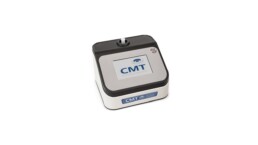

CM Technologies has introduced two new instruments for measuring ferrous metal debris in the drained cylinder oil of marine engines, extending the electromagnetic monitoring options available for detecting engine component wear onboard ship.
The FWDM Ferrous Wear Debris Meter Pro and next-generation Ferrous Particle Quantifier (FPQ) – officially unveiled today at the SMM 2026 exhibition – have been designed to provide more reliable insight into the condition of two-stroke marine engines.
In any engine, mechanical stress on piston rings, cylinder liners, bearings, gears, and more can result in ferrous debris in the cylinder oil. These metal particles accumulate over time and the amount detected in the sample reflects the overall health of engine.
“Compared to its predecessor, the new FWDM Pro delivers improved usability allowing engineers to carry out trend analysis directly from the device,” explained CMT Managing Director David Fuhlbrügge. “It is one of the most advanced test kits we have developed for onboard cylinder oil analysis.”
With magnetic sensors housed in a rugged casing along with an integrated battery, the new kit cuts measurement time without sacrificing accuracy. It can measure oils or grease, analysing iron content in parts per million (ppm) from a sample size of just 2ml.
The Ferrous Particle Quantifier (FPQ), meanwhile, is used to deliver reliable laboratory-grade results onboard by measuring magnetic mass providing a Particle Quantifier (PQ) index.
For laboratories and condition monitoring services, ferrous particle analysis is a key diagnostic parameter, used across marine, industrial, and heavy machinery applications to detect developing wear at an early stage, enabling scheduled intervention before minor issues escalate into serious failures.
However, not all ferrous particle tests are equal, Fuhlbrügge said. “Most conventional methods assess iron content by measuring the surface area of particles in the sample. The problem is that surface area does not scale linearly with particle size. A result, what appears within normal limits may be concealing a significant wear event,” he said.
Using advanced electromagnetic sensors, the FPQ includes a large touchscreen to help users through the measurement process, with in-device analysis and trend visualisation across the full range of sample volumes encountered in professional testing workflows. Results are delivered immediately and without the need for additional software.
Typically, the type of fuel the engine burns determines the type of iron test kit required.
For example, the use of HFO+scrubber tends to result in higher cold corrosion risk with chemical testing the most effective way of detecting corroded ferrous particles. VLSFO, on the other hand, results mostly in abrasive wear with non-corroded particles best detected by magnetic devices.
While CMT has chemical- and magnetic-based iron test kits for use with all fuel types, Fuhlbrügge said crews prefer the magnetic devices because they are easy to use and avoid chemical handling. However, these devices only test for abrasive iron and to get a full picture cold corrosion test can also be carried out.
“Operators burning mainly VLSFO tend to see less cold corrosion and can benefit from the simplicity and speed of the FDWM Pro and FPQ’s magnetic detection kits,” said Fuhlbrügge. “With immediate, cylinder-specific results available, onboard crews can implement more informed lubrication strategies, reduce the risk of unplanned downtime, and better protect critical engine components.”
Typical practice is to test cylinder drain oil every 1 to 3 months, with more frequent checks recommended after component changes or liner replacements.
Visitors to SMM booth 200 in Hall A3 will be able to learn more about the impact of ferrous particles on engine performance and operation costs, along with more information about CMT’s range of test kits and diesel performance analysers. SMM takes place at the Hamburg Messe und Congress centre in Hamburg, Germany, between 1 and 4 September.



Related News.

Poland’s additional national requirements distort competition says Danish Shipping
Poland has introduced a national survey requirement for smaller foreign-flagged vessels operating in Polish waters. This creates significant…

Battery Vessels could help electrify most of Global Shipping Emissions
Battery-electric ships are economical only if the pack is cycled frequently, so they have been confined to short-sea, ferry and harbour vessels…

Mintra and Ledgid explore collaboration to connect Maritime digital identity, learning and workforce development
Mintra® and LEDGID are exploring opportunities to bring together complementary capabilities in digital learning, maritime training, professional…

World Shipping Council calls for global agreement on shipping emissions as industry investment surpasses $200 billion USD
The World Shipping Council (WSC) is calling on governments to agree on binding global greenhouse gas regulations for international shipping without…

What happened to the ITF whistleblower’s complaint?
In January 2026, a whistleblower complained that International Transport Workers’ Federation (ITF) General Secretary Stephen Cotton had manipulated…

Growing regulatory scrutiny puts seafarer wellbeing firmly on maritime safety agenda, VIKAND warns
Seafarer wellbeing is coming under greater regulatory scrutiny as international rules and guidance increasingly recognise crew health and welfare as…

Good Times Bad Times the Premium Stays with the Strait
In October, we wrote that if the transfer network off Oman kept pace, Gulf crude would carry China's refill and keep drawing tonnage east,…

Allied Weekly Market Review Week 47
Pls find below the Allied - Weekly Market Review - Week 47 ALLIED - Weekly Market Report- Week 47


Climate TRACE releases September 2026 Emissions Data
Climate TRACE reported that global greenhouse gas (GHG) emissions for the month of September 2026 totaled 4.7 billion tonnes CO₂e. This remains…
Subscribe to our newsletter!
if you dont want to swim alone in the ocean of news, sign up for the newsletter, and you will receive daily all the important news of world shipping!
