UK extends emissions trading to shipping


Since 1 July 2026, ships operating on domestic UK voyages have been subject to the UK Emissions Trading Scheme (UK ETS). While many owners and charterers are already familiar with the EU ETS, the UK’s new regime adds another layer to an increasingly complex regulatory landscape.
ETS in a nutshell
An emissions trading scheme is a way of putting a price on emissions without prescribing exactly how to reduce them. The regulator sets a cap on the total greenhouse gases that can be emitted by the sectors in the scheme. That cap is divided into allowances, with one allowance broadly representing the right to emit one tonne of carbon dioxide equivalent. Operators then monitor their emissions and surrender enough allowances to match them. As the cap reduces over time, allowances become scarcer and the commercial incentive to reduce emissions becomes stronger. In simple terms, an ETS works like a gradually tightening budget: the industry may decide where best to spend it, but the overall budget is intended to shrink in line with climate targets.
For shipping, the best-known reference point is the EU Emissions Trading System. Launched in 2005, the EU ETS was the world’s first carbon market and remains one of the largest globally. Maritime transport has been included in the EU ETS since 2024, with obligations applying to emissions from voyages involving European Economic Area ports and emissions at berth within the EEA. The EU scheme is not an isolated example. Carbon pricing is spreading through a patchwork of regional and national initiatives. Around 40 emissions trading systems in force have been identified globally, including ETS-type schemes or mechanisms in jurisdictions as diverse as Australia, Mexico or Kazakhstan.
Domestic scope for now
The United Kingdom developed its own ETS after leaving the EU. Originally limited to power generation, aviation and energy-intensive industries the UK ETS was extended to maritime transport through the Greenhouse Gas Emissions Trading Scheme (Amendment) (Extension to Maritime Activities) Order 2026.
At this stage, the UK ETS applies to ships of 5,000 gross tonnage and above, regardless of flag, in respect of carbon dioxide, methane and nitrous oxide emissions from domestic UK voyages and in-port activities from 1 July 2026. A domestic voyage means a voyage beginning and ending at a UK port of call, including a voyage beginning and ending at the same UK port of call (with the exception that the UK has introduced a 50% surrender deduction for voyages between Great Britain and Northern Ireland). In-port activity includes emissions at berth and movements within a UK port of call. Assuming that a voyage itself is international and therefore not yet caught as a sea passage under the current UK ETS, emissions while the ship is in a UK port may still be within scope.
Offshore ships will be included from 1 January 2027, and certain exemptions will continue to apply, including for specified government activities, fish-catching and fish-processing ships, and Scottish ferry services as defined in the legislation.
Compliance requirements
The person responsible for compliance is the “maritime operator”. In practical terms, this will usually be the registered owner unless an ISM company has assumed responsibility under a written agreement and the required evidence has been provided to the regulator (the relevant regulator for operators registered outside the UK is the Environment Agency). Owners may want to verify what their ship management agreement provides.
The administrative cycle will be familiar to operators already dealing with EU ETS or MRV (“Monitoring, Reporting and Verification”) requirements, but it is not identical. The UK ETS has its own compliance infrastructure and timetable:
-
Maritime operators must set up a METS account, apply for an emissions monitoring plan within 42 days of their first UK ETS maritime activity, monitor greenhouse gas emissions in accordance with that plan, have the annual emissions report verified by a UKAS-accredited verifier, and submit the verified report. There are costs associated with these administrative steps.
-
Maritime operators must use UK Allowances (UKAs) and manage compliance through the UK ETS Registry, whereas EU ETS compliance is administered through the Union Registry and requires the surrender of EU Allowances (EUAs).
-
Under the UK ETS, emissions generated between, for instance, 1 January and 31 December 2028 must be verified and reported by 31 March 2029, and the corresponding allowances must then be surrendered shortly after, by 30 April 2029 (compared with 30 September under the EU ETS). Maritime operators will also benefit from a transitional arrangement under which allowances relating to both the shortened 2026 scheme year and the 2027 scheme year will be surrendered together by 30 April 2028.
Failure to surrender sufficient UK allowances by the 30 April deadline may result in penalties under Article 52 of the UK ETS Order. The penalty is not maritime-specific. It is calculated by reference to each allowance not surrendered, at £100 multiplied by the statutory inflation factor, and payment of the penalty does not remove the obligation to surrender the missing allowances. If the deficit remains, the regulator may issue a deficit notice and further penalties may follow (in the EU, a ship may be refused port entry or may even be detained).
Expansion likely ahead
Further change should be expected. The UK ETS Authority has consulted on extending the scheme from 2028 to cover 50% of emissions from international voyages to and from the UK. The proposal broadly reflects the EU ETS treatment of extra-EEA voyages and is consistent with ongoing UK-EU discussions aimed at ensuring the two systems develop in a coordinated manner.
The 5,000 GT threshold will also be reviewed in 2028 and potentially lowered to 400 GT in the future. These proposals are worth bearing in mind when negotiating longer-term fixtures and drafting clauses intended to survive regulatory change.
BIMCO clause available
BIMCO published an Emission Trading Scheme Allowances Clause for Time Charter Parties in 2022 which is not limited to the EU ETS. It defines an “Emission Scheme” as including the EU ETS and “any other similar systems” imposed by lawful authorities. BIMCO’s guidance states that the clause was designed to apply to future emissions schemes around the world, and would cover the UK ETS.
The clause is built on the principle that the party providing and paying for the fuel under a time charter should provide and pay for the corresponding emissions allowances, while owners monitor and report the emissions and provide the data and calculations needed for the transfer of allowances. In the absence of any bespoke provision, it offers an off-the-shelf solution for owners and charterers looking to allocate the costs of complying with the UK ETS.
Source: GARD



Related News.
Italy and Cyprus chart a shared course for the blue economy: Italy-Cyprus Maritime Business Forum in Limassol on 9 October
Institutions and businesses from both countries will meet at the DP World Terminal for three sessions on sustainable ports, shipping and maritime…
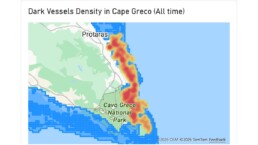
Satellite monitoring reveals recurring vessel activity across three of Cyprus’s marine protected areas
More than two thousand detections at Lady’s Mile, Latsi-Akamas and Cavo Greco within the months of June-August highlight distinct activity patterns…

Shipbuilding Labor talks hit fresh snags after tentative deal rejected
This year’s wage and collective bargaining negotiations in the shipbuilding industry are drifting back into uncertainty just as they appeared to be…
SEA.AI brings Machine Vision to multiple USV platforms at NATO’s REPMUS 2026
Maritime AI specialist demonstrated a shared perception layer across crewed and uncrewed vessels during the Portuguese Navy-led exercise, held in…

Clean tanker markets size up impact of potential US diesel export curbs
HIGHLIGHTS Trump floats diesel export ban amid soaring prices MR tanker demand could fall by 1.35 million b/d Russian diesel exports…
RINA and PTT sign strategic agreements to advance innovation and decarbonization across the energy and maritime sectors
RINA, the inspection, certification and engineering consulting multinational, announces the signing of two Memoranda of Understanding with PTT…

IMEC and The Hood launch Sisterhood Box to support the next generation of female seafarers
The International Maritime Employers’ Council and The Hood Platform have joined forces to launch the Sisterhood Box, a new initiative providing…

The Port Authority and Valencia City Council launch the countdown to the River Mouth Park
The Port Authority of Valencia (APV) and Valencia City Council have reached an agreement on the River Mouth Park setting out the commitments of both…
Newbuild order for two very large ammonia acriers in combination with long term time charters
SFL Corporation announced that it has agreed to build two 93,000 cbm Very Large Ammonia Carriers. The vessels will be able to carry a wide range of…

xclusiv S&P Report 05th October 2026
Pls find below the [xclusiv] S&P Report 05th October 2026 [xclusiv] 2026_10_05
Subscribe to our newsletter!
if you dont want to swim alone in the ocean of news, sign up for the newsletter, and you will receive daily all the important news of world shipping!
