From concern to control – DNV presents resilience framework to strengthen critical energy infrastructure as threats intensify
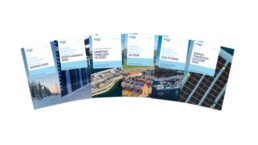

DNV called on the energy sector to treat infrastructure resilience as a strategic and societal necessity in the face of ever-changing and increasingly complex threats, unveiling its new ‘From concern to control’ position paper at the ONS conference.
The independent energy expert and assurance provider’s paper introduces a new Resilience Framework and highlights the mindset shift needed to move resilience from a compliance exercise to a strategic priority. Drawing on DNV’s deep expertise in risk management in the energy sector, the framework provides a systems-wide, risk-based blueprint for understanding vulnerabilities, prioritizing action and strengthening preparedness and recovery. At its launch, DNV stressed that no organization can solve these challenges on its own as risks can cascade through infrastructure, supply chains, economies and societies.
Strikingly, recent DNV Industry Insights data surveying more than 1,000 senior energy professionals found that more than half said their organizations lacked a clearly defined and regularly updated resilience strategy. The paper emphasizes that the threat landscape facing the sector is fundamentally different from a decade ago, as geopolitical tensions, climate change, growing digitalization, AI and supply chain dependencies have created new and interconnected risks.
Critical energy infrastructure now rarely faces one singular threat in isolation. Instead, vulnerabilities in one area can cascade into physical or technical failures spanning an entire value chain. These threats can combine to impact the supply and cost of energy, and will only be intensified without a collaborative, systems-wide approach to resilience.
The framework sets out a four-step cycle: analyze risks, prioritize investments, implement measures and check and validate. It applies this continuous cycle across five dimensions – organization, people, physical assets, IT and cyber, and supply chain – and is intended to help stakeholders embed a resilience mindset into core investment planning and to align on risk assessment, prepare for shocks, defend systems in real time, and recover safely after an incident.
Ditlev Engel, CEO at DNV Energy Systems, said: “As a sector, we must treat resilience as fundamental to everyday operations. Quite simply, it is a strategic and societal necessity as it protects our ability to provide energy that is reliable, affordable and sustainable. Without integrating security into core investment planning, organizations run the risk of suffering attacks that could impact the grid and other vital infrastructure and disrupt economic and societal stability.
“What we want to do is turn vulnerabilities into areas in which companies can have real confidence. Whether it is the public or private sectors, resilience must be embedded in every step of the energy value chain, or we risk accidents or attacks that could have serious consequences.”
The report details several examples of attacks by malicious actors on infrastructure, including opportunistic cyber-attacks, damaging of subsea gas pipelines and LNG terminals and tankers being targeted by missiles. Evolving policy and extreme weather events have also had indirect impact on the reliability of energy systems.
Derek Riezebos,defence & security manager for Northern Europe, Energy Systems at DNV, said: “Risk and threats are constants in the energy sector, and few organizations can have complete visibility of their vulnerabilities. But understanding critical dependencies, reducing single points of failure and maintaining response, restart and recovery plans can help organizations move from concern to control.
Recent prolonged blackouts have demonstrated the cascading impact on transport, communications, hospitals and other critical services. Around the world, businesses and governments have a responsibility to ensure that energy systems are resilient and prepared for the worst. Threats to infrastructure are evolving faster than many organizations can adapt, making it increasingly important to ensure safeguards are at a sufficient standard to limit their impact.”
The framework reflects DNV’s position as a global independent assurance and risk management provider, combining international expertise with local presence and market-specific knowledge to support governments, defence organizations, utilities, and infrastructure owners as they build resilience into daily operations.



Related News.
Italy and Cyprus chart a shared course for the blue economy: Italy-Cyprus Maritime Business Forum in Limassol on 9 October
Institutions and businesses from both countries will meet at the DP World Terminal for three sessions on sustainable ports, shipping and maritime…
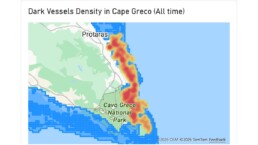
Satellite monitoring reveals recurring vessel activity across three of Cyprus’s marine protected areas
More than two thousand detections at Lady’s Mile, Latsi-Akamas and Cavo Greco within the months of June-August highlight distinct activity patterns…

Shipbuilding Labor talks hit fresh snags after tentative deal rejected
This year’s wage and collective bargaining negotiations in the shipbuilding industry are drifting back into uncertainty just as they appeared to be…
SEA.AI brings Machine Vision to multiple USV platforms at NATO’s REPMUS 2026
Maritime AI specialist demonstrated a shared perception layer across crewed and uncrewed vessels during the Portuguese Navy-led exercise, held in…
Clean tanker markets size up impact of potential US diesel export curbs
HIGHLIGHTS Trump floats diesel export ban amid soaring prices MR tanker demand could fall by 1.35 million b/d Russian diesel exports…
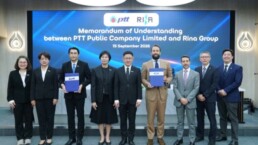
RINA and PTT sign strategic agreements to advance innovation and decarbonization across the energy and maritime sectors
RINA, the inspection, certification and engineering consulting multinational, announces the signing of two Memoranda of Understanding with PTT…

IMEC and The Hood launch Sisterhood Box to support the next generation of female seafarers
The International Maritime Employers’ Council and The Hood Platform have joined forces to launch the Sisterhood Box, a new initiative providing…
The Port Authority and Valencia City Council launch the countdown to the River Mouth Park
The Port Authority of Valencia (APV) and Valencia City Council have reached an agreement on the River Mouth Park setting out the commitments of both…
Newbuild order for two very large ammonia acriers in combination with long term time charters
SFL Corporation announced that it has agreed to build two 93,000 cbm Very Large Ammonia Carriers. The vessels will be able to carry a wide range of…

xclusiv S&P Report 05th October 2026
Pls find below the [xclusiv] S&P Report 05th October 2026 [xclusiv] 2026_10_05
Subscribe to our newsletter!
if you dont want to swim alone in the ocean of news, sign up for the newsletter, and you will receive daily all the important news of world shipping!
