VIKAND Clinical Data reinforces Gard Findings on Maritime’s highest-cost crew health risk


Cardiovascular disease may account for a relatively small proportion of onboard medical consultations, but serious cases can have a disproportionate clinical and operational impact, according to VIKAND, whose commercial shipping data reinforces findings from the recently published 2026 Gard Crew Claims Report.
Gard’s report, based on around 3,000 P&I crew claims, found that illness accounts for around 60% of all crew claims, with cardiovascular disease responsible for both the highest illness costs and the greatest number of fatalities, highlighting a significant crew welfare and operational risk.
Analysis of commercial shipping clinical encounters through OneHealth by VIKAND from 2024-2026 found that cardiovascular conditions represented around 5% of consultations. By comparison, musculoskeletal conditions accounted for approximately 13%, dermatology 11%, injuries 10%, gastrointestinal conditions 9% and infectious diseases 8%.
Despite their lower frequency, cardiovascular illnesses accounted for approximately 10% of all disembarkations, making them the fourth most common reason for crew disembarkation over the same period.
VIKAND’s data points to a growing burden of chronic cardiovascular risk factors among crew, particularly older seafarers, rather than clear evidence that cardiovascular emergencies themselves are becoming more frequent. Hypertension, obesity, diabetes and other chronic conditions increase the likelihood of future cardiovascular events if not identified and managed early.
“Gard’s findings reflect exactly what our clinicians are seeing across the global fleet,” said Ronald Spithout, Managing Director, OneHealth by VIKAND. “The maritime industry has become very good at responding to emergencies but the greater opportunity now is preventing them. If we can identify and manage hypertension before it becomes chest pain, and chest pain before it becomes a medical evacuation, we improve outcomes for crew while reducing operational disruption.”
Hypertension remains one of the most significant modifiable cardiovascular risk factors encountered by VIKAND clinicians, alongside obesity, diabetes, tobacco use, poor diet and physical inactivity. Fatigue, shift work, disrupted sleep, prolonged contracts and psychosocial stress can further contribute to risk.
VIKAND believes the greatest opportunity for shipowners lies in proactive chronic disease management, supported by comprehensive pre-employment and pre-embarkation health assessments.
Careful review of PEME results can identify cardiovascular risk factors before deployment, while routine blood pressure monitoring, targeted follow-up, medication adherence and onboard health and wellness initiatives can help prevent deterioration. Encouraging honest disclosure of well-controlled chronic conditions and ensuring crew carry sufficient maintenance medication for potential voyage extensions can further reduce risk.
One recent case demonstrates the value of this approach. A 60-year-old crew member developed chest pain onboard a vessel in a remote region where immediate evacuation was not possible. Working with the ship’s command team, VIKAND clinicians established twice-daily monitoring of symptoms, blood pressure and ECG findings, while initiating anti-anginal therapy and adjusting treatment as his condition evolved.
Despite recurring episodes over nearly two weeks, the crew member remained clinically stable and was safely disembarked for specialist assessment at the vessel’s scheduled port, avoiding an emergency diversion.
“This outcome demonstrated the value of structured protocols, continuous monitoring and close collaboration between ship and shore,” said Mr Spithout. “Telehealth isn’t designed to replace hospitals, it’s about bringing expert clinical judgement to the places where hospitals can’t reach.”
With cardiovascular disease identified as the highest-cost illness category in the Gard report, VIKAND is encouraging shipowners to view cardiovascular health as part of operational resilience. Proactive programmes can also generate measurable data on cardiovascular risk, blood pressure control, teleconsultations, disembarkations and repatriations, helping shipowners assess the impact of preventive interventions.
“Every avoided escalation means less disruption to operations, lower healthcare costs and, most importantly, a better outcome for the individual,” concluded Mr Spithout. “The strongest safety cultures don’t wait for a crisis, they identify health risks early, encourage crews to speak up and give people access to the support they need before a medical issue becomes an emergency.”



Related News.
Italy and Cyprus chart a shared course for the blue economy: Italy-Cyprus Maritime Business Forum in Limassol on 9 October
Institutions and businesses from both countries will meet at the DP World Terminal for three sessions on sustainable ports, shipping and maritime…
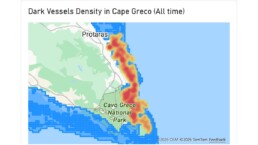
Satellite monitoring reveals recurring vessel activity across three of Cyprus’s marine protected areas
More than two thousand detections at Lady’s Mile, Latsi-Akamas and Cavo Greco within the months of June-August highlight distinct activity patterns…

Shipbuilding Labor talks hit fresh snags after tentative deal rejected
This year’s wage and collective bargaining negotiations in the shipbuilding industry are drifting back into uncertainty just as they appeared to be…

SEA.AI brings Machine Vision to multiple USV platforms at NATO’s REPMUS 2026
Maritime AI specialist demonstrated a shared perception layer across crewed and uncrewed vessels during the Portuguese Navy-led exercise, held in…
Clean tanker markets size up impact of potential US diesel export curbs
HIGHLIGHTS Trump floats diesel export ban amid soaring prices MR tanker demand could fall by 1.35 million b/d Russian diesel exports…
RINA and PTT sign strategic agreements to advance innovation and decarbonization across the energy and maritime sectors
RINA, the inspection, certification and engineering consulting multinational, announces the signing of two Memoranda of Understanding with PTT…

IMEC and The Hood launch Sisterhood Box to support the next generation of female seafarers
The International Maritime Employers’ Council and The Hood Platform have joined forces to launch the Sisterhood Box, a new initiative providing…

The Port Authority and Valencia City Council launch the countdown to the River Mouth Park
The Port Authority of Valencia (APV) and Valencia City Council have reached an agreement on the River Mouth Park setting out the commitments of both…

Newbuild order for two very large ammonia acriers in combination with long term time charters
SFL Corporation announced that it has agreed to build two 93,000 cbm Very Large Ammonia Carriers. The vessels will be able to carry a wide range of…
xclusiv S&P Report 05th October 2026
Pls find below the [xclusiv] S&P Report 05th October 2026 [xclusiv] 2026_10_05
Subscribe to our newsletter!
if you dont want to swim alone in the ocean of news, sign up for the newsletter, and you will receive daily all the important news of world shipping!
