Seafarer happiness falls as “acute shock” hardens into “chronic strain”
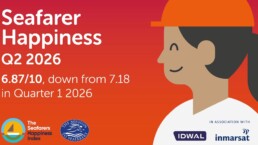

The Mission to Seafarers Q2 2026 Seafarers Happiness Index falls to 6.87/10 as everyday pressures wear down a resilient but stretched global workforce.
Overall seafarer happiness has fallen to 6.87 out of 10 in the second quarter of 2026, down from 7.18 in Q1, according to the latest Seafarers Happiness Index (SHI) published today by The Mission to Seafarers.
The decline confirms that the hoped-for recovery after a challenging start to the year has failed to take hold, marking what the report calls a transition “from acute shock to chronic strain.”
Whilst the first quarter of 2026 was defined by the sudden shock of conflict in the Persian Gulf, the second quarter shows those pressures settling into the everyday baseline of life at sea. It is the daily norms – i.e. limited shore leave, excessive workloads and stagnant real-wage buying power – that are steadily eroding crew morale.
Sadly, shore leave scores fell to 5.72, the lowest by a significant margin, with time ashore increasingly sacrificed to intense schedules, short port stays, and restrictions on port and terminal access. Workload management scored 6.20, amid a relentless cycle of six-on, six-off watchkeeping, rapid turnarounds, heavy paperwork and inspections, with rest hours, most alarmingly, recorded “just for authorities and filing.”
Nevertheless, the report firmly rejects a narrative of pure negativity. The strongest categories were crew interactions at 7.49 and connectivity at 7.46, showing that seafarers continue to draw strength from crew relationships and from staying connected with family. Where companies get it right, the best operators respect sign-off dates, ensure timely reliefs, offer merit-based promotions and maintain modern tonnage. As one seafarer noted, “I am heard, my company looks after the crew.”
The report also frames a deepening recruitment and retention challenge, with pay increasingly judged against the total life package available ashore rather than historical maritime wages. One respondent warned that young crew see “no advantages remaining compared with a shore job.”
Demographic data shows where pressure is greatest. The average score from female respondents was 6.06, against 7.13 for men; by region and vessel type, the Middle East (4.94) and container ships (5.85) fell well below the average; and mid-career professionals aged 35 to 55 reported the lowest morale of any age group.
Ben Bailey, Director of Programme, The Mission to Seafarers, said: “This quarter’s data should trouble the entire industry. Seafarers are extraordinarily resilient, but we must not mistake resilience for unlimited capacity; endurance is not the same as wellbeing. The fundamentals that crews are asking for are strikingly basic: enough rest to recover, connectivity to sustain family life, quality food, and pay that justifies the sacrifice. The brightest results prove happiness at sea is achievable.”
Gert-Jan Panken, GM and Vice President of Inmarsat Maritime commented: “This report is an important reminder that seafarer wellbeing is shaped by the choices we make as an industry every day. While the overall findings show there is still much work to do, they also demonstrate that when companies invest in their people, through reliable connectivity, supportive leadership and an onboard environment where crews feel safe and valued, the impact is real. Technology alone is never the answer, but when combined with a genuine commitment to crew welfare and safety, it can help create a more connected, resilient and rewarding experience at sea. As our industry continues to evolve, we must ensure that progress is measured not only by operational performance, but by the safety and wellbeing of the people who keep global trade moving.”
Thom Herbert, Idwal’s Head of Global Strategic Accounts and part of the seafarer advocacy team, added: “Idwal is proud to support the Seafarers’ Happiness Index because it brings the realities of life at sea into clear view. Many of our technical team are recent former seafarers, while our surveyors spend every day working alongside crews on board, so we recognise both the resilience described in this report and the pressures behind it. Strong leadership, respectful relationships and meaningful support from shore make a tangible difference. The industry must ensure that seafarers’ professionalism and commitment are valued, not simply relied upon.”
The SHI continues its collaboration with Idwal, the global provider of independent vessel inspections, whose surveyors attend fifteen vessels a day. Reading seafarers’ feedback alongside objective vessel-condition data aims to eliminate welfare blind spots and target social-impact investment more precisely.
To read the full findings from the Seafarers Happiness Index Q2 2026 report, click here.



Related News.
Italy and Cyprus chart a shared course for the blue economy: Italy-Cyprus Maritime Business Forum in Limassol on 9 October
Institutions and businesses from both countries will meet at the DP World Terminal for three sessions on sustainable ports, shipping and maritime…
Satellite monitoring reveals recurring vessel activity across three of Cyprus’s marine protected areas
More than two thousand detections at Lady’s Mile, Latsi-Akamas and Cavo Greco within the months of June-August highlight distinct activity patterns…

Shipbuilding Labor talks hit fresh snags after tentative deal rejected
This year’s wage and collective bargaining negotiations in the shipbuilding industry are drifting back into uncertainty just as they appeared to be…
SEA.AI brings Machine Vision to multiple USV platforms at NATO’s REPMUS 2026
Maritime AI specialist demonstrated a shared perception layer across crewed and uncrewed vessels during the Portuguese Navy-led exercise, held in…
Clean tanker markets size up impact of potential US diesel export curbs
HIGHLIGHTS Trump floats diesel export ban amid soaring prices MR tanker demand could fall by 1.35 million b/d Russian diesel exports…
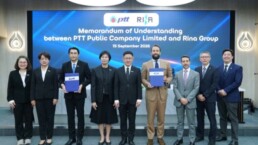
RINA and PTT sign strategic agreements to advance innovation and decarbonization across the energy and maritime sectors
RINA, the inspection, certification and engineering consulting multinational, announces the signing of two Memoranda of Understanding with PTT…

IMEC and The Hood launch Sisterhood Box to support the next generation of female seafarers
The International Maritime Employers’ Council and The Hood Platform have joined forces to launch the Sisterhood Box, a new initiative providing…

The Port Authority and Valencia City Council launch the countdown to the River Mouth Park
The Port Authority of Valencia (APV) and Valencia City Council have reached an agreement on the River Mouth Park setting out the commitments of both…

Newbuild order for two very large ammonia acriers in combination with long term time charters
SFL Corporation announced that it has agreed to build two 93,000 cbm Very Large Ammonia Carriers. The vessels will be able to carry a wide range of…

xclusiv S&P Report 05th October 2026
Pls find below the [xclusiv] S&P Report 05th October 2026 [xclusiv] 2026_10_05
Subscribe to our newsletter!
if you dont want to swim alone in the ocean of news, sign up for the newsletter, and you will receive daily all the important news of world shipping!
