U-Freight sees traders adapt to new EU Customs charges
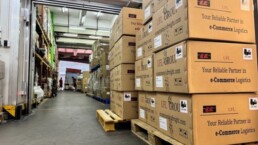

The U-Freight Group has noticed that EU importers and international e-commerce businesses are adapting their shipping processes for cross-border trade following the European Union’s abolition of the €150 duty-free threshold for low-value consignments, which came into effect on 1 July 2026.
Under the new regulations, shipments valued at €150 or less entering the European Union are now subject to a temporary customs charge of €3 per commodity code contained within each parcel. The measure replaces the previous duty-free exemption for low-value goods and is expected to remain in force until at least 1 July 2028 as part of the EU’s wider customs reform programme.
The changes represent one of the most significant developments in European e-commerce logistics in recent years and are expected to have a substantial impact on businesses shipping large volumes of direct-to-consumer (B2C) parcels into the EU.
“The removal of the €150 de minimis threshold marks a major turning point for cross-border e-commerce,” said Simon Wong, Chief Executive Officer of U-Freight Group. “Business models built around shipping individual low-value parcels directly into Europe now face higher costs, increased customs complexity and the potential for longer clearance times. If they haven’t already, companies need to review their supply chain strategies now rather than wait for costs to escalate.”
The new customs regime forms part of the EU’s efforts to modernise customs procedures, create a more level playing field between parcel and bulk imports, and discourage the undervaluation of goods previously used to benefit from duty exemptions.
Industry trends already indicate that supply chains are evolving in response. Across several key European markets, including Spain, France and Poland, locally fulfilled e-commerce orders have now overtaken direct cross-border shipments, reflecting a growing preference for forward-deployed inventory and regional distribution.
U-Freight believes that establishing inventory within Europe offers businesses a practical long-term solution to the new regulatory environment. By positioning stock closer to customers, companies can minimise border-related costs, improve delivery performance and strengthen supply chain resilience.
“Forward positioning inventory within Europe is becoming a competitive necessity rather than simply an operational option,” added Wong. “Regional fulfilment enables businesses to improve delivery speeds, reduce customs-related uncertainty and maintain a seamless customer experience while remaining fully compliant with the latest EU requirements.”
U-Freight offers integrated supply chain solutions designed to help businesses adapt to changing international trade regulations. Its services include international freight forwarding, customs brokerage, warehousing, inventory management and European distribution, providing customers with end-to-end support as they navigate the evolving customs landscape.
U-Freight is encouraging businesses exporting to the EU to review their shipping profiles, evaluate product classifications, assess the financial impact of the new customs charges and consider whether regional fulfilment strategies could improve efficiency and reduce overall logistics costs.
As regulatory changes continue to reshape global trade, U-Freight remains committed to helping customers build agile, compliant and cost-effective supply chains that support sustainable international growth.



Related News.

European Shipowners call on MEPs to back Commission proposal to include two Indian yards in the EU ship recycling list
The Environment Committee of the European Parliament votes on 4 November on a motion for resolution objecting to the Commission’s proposal to add two…

Oversea signs commercial agreement with UECC following Successful Pilot
Following a successful pilot onboard Auto Advance, UECC has chosen to enter into a commercial agreement with Oversea. The pilot demonstrates how…

First NABEP Crude Cargo Under U.S. Agreement Arrives in Texas
Shipment of 1 million barrels arrived as NABEP production passes 223,000 barrels of oil equivalent per day. Two tankers carrying 1 million barrels of…

LNG carrier prices fall to $245 million, threatening Korean Shipbuilders’ Margins
Prices for high-value vessels, including liquefied natural gas carriers and ultra-large container ships, have begun to decline despite rising…
Vehicle Carrier Safety Forum publishes new Fire Drill Guidelines for vehicle carrying vessels
The Vehicle Carrier Safety Forum has published new Fire Drill Guidelines for Vehicle Carrying Vessels, providing vessel operators with a practical…
Is an Atlantic Basin crude glut on the cards?
Atlantic crude discounts fail to offset high freight to Asia, raising the risk of a regional glut as VLCC availability tightens. Freight…
The future of trade infrastructure in Europe is connectivity
One year after its inauguration, Rijeka Gateway offers a glimpse into the future of European trade. On 10 September last year,…

Allied – Weekly Market Review – Week 43
Please find below the Allied Weekly Report for Week 43 | 2026 ALLIED - Weekly Market Report- Week 43

Intermodal Report – Week 43 2026
Please find below the Intermodal market report for week 43 2026. Intermodal Report Week 43 2026
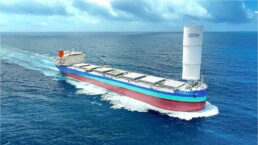
Wind Challenger-Equipped LNG Dual-Fueled Coal Carrier ‘MAIZURU KAZENOMAI’ Delivered
-While Supporting a Stable Energy Supply, Reducing Environmental Impact - Mitsui O.S.K. Lines announced the delivery and entry into service of an…
Subscribe to our newsletter!
if you dont want to swim alone in the ocean of news, sign up for the newsletter, and you will receive daily all the important news of world shipping!
