Hormuz, Malacca and other key straits spawn tensions throughout history
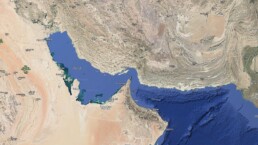

As Iran tightens its grip on the Strait of Hormuz, its Yemeni allies, the Houthi rebels, want to disrupt shipping in the Red Sea to and from Saudi ports and could possibly disturb traffic in another strait, Bab el-Mandeb, which ships must cross to reach the Suez Canal, experts say.
These two passages, which lock access to the Gulf and to the Red Sea, are among the dozen or so straits considered vital to international trade.
Oil and gas tankers, bulk carriers and container ships loaded with raw materials and goods pass through these narrow natural corridors.
The United Nations Convention on the Law of the Sea signed in Montego Bay on December 10, 1982 — a kind of constitution for the oceans — “formalises the fact that a strait is a natural feature that must not be subject to tolls” and where “the principle of free navigation” is guaranteed, Sylvain Domergue, a lecturer at Sciences Po Bordeaux and author of Geopolitics of Maritime Spaces told AFP.
By contrast, canals such as Panama or Suez, which are man‑made waterways, may be subject to tolls levied by the states that control them.
In Hormuz, Iran, which “has not ratified the Montego Bay Convention, had until now respected it under customary law,” Domergue said.
Portugal, whose navigators were the first to open the sea route to the Indies, tried as early as 1507 to establish control over Hormuz to secure a monopoly on access to spices and the riches of the Orient, he said.
‘The sea belongs to none’
But after a famous controversy, the Mare Liberum thesis of Dutch jurist and philosopher Hugo Grotius prevailed in the early 17th century: straits were then seen as essential to long‑distance international trade because “the sea belongs to no one”.
“To guarantee freedom of navigation, one had to start by guaranteeing freedom of passage through the straits,” Domergue said.
The Netherlands adopted this doctrine and defended freedom of the seas, followed by Britain and later by the United States which to this day respects “almost all of the Montego Bay Convention,” despite not having ratified it either, he said.
Yet the principle of free navigation “did not prevent the British from guiding their colonisation in part according to the geography of straits”, Domergue said.
Britain’s key military footholds were established along strategic waterways. Its great colonial naval base in Asia would be in Singapore, allowing control of Malacca, through which the largest share of global maritime traffic from China now passes.
London would also establish bases on the island of Socotra, near Bab el‑Mandeb and the entrance to the Red Sea.
In Europe, the Danish straits (the Oresund, the Kattegat), which close off the Baltic, “were of great importance in the 19th century because they enabled the Danes, for a very long time, to collect a toll,” and are strategic because they “block access to the Atlantic for the Baltic powers, particularly the Russians,” the geographer said.
Turkish exceptions
The only major straits where a toll is still collected are the “Turkish Straits” of the Bosphorus and the Dardanelles, which are governed by earlier agreements, signed in Montreux in 1936.
“In the long run, other issues concerning straits will arise,” Domergue said, citing the Taiwan Strait, given China’s declared territorial ambitions in Southeast Asia, or the Strait of Malacca, shared by Singapore, Malaysia, and Indonesia.
“There is already a ‘war of sand’ going on in the Taiwan Strait: Chinese vessels come to collect marine sand for the construction sector in China, in waters claimed by Taiwan—provocative actions,” he said.
On the evening Iran announced plans to introduce a toll in Hormuz, “the Malaysian prime minister spoke out to say it was a very good idea that he might emulate for Malacca, before backtracking,” Domergue noted.
“If there were a toll in Malacca, Singapore would lose some of its splendour and its status as a hub of East Asia,” he added.
Source: AFP



Related News.
Meet the panellists of the CSN London Maritime Forum – Panel Discussion – “The reality of keeping up with geopolitical volatility and its impact on the industry”
Meet the Panellists of the CSN London Maritime Forum "Shipping: Predicting an Unpredictable Future" - Panel Discussion - “The reality of keeping up…
Meet the panellists of the CSN London Maritime Forum – Panel Discussion – “Ship Finance: Navigating Capital, Risk and Opportunity”
Meet the Panellists of the CSN London Maritime Forum "Shipping: Predicting an Unpredictable Future" - Panel Discussion - “Ship Finance: Navigating…
S-100 and the Connected Bridge: In Conversation with Stephan Dimke of Teledyne Raymarine Commercial
Following the strategic unification of ChartWorld and Raymarine Commercial earlier this year, the maritime industry has gained a powerful new entity…

12th ShipIT Conference: Shipping moves from Digital Transformation into the AI Era
Cybersecurity, Artificial Intelligence, data, energy efficiency and the new AMMITEC AI Working Group at the centre of this year’s conference The 12th…
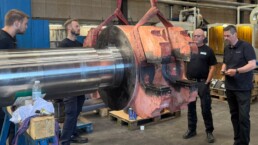
Twisted rudder stock on LNG carrier required specialist engineering repairs
When an LNG carrier experienced steering-gear issues, the initial suspicion was damage to the rudder equipment. A shipyard inspection in Portugal…
Iran-US deal logic is building, but the political math doesn’t work yet
Diplomacy and desperation are both accelerating at once. The question for markets is whether either side's decision-makers have enough reason to…
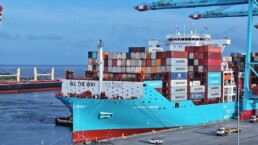
Maersk completes first U.S. ethanol bunkering of a deep-sea container vessel
Maersk has completed the first ship-to-ship commercial ethanol bunkering of a deep-sea container vessel in the United States, marking another…
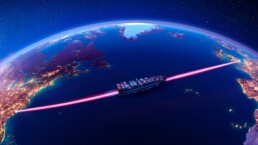
Pink Corridor project to explore safety requirements of nuclear-powered transatlantic container shipping route
Lloyd’s Register, A.P. Moller - Maersk and the ports of Charleston and Felixstowe will examine the security and safeguarding requirements for the…

Scorpio Tankers announces agreements to sell three Product Tankers and Purchase Four Newbuilding Vessels
Scorpio Tankers Inc. announced that it has entered into agreements to sell three product tankers and purchase four newbuilding vessels. Vessel……
Steel Demand softens as Iron Ore Flows face growing headwinds
Iron ore market fundamentals continued to soften as subdued Chinese steel demand kept pressure on inventories and reduced the need for additional…
Subscribe to our newsletter!
if you dont want to swim alone in the ocean of news, sign up for the newsletter, and you will receive daily all the important news of world shipping!
