Regional Experts mobilise to combat Stony Coral Tissue Loss Disease threatening Caribbean Reefs
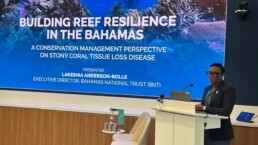

MSC Foundation convenes regional expert workshop bringing together over 45 scientists, government representatives and conservation partners to strengthen collaboration and science-based action on coral disease
· Participants identified five key priorities for safeguarding Bahamian coral reefs
At an expert workshop this week in Miami, scientists and practitioners agreed with the urgent need to strengthen responses to Stony Coral Tissue Loss Disease (SCTLD), one of the most serious threats facing coral reefs across the Caribbean, including Florida and The Bahamas.
“SCTLD remains a serious challenge for us, but it is also an opportunity to strengthen our stewardship, accelerate science-based decision making, and empower communities to build a more resilient archipelago”, said Dr Rhianna Neely-Murphy, Director of The Bahamas Department of Environmental Planning and Protection, in her keynote address to experts in Miami. “Since its emergence, SCTLD has caused an unprecedented threat to our reef building corals across the Bahamas.”
Highlighting the complexity of the challenge, workshop participants from across The Bahamas, Florida and the wider Caribbean agreed on the need for coordinated action, strengthened scientific collaboration, and open exchange of data and best practices to achieve meaningful progress. Participants highlighted the significant efforts underway to understand the impacts of the disease on reef ecosystems and the effectiveness of existing treatments and management approaches.
“Stony Coral Tissue Loss Disease is one of the most serious threats Caribbean reefs have ever faced, and The Bahamas sits directly in its path. Perry Institute for Marine Science has worked alongside Bahamian agencies and regional partners for years to monitor our reefs, treat affected corals, and understand how this disease spreads and how to slow it”, said Dr Aaron Hartmann, Senior Scientist at PIMS and Head of The Bahamas Coral Program.
“ What this workshop does is bring that on-the-ground experience together across borders, because coral disease does not stop at national boundaries and neither can our response. By sharing data, treatments, and hard-won lessons openly, we give these reefs, and the fisheries, livelihoods, and communities that depend on them, a far stronger chance to recover.”
Participants identified five key priorities for safeguarding Bahamian coral reefs: building local conservation capacity, closing critical data gaps, strengthening national research collaboration, identifying levels of reef interconnectivity, and implementing integrated management approaches that address the full range of threats facing reef ecosystems. Participating organisations also committed to developing a shared framework that can inform coordinated efforts on conservation priorities.
“The scale and complexity of Stony Coral Tissue Loss Disease means that no single organisation or country can address it alone”, said David Smith, MSC Foundation Chief Scientific Adviser. “Bringing together experts from different regions and disciplines creates a real opportunity to learn from one another, strengthen coordination and support science-based action for reef conservation.”
Since first identified in Florida in 2014, SCTLD has spread across multiple countries and territories across the Caribbean region, including The Bahamas. The disease affects hard corals and can spread rapidly across reefs, threatening marine biodiversity, fisheries, tourism and coastal protection. In The Bahamas, national response efforts have involved government agencies, scientific partners and conservation organisations working together to strengthen monitoring, treatment and management approaches.
The expert workshop “Stony Coral Tissue Loss Disease: Partnering for Resilient Reefs” convened representatives from government agencies, research institutions, conservation organisations and restoration practitioners working across The Bahamas, Florida and the wider Caribbean to exchange experience, review emerging science spanning disease ecology and epidemiology, pathogen identification, field detection and reef health monitoring, treatment development and application, intervention effectiveness, national-scale implementation strategies and restoration science.



Related News.

Meet the panellists of the CSN London Maritime Forum – Panel Discussion – “The reality of keeping up with geopolitical volatility and its impact on the industry”
Meet the Panellists of the CSN London Maritime Forum "Shipping: Predicting an Unpredictable Future" - Panel Discussion - “The reality of keeping up…

Meet the panellists of the CSN London Maritime Forum – Panel Discussion – “Ship Finance: Navigating Capital, Risk and Opportunity”
Meet the Panellists of the CSN London Maritime Forum "Shipping: Predicting an Unpredictable Future" - Panel Discussion - “Ship Finance: Navigating…
S-100 and the Connected Bridge: In Conversation with Stephan Dimke of Teledyne Raymarine Commercial
Following the strategic unification of ChartWorld and Raymarine Commercial earlier this year, the maritime industry has gained a powerful new entity…
12th ShipIT Conference: Shipping moves from Digital Transformation into the AI Era
Cybersecurity, Artificial Intelligence, data, energy efficiency and the new AMMITEC AI Working Group at the centre of this year’s conference The 12th…

Twisted rudder stock on LNG carrier required specialist engineering repairs
When an LNG carrier experienced steering-gear issues, the initial suspicion was damage to the rudder equipment. A shipyard inspection in Portugal…
Iran-US deal logic is building, but the political math doesn’t work yet
Diplomacy and desperation are both accelerating at once. The question for markets is whether either side's decision-makers have enough reason to…
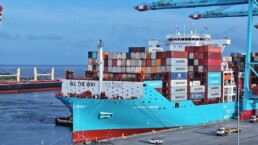
Maersk completes first U.S. ethanol bunkering of a deep-sea container vessel
Maersk has completed the first ship-to-ship commercial ethanol bunkering of a deep-sea container vessel in the United States, marking another…

Pink Corridor project to explore safety requirements of nuclear-powered transatlantic container shipping route
Lloyd’s Register, A.P. Moller - Maersk and the ports of Charleston and Felixstowe will examine the security and safeguarding requirements for the…
Scorpio Tankers announces agreements to sell three Product Tankers and Purchase Four Newbuilding Vessels
Scorpio Tankers Inc. announced that it has entered into agreements to sell three product tankers and purchase four newbuilding vessels. Vessel……
Steel Demand softens as Iron Ore Flows face growing headwinds
Iron ore market fundamentals continued to soften as subdued Chinese steel demand kept pressure on inventories and reduced the need for additional…
Subscribe to our newsletter!
if you dont want to swim alone in the ocean of news, sign up for the newsletter, and you will receive daily all the important news of world shipping!
