DNV confirms Carbon Ridge’s centrifugal OCCS system reaches peak CO2 capture rate of 98%
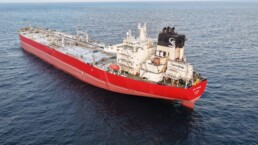

DNV’s technical evaluation of the installation onboard Scorpio Tankers Inc pilot confirms Carbon Ridge OCCS performance results.
An assessment from global classification society DNV, using its Recommended Practice for performance verification of onboard carbon capture and storage , has confirmed Carbon Ridge’s centrifugal onboard carbon capture system can reach CO2 capture rates of as high as 98%. This is the first maritime deployment of a centrifugal OOCS system, which during the testing was set up to capture and treat a part of the emissions stream generated by a LR2 product tanker owned by Scorpio Tankers Inc.The results were reached using data gathered over a scheduled five-month pilot period, which commenced in July 2025 at Besiktas Shipyard in Turkey, on the 10
9,999 dwt, 2015-built STI Spiga as the vessel undertook regular commercial operations.
DNV reviewed and validated the associated methodologies, calculations, and reported performance metrics and based on the data provided was able to corroborate peak CO2 capture rates of over 98%, with 55% of the observations falling within a range of 86–98%.
“This evaluation under DNV’s Recommended Practice validates the capability of Carbon Ridge’s modular centrifugal OCCS technology to significantly reduce the emissions of existing and newbuild vessels,” said Chase Dwyer, Carbon Ridge CEO & Founder. “The initial data and learnings from the STI Spiga trial further underpin our ambitions to scale Carbon Ridge’s OCCS across the global fleet. This work would not be possible without industry partners like Scorpio Tankers Inc supporting the deployment of these critical technologies.”
Chara Georgopoulou, Head of Onboard Carbon Capture, DNV Maritime, said: “Independently verified carbon capture rates will be vital to building out a commercially viable business model for OCCS. At DNV we are applying our new OCCS verification Recommended Practice to make sure performance reporting can be accurately and consistently applied across the industry and to help OCCS scale. This has been a great cooperation with Scorpio Tankers and Carbon Ridge, and we look forward to taking the next steps, moving from periodic verification to continuous assurance by using real-time data.”
Scorpio Tankers Inc. chief operating officer Cameron Mackey said: “We’re pleased that DNV has validated the results of our trial with Carbon Ridge. For any shipowner that foresees higher prices or stricter regulations for carbon, Carbon Ridge’s OCCS is an attractive solution. Their system is both straightforward to install and places a low operational burden on the crew. Carbon Ridge has demonstrated the technical capability and understanding required for marine deployment, and we look forward to building on this partnership.”
The Scorpio Tankers Inc pilot marks the first deployment of a centrifugal OCCS system in maritime operations, establishing Carbon Ridge as the pioneer in bringing this method of carbon capture to the shipping industry.
The technology’s compact design means that space requirements are reduced by up to 75% compared with conventional OCCS columns, while its flexible installation options, vertical or horizontal depending on vessel constraints, can accommodate the requirements of shipping’s diverse and globally operational fleet. Captured CO2 is compressed, liquefied, and stored safely for the duration of the voyage.



Related News.

Poland’s additional national requirements distort competition says Danish Shipping
Poland has introduced a national survey requirement for smaller foreign-flagged vessels operating in Polish waters. This creates significant…

Battery Vessels could help electrify most of Global Shipping Emissions
Battery-electric ships are economical only if the pack is cycled frequently, so they have been confined to short-sea, ferry and harbour vessels…

Mintra and Ledgid explore collaboration to connect Maritime digital identity, learning and workforce development
Mintra® and LEDGID are exploring opportunities to bring together complementary capabilities in digital learning, maritime training, professional…

World Shipping Council calls for global agreement on shipping emissions as industry investment surpasses $200 billion USD
The World Shipping Council (WSC) is calling on governments to agree on binding global greenhouse gas regulations for international shipping without…

What happened to the ITF whistleblower’s complaint?
In January 2026, a whistleblower complained that International Transport Workers’ Federation (ITF) General Secretary Stephen Cotton had manipulated…

Growing regulatory scrutiny puts seafarer wellbeing firmly on maritime safety agenda, VIKAND warns
Seafarer wellbeing is coming under greater regulatory scrutiny as international rules and guidance increasingly recognise crew health and welfare as…

Good Times Bad Times the Premium Stays with the Strait
In October, we wrote that if the transfer network off Oman kept pace, Gulf crude would carry China's refill and keep drawing tonnage east,…

Allied Weekly Market Review Week 47
Pls find below the Allied - Weekly Market Review - Week 47 ALLIED - Weekly Market Report- Week 47


Climate TRACE releases September 2026 Emissions Data
Climate TRACE reported that global greenhouse gas (GHG) emissions for the month of September 2026 totaled 4.7 billion tonnes CO₂e. This remains…
Subscribe to our newsletter!
if you dont want to swim alone in the ocean of news, sign up for the newsletter, and you will receive daily all the important news of world shipping!
