Maritime Safety Committee – 111th session MSC 111, 13-22 May 2026
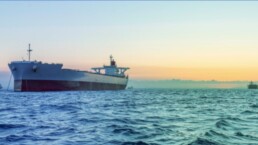

The Maritime Safety Committee meets for its 111th session at IMO Headquarters in London (in-person supported with hybrid capabilities) from 13-22 May 2026. The meeting is chaired by Capt. Theofilos Mozas of Greece.
MSC 111 highlights (including media arrangements)
- Amendments to mandatory instruments and related non-mandatory instruments
- Expected adoption of the goal-based International Code of Safety for Maritime Autonomous Surface Ships (MASS Code)
- Impacts on shipping and seafarers of the situation in the Arabian Sea, the Sea of Oman, and the Gulf region, particularly in and around the Strait of Hormuz
- Enhancing maritime security
- Piracy and armed robbery against ships
- Development of a GHG safety regulatory framework
- Goal-based ship construction standards audit
- Review of the financial architecture of the LRIT system
- Maritime digitalization
- Reports of Sub-Committees
- Media attendance – information
1. Amendments to mandatory and related non-mandatory instruments
The Committee is expected to consider, with a view to adoption, draft amendments to several mandatory instruments, with a planned entry into force date of 1 January 2028.
These include draft amendments to:
- SOLAS chapters IV and V – including updated provisions allowing the carriage of VHF data exchange system (VDES) onboard ships as an alternative to the automatic identification system (AIS), and new provisions clarifying the use of all operational recognized mobile satellite services for the dissemination of maritime safety information and search and rescue related information. Along with these amendments, the Committee is also expected to adopt new MSC resolutions on performance standards for VDES and on introduction of VDES into the IMO regulatory framework, a revision of resolution MSC.509(105)/Rev.1 on provision of radio services for the Global Maritime Distress and Safety System (GMDSS), and guidelines for the onboard operational use of shipborne VDES.
- International code on the enhanced programme of inspections during surveys of bulk carriers and oil tankers, 2011 (2011 ESP Code) – including a new section related to Remote inspection techniques (RIT) and associated guidelines.
- 1994 & 2000 HSC Codes, to include amendments on VHF data exchange system (VDES) consequential to the above-mentioned SOLAS amendments.
- Amendments to the International Maritime Dangerous Goods (IMDG) Code.
- International Code of Safety for Ships Carrying Industrial Personnel (IP Code) – amendments related to subdivision and damage stability and life-saving appliances requirements, particularly for ships carrying more than 240 passengers/industrial personnel. shall be in accordance with SOLAS chapter II-1, where the ship is considered a passenger ship and industrial personnel are counted as passengers
- International Life-Saving Appliance (LSA) Code – clarifying the application provisions therein and arrangements to test the release system under load without launching the free-fall lifeboat into the water.
- Amendments to update the Requirements for maintenance, thorough examination, operational testing, overhaul and repair of lifeboats and rescue boats, launching appliances and release gear (resolution MSC.402(96)).
- 1988 Load Lines Protocol annex B – updated requirements related to guard rails and bulwarks.
Concerning related non-mandatory instruments, 11 instruments in total are expected to be adopted/approved or amended.
2. Adoption of goal-based instrument for Maritime Autonomous Surface Ships (MASS)
The Committee is expected to finalize and adopt the non-mandatory International Code of Safety for Maritime Autonomous Surface Ships (MASS Code).
The MASS Code aims to address the functions needed for safe, secure, and environmentally sound operations of MASS insofar as they are not adequately or fully addressed in other applied IMO instruments, while ensuring that required safety levels are maintained when implementing remote controlled or autonomous operation of key functions.
The MASS Code is intended as supplementary to other IMO instruments, including SOLAS, and provides a regulatory framework for remotely controlled and autonomous ship operations.
Chapters of the draft MASS Code (MSC 111/5/3) include those covering: surveys and certificates; approval process; risk assessment; operational context; system design; software principles; management of safe operations; alert management; manning, training and watchkeeping; safety of navigation; connectivity; remote operations; structure, subdivision, stability and watertight integrity; fire protection, fire detection and fire extinction; special measures to enhance maritime security; search and rescue; carriage of cargoes; anchoring, towing and mooring; machinery and electrical installations.
A Working Group will be established to finalize the non-mandatory MASS Code.
3. Impacts on shipping and seafarers of the situation in the Arabian Sea, the Sea of Oman, and the Gulf region, particularly in and around the Strait of Hormuz
The Committee is expected to consider the outcome of other IMO bodies in relation to impacts on shipping and seafarers of the situation in the Arabian Sea, the Sea of Oman, and the Gulf region, particularly in and around the Strait of Hormuz. (See IMO page: Middle East).
In particular, the Committee is expected to consider the safety, security and seafarer protection draft resolution proposed by the United Arab Emirates, underscoring the importance of protecting navigational freedoms and exploring safe‑corridor arrangements, to ensure essential supplies and crew support.
The IMO Secretariat has prepared, for the Committee’s consideration, draft guidance on training and certification of seafarers affected by the situation in the Arabian sea, the sea of Oman and the Gulf region, particularly in and around the Strait of Hormuz.
The draft guidance is intended to assist Administrations responsible for training and the issuance of seafarers’ certificates, flag States and port States, with the implementation of the STCW Convention and Code during the current situation.
This effort aims to support seafarers affected by prolonged time in the region, intending to ensure that they are not negatively impacted by any potential lapse in required training or certification, encouraging a pragmatic approach by the responsible authorities.
4. Enhancing maritime security
The Committee will be updated on recent developments related to maritime security.
The Committee will be invited to consider a proposal to review the International Ship and Port Facility Security (ISPS) Code, and how the ISPS Code could be used to address the broader security risks faced by ships and port facilities including those associated with illicit and criminal activity.
5. Piracy and armed robbery against ships
The Committee will hear an update on developments related to piracy and armed robbery against ships. According to information received and made available in IMO’s GISIS module, 171 incidents of piracy and armed robbery against ships were reported to IMO as having occurred or been attempted in 2025 – an increase of approximately 17% at the global level compared to the 146 incidents in 2024.
6. Development of a GHG safety regulatory framework
The Committee will continue its work to develop a safety regulatory framework to support the reduction of GHG emissions from ships using new technologies and alternative fuels, and is expected to establish a working group during the session.
Issues under consideration include proposed regulatory solutions for using alternative fuels on gas carriers.
The Committee is expected to approve the draft work plans prepared by different Sub-Committees, notably CCC and SDC, for the development of a safety regulatory framework to support the reduction of GHG emissions from ships using new technologies and alternative fuels.
7. Goal-based new ship construction standards
The Committee is expected to consider audit reports related to Biro Klasifikasi Indonesia (BKI) and to consider the Fourth GBS Maintenance of Verification Audit of 14 recognized organizations and IACS Common Structural Rules for Bulk Carriers and Oil Tankers. Read more about goal-based standards.
8. Review of the financial architecture of the LRIT system
The Committee is expected to review the financial architecture of the Long-Range Identification and Tracking (LRIT) system, including whether the regular six-hourly LRIT position reports should be provided free of charge to coastal States entitled to receive such information. The LRIT system, which is defined under SOLAS regulation V/19-1, provides for the global identification and tracking of ships to enhance security of shipping and for the purposes of safety and marine environment protection. A working group is expected to be established to consider this matter.
9. Maritime digitalization
The Committee is expected to approve the IMO Strategy on Maritime Digitalization, developed by FAL 50, and the work plan for the development of the IMO Strategy on Maritime Digitalization, and to submit the IMO Strategy on Maritime Digitalization to MEPC 85 for consideration and concurrent approval. The Committee is expected to encourage Member States and international organizations to join the Correspondence Group on the Development of the IMO Strategy on Maritime Digitalization to provide input to the action plan through the Correspondence Group.
10. Reports of Sub-Committees
The Committee will consider the reports from the following Sub-Committees and take relevant decisions (other than those mentioned under above topics):
Sub-Committee on carriage of cargoes and containers (CCC 11)
The Committee is expected to:
- approve the draft MSC circular on interim guidelines for the safety of ships using hydrogen as fuel;
- approve the draft MSC circular on interim guidelines for the use of ammonia cargo as fuel; approve the draft MSC circular on unified interpretations of the IGC Code;
- adopt the draft MSC resolution on a new consolidated version of the Revised interim recommendations for carriage of liquefied hydrogen in bulk;
- approval of draft amendments to the International Code for the Construction and Equipment of Ships Carrying Liquified Gases in Bulk (IGC Code).
Sub-Committee on navigation, communications and search and rescue (NCSR 12)
The Committee is expected to consider the adoption of new routeing measure consisting of a new area to be avoided “Off the coast of Réunion”, and three revised mandatory ship reporting systems in the EU region.
The Committee will also consider the approval of the draft IMO position on relevant agenda items of the ITU World Radio Conference 2027 relating to maritime services, new guidelines for software maintenance of shipboard computer-based navigation and communication equipment and systems, and new guidelines on carriage and use of electronic nautical publications (ENP) system.
The Committee is also expected to adopt amendments to resolution A.1046(27) on Worldwide Radionavigation System to include relevant requirements for augmentation systems, as well as revised performance standards for shipborne BeiDou Satellite Navigation System (BDS) receiver equipment.
Sub-Committee on Implementation of IMO Instruments (III 11)
The Committee will consider the approval of an MSC circular on casualty analysis process and procedure on casualty investigation reports and data-based studies; and approval of MSC-MEPC.5 circular on guidance on remote surveys, ISM Code audits and ISPS Code verifications.
The Committee will consider a proposed project to develop a port State control overarching database with web service.
Sub-Committee on human element, training and watchkeeping (HTW 12)
The Committee will consider the approval of two sets of draft interim guidelines on training for seafarers on ships using alternative fuels and new technologies, covering methyl/ethyl alcohol as fuel and ammonia as fuel.
The Committee will be invited to endorse the work plan for the development of training provisions for seafarers on ships using alternative fuels and new technologies.
Ship design and construction (SDC 12)
The Committee is expected to:
- approve the draft MSC circular on Explanatory Notes for safe return to port and orderly evacuation and abandonment after a fire or flooding casualty;
- approve the draft MSC circular on Guidelines on the use of remote inspection techniques (RIT) for ESP Code surveys, in conjunction with the adoption of the associated draft amendments to the 2011 ESP Code, completing in this way the framework to allow the use of RIT in ESP Code surveys;
- approve the draft amendments to the Technical provisions for means of access for inspections of (resolution MSC.133(76), as amended), with a view to adoption by MSC 112;
- approve the draft MSC Circular on Revised interim guidelines for use of fibre-reinforced plastic (FRP) elements within ship structures for fire safety;
- adopt draft MSC resolution on Amendments to the 2009 MODU Code.
11. Media information
Related documents
To access all documents from MSC Session, including submissions from Member States, please visit IMODOCS, create a free account and explore Meeting Documents> MSC> MSC 111.
Registration and accreditation
Accredited media may attend and follow plenary sessions of MSC either in person or online. Working and drafting group meetings are closed to media.
To get accredited, fill out the relevant form and send to media@imo.org with an assignment letter from your editor. For more details, see: Media accreditation.
Guidance for covering MSC
Please refer to: Terms and conditions
Media moments
- Tuesday 12 May, 10:00 – 17.30 (UTC+1): Technical Seminar on methane-based fuels
- Wednesday 13 May, 9.30 (UTC+1): Opening of MSC Session – Remarks by IMO Secretary-General Arsenio Dominguez
- Wednesday 13 May, 14.00 – 14.30 (UTC+1): Press Q&A with IMO Secretary-General (in person)
- Monday 18 May, 16:30 (UTC+1): Celebration of International Day for Women in Maritime – IMO Event: From Policy to Practice: advancing gender equality for maritime excellence
- Tuesday 19 May, 17:40 – 18:30 (UTC+1): Presentation of the updated ‘Rescue at Sea’ guide by IMO, UNHCR and ICS
- Friday 22 May: Consideration of the report of the Committee, outcome of MSC 111.
Interviews
Accredited journalists may organize and conduct interviews independently with delegates. Interview requests for IMO Secretary-General Arsenio Dominguez or IMO staff should be sent in writing to media@imo.org.
If you are already accredited and wish to cover the meeting, please send an email to media@imo.org to register to attend MSC 111. We will share your details with security for access to the building (if attending in person) or provide further instructions for following the meeting online.
Facilities
IMO headquarters is located at 4 Albert Embankment, London SE1 7SR.
Plenary sessions will take place in the Main Hall, with overflow rooms made available.
Communal areas include the reception area (ground floor), delegates lounge (1st floor), cafeteria (4th floor) and terrace (4th floor). Free wi-fi is available.
Source:IMO



Related News.
Navigating the Multi-Orbit Era: In Conversation with Intellian’s Jon Harrison at SMM 2026
At SMM 2026 in Hamburg, the rapid evolution of maritime satellite communications took centre stage. Across the exhibition halls, discussions among…
Cyprus ports need joint energy and investment strategy, shipping agents chief says
Cyprus needs a coordinated strategy for shipping, energy and environmental protection to support port investment and modernisation, Cyprus shipping…

MASO Public Affairs introduces MASO Regulatory Intelligence
A new subscription service helping businesses understand what is changing and what it means for them MASO Public Affairs introduces MASO Regulatory…
Anglo-Eastern helps turn CMBTECH’s ammonia ambition into an operational reality
From early feasibility study and risk-based design to newbuilding supervision, crew readiness and technical management, Anglo-Eastern drew on its…

Escalation of attacks threatens to derail recovery in Middle East oil exports
World oil demand is forecast to fall by 2.5 mb/d y-o-y in 4Q26 and 2.6 mb/d on average in 2026. As the Iran war manifests itself through restricted…
New study finds shipping pays twice its share to EU ETS earmarked revenues should triple to help build market for sustainable fuels and technologies
Shipping is responsible for around 10% of EU ETS emissions but pays almost 20% of the ETS bill. Unlike other sectors, it has never received free…
MSARC strengthens maritime mass rescue readiness through training and national live exercise off Dakar, Senegal
Joint MSARC–FHAS programme combines three days of SAR training with a national multi-agency live exercise The Maritime Search and Rescue Council ,…
Sogese report deliveries are still being delayed as container freight rates fluctuate
FOR IMPORTERS Spot rates into the Mediterranean are back at January levels, Far East to Europe reliability sits at pandemic lows, and nearly…
Glencore begins trading on Australian Securities Exchange
Glencore has begun trading on the Australian Securities Exchange under the ASX code GLC. Gary Nagle, Glencore’s CEO, said it was an exciting day for…
BIMCO Shipping Number of the Week
Suez Canal container ship transits exceed 50% of pre-disruption levels "During the first two weeks of October, weekly container ship capacity…
Subscribe to our newsletter!
if you dont want to swim alone in the ocean of news, sign up for the newsletter, and you will receive daily all the important news of world shipping!
