South Korea Government plans to expand National Essential Fleet for first time in 16 Years
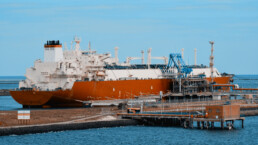

Expansion Addresses Maritime Security amid Global Tensions
The Ministry of Oceans and Fisheries announced on Jan. 5 that it plans to consult budget authorities and others on institutional improvement measures, including raising the current target of 88 national essential vessels by two vessels each this year and next year, while also making compensation for losses more realistic. According to the ministry’s plan, the maximum operational scale of national essential vessels, which has been maintained at the same level for 15 years since 2010, would increase to 90 vessels this year and 92 vessels next year. A ministry official stated, “We plan to begin full-scale discussions with relevant ministries and private institutions based on the appropriate operational scale of national essential vessels recalculated through research services and other means.”
Since 2006, the government has operated a system designating commercial vessels as national essential vessels to ensure stable transport of strategic materials, essential consumer goods, and military supplies when emergencies such as wartime occur or when there are significant disruptions to shipping and port functions. While the number of national essential vessels (based on target figures) grew from just 30 when the system was introduced to the current 88 vessels by 2010 through events such as the global financial crisis, there is consensus both within and outside the government that this remains severely insufficient considering South Korea’s economic structure, which relies virtually entirely on overseas imports for major energy and other resources.
Kim Kyung-hoon, director of the Korea Shipping Association, argued at a National Assembly discussion session last month that “Korea depends on maritime transport for 99.7% of its raw materials, making economic paralysis inevitable if supply chains collapse,” and “we must secure a strategic merchant fleet of at least 200 vessels by 2040.” Specifically, his proposal involves selecting nine strategic materials, including crude oil, liquefied natural gas (LNG), and grains; converting and expanding the current 88 national essential vessels into a strategic merchant fleet to operate 100 vessels continuously, while ordering the construction of the remaining 100 vessels from domestic shipyards.
Raising the operational scale of national essential vessels as demanded by the Ministry of Oceans and Fisheries and the Korea Shipowners’ Association would require corresponding increases in fiscal support. National essential vessels have an obligation to respond to government mobilization requests during emergencies. Even during peacetime, they cannot employ foreign crew members beyond a certain number despite their lower labor costs compared to Korean crew members, and must participate in emergency preparedness training and other activities, requiring compensation for losses. However, current differential compensation is insufficient, leading some shipping companies to avoid applying for national essential vessel designation, making additional incentives such as increased subsidies necessary, according to shipping industry insiders. Accordingly, the Ministry of Oceans and Fisheries is reportedly planning to discuss both budget increases corresponding to the upward adjustment of national essential vessel targets and increases in support unit prices.



Related News.
European Shipowners call on MEPs to back Commission proposal to include two Indian yards in the EU ship recycling list
The Environment Committee of the European Parliament votes on 4 November on a motion for resolution objecting to the Commission’s proposal to add two…
Oversea signs commercial agreement with UECC following Successful Pilot
Following a successful pilot onboard Auto Advance, UECC has chosen to enter into a commercial agreement with Oversea. The pilot demonstrates how…
First NABEP Crude Cargo Under U.S. Agreement Arrives in Texas
Shipment of 1 million barrels arrived as NABEP production passes 223,000 barrels of oil equivalent per day. Two tankers carrying 1 million barrels of…
LNG carrier prices fall to $245 million, threatening Korean Shipbuilders’ Margins
Prices for high-value vessels, including liquefied natural gas carriers and ultra-large container ships, have begun to decline despite rising…
Vehicle Carrier Safety Forum publishes new Fire Drill Guidelines for vehicle carrying vessels
The Vehicle Carrier Safety Forum has published new Fire Drill Guidelines for Vehicle Carrying Vessels, providing vessel operators with a practical…
Is an Atlantic Basin crude glut on the cards?
Atlantic crude discounts fail to offset high freight to Asia, raising the risk of a regional glut as VLCC availability tightens. Freight…
The future of trade infrastructure in Europe is connectivity
One year after its inauguration, Rijeka Gateway offers a glimpse into the future of European trade. On 10 September last year,…
Allied – Weekly Market Review – Week 43
Please find below the Allied Weekly Report for Week 43 | 2026 ALLIED - Weekly Market Report- Week 43

Intermodal Report – Week 43 2026
Please find below the Intermodal market report for week 43 2026. Intermodal Report Week 43 2026
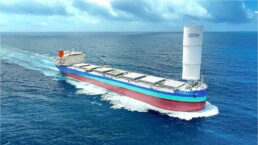
Wind Challenger-Equipped LNG Dual-Fueled Coal Carrier ‘MAIZURU KAZENOMAI’ Delivered
-While Supporting a Stable Energy Supply, Reducing Environmental Impact - Mitsui O.S.K. Lines announced the delivery and entry into service of an…
Subscribe to our newsletter!
if you dont want to swim alone in the ocean of news, sign up for the newsletter, and you will receive daily all the important news of world shipping!
