Why One ‘Peace’ Deal just made shipping more expensive: Houthi Ceasefire & Iranian Seizure


The maritime industry’s path forward demands continuous intelligence, flexible contracting, and recognition that regional ceasefires don’t guarantee unified de-escalation across Middle Eastern waters.
The maritime industry faces a paradox this week: Yemen’s Houthi rebels signaled a cessation of Red Sea attacks following the Gaza ceasefire. Around the same time, Iran executed its first vessel seizure in months, seizing the Marshall Islands-flagged tanker Talara in the Strait of Hormuz on Friday. These two developments underscore a critical reality: regional maritime security remains fragmented, unpredictable, and expensive.
After 690 days of Houthi attacks that killed nine mariners and sank four vessels, the conditional ceasefire offers cautious optimism. Yet Suez Canal traffic remains at historic lows, averaging just 36 vessels daily in 2025 compared to 74 in 2023. Insurance premiums tell the story; insurers aren’t convinced. Red Sea war-risk rates remain elevated despite the announcement, as underwriters demand proof through multiple safe transits before reducing coverage costs that currently add tens of thousands of dollars per voyage.
Iran’s seizure of the Talara, carrying 30,000 tons of petrochemicals through waters handling 20% of global oil trade, signals Tehran’s willingness to reassert control in the Strait of Hormuz. The incident prompted war-risk premiums in the Middle East Gulf to double within days, while hull and machinery insurance jumped 60%.
Impact on Safe Passage: Top 3 Implications
- Bifurcated Geographic Risk: The Red Sea may experience gradual normalization while Persian Gulf risks intensify, forcing carriers to reassess route optimization strategies across two distinct zones simultaneously.
- Insurance Market Volatility: War-risk premiums will remain fluid and regionally specific, with 24-hour quote validities and 96-hour cancellation clauses now standard practice, eliminating predictable cost structures for voyage planning.
- Extended Cape Routing Persistence: Despite the Houthi pause, major carriers will maintain Cape of Good Hope diversions through at least Q2 2026, sustaining 10-14 day transit delays and suppressing Suez Canal revenues while creating potential freight rate collapse when capacity eventually returns.
STAKEHOLDER ACTIONS
Fleet Owners: Implement dynamic voyage insurance strategies with multiple underwriters rather than single-carrier contracts; leverage real-time intelligence platforms for routing decisions that balance premium costs against time-charter economics.
Cargo Insurers: Adopt granular, passage-level risk assessment using vessel ownership transparency data and beneficial owner verification to differentiate premium pricing; consider fleet-based bundling arrangements for operators with strong compliance records.
Port Authorities: Enhance berth scheduling flexibility to accommodate last-minute routing changes; coordinate with maritime security agencies on threat intelligence sharing protocols for vessels calling from high-risk transit zones.
Vessel Crews: Verify that comprehensive war-risk coverage explicitly includes both Red Sea and Persian Gulf waters before transit; maintain heightened vigilance for GPS jamming and AIS interference, particularly near the Straits of Hormuz and Bab el-Mandeb chokepoints.
Source: Pole Star Global by Saleem Khan – Chief Data & Analytics Officer



Related News.

European Shipowners call on MEPs to back Commission proposal to include two Indian yards in the EU ship recycling list
The Environment Committee of the European Parliament votes on 4 November on a motion for resolution objecting to the Commission’s proposal to add two…
Oversea signs commercial agreement with UECC following Successful Pilot
Following a successful pilot onboard Auto Advance, UECC has chosen to enter into a commercial agreement with Oversea. The pilot demonstrates how…

First NABEP Crude Cargo Under U.S. Agreement Arrives in Texas
Shipment of 1 million barrels arrived as NABEP production passes 223,000 barrels of oil equivalent per day. Two tankers carrying 1 million barrels of…
LNG carrier prices fall to $245 million, threatening Korean Shipbuilders’ Margins
Prices for high-value vessels, including liquefied natural gas carriers and ultra-large container ships, have begun to decline despite rising…
Vehicle Carrier Safety Forum publishes new Fire Drill Guidelines for vehicle carrying vessels
The Vehicle Carrier Safety Forum has published new Fire Drill Guidelines for Vehicle Carrying Vessels, providing vessel operators with a practical…

Is an Atlantic Basin crude glut on the cards?
Atlantic crude discounts fail to offset high freight to Asia, raising the risk of a regional glut as VLCC availability tightens. Freight…
The future of trade infrastructure in Europe is connectivity
One year after its inauguration, Rijeka Gateway offers a glimpse into the future of European trade. On 10 September last year,…
Allied – Weekly Market Review – Week 43
Please find below the Allied Weekly Report for Week 43 | 2026 ALLIED - Weekly Market Report- Week 43

Intermodal Report – Week 43 2026
Please find below the Intermodal market report for week 43 2026. Intermodal Report Week 43 2026
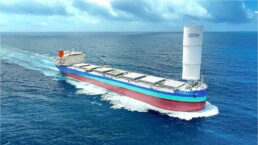
Wind Challenger-Equipped LNG Dual-Fueled Coal Carrier ‘MAIZURU KAZENOMAI’ Delivered
-While Supporting a Stable Energy Supply, Reducing Environmental Impact - Mitsui O.S.K. Lines announced the delivery and entry into service of an…
Subscribe to our newsletter!
if you dont want to swim alone in the ocean of news, sign up for the newsletter, and you will receive daily all the important news of world shipping!
