Intermodal Report – Week 47 2025

Intermodal Weekly Market Report
Please find Below the Intermodal market report for week 47 2025.
Intermodal Report Week 47 2025
The following text is the summary of Intermodal’s Weekly Market Report for smartphone users.
Market Insight
By Yiannis Parganas, Head of Research Department
During the past few weeks, we have seen a notable resurgence in dry bulk newbuilding activity from Greek shipowners. Several well-established names have been active at the yards, with Eastmed, Ocean Bulk, Efnav and Seanergy committing to Kamsarmax tonnage, while Capital Shipping and Seanergy have also moved into the Capesize segment. At the same time, Atlantic Bulk Carriers and JME have targeted the Ultramax sector. These orders have dominated our recent newbuilding lists, creating the impression of renewed appetite among Greek buyers. However, this short-term activity contrasts sharply with the broader picture of 2025, and as we approach year-end the full trendline is now clearer.
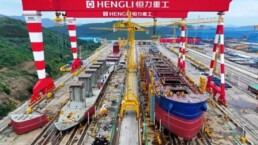
Overall dry bulk contracting has been exceptionally subdued, with only 288 vessels ordered so far this year, the lowest annual tally since 2016 and significantly below the volumes recorded in recent years, when 549 orders were placed in 2022, 709 in 2023 and 771 in 2024. While ordering across the major shipping nations has slowed, the reduced Greek presence has been one of the most decisive contributors to this year’s weak numbers. Greek owners have placed just 26 bulk carrier orders in 2025, representing around 9% of total contracting, and 18 of those were materialized in October and November. Yard selection also reflects a concentrated pattern; aside from three Japanese orders (two at Oshima and one at Imabari), Greek buyers have turned exclusively to China, with Hengli Shipbuilding alone accounting for nearly 70% of their activity. Hengli’s prominence is unsurprising; competitive pricing, access to earlier delivery slots and an aggressive commercial strategy have made it one of the few yards still able to offer a combination of cost efficiency and timetable flexibility that appeals in a high-cost environment. Sector-wise, the Greek orderbook consists of 16 Kamsarmax, 7 Ultramax and 3 Capesize units, far below the 57 vessels ordered in 2024 and the 141 placed in 2023.
Chinese ordering activity has also retreated markedly this year, with a total of 112 bulk carriers ordered in 2025, down sharply from the 274 placed in 2024 and the 171 recorded in 2023. Despite the reduced volume, Chinese operators have spread their commitments across a much wider range of shipyards, selecting 21 different shipbuilders for an assortment of vessel types. This includes 31 Newcastlemax, 26 Post-Panamax, 20 Kamsarmax, 20 Ultramax and 15 Handysize units. Japanese newbuilding activity is following a similar pattern of contraction, with only 32 orders placed so far in 2025, representing around 11% of total dry bulk contracting. This compares with 82 vessels ordered in 2024 and 147 in 2023, highlighting a consistent decline in Japanese participation as owners adopt a more cautious forward posture.
The exceptionally low level of contracting this year reflects a broader hesitation across the industry, driven by a combination of a regulatory horizon that remains blurred, geopolitical flashpoints still unresolved and strategic options that feel constrained rather than compelling. The delay in the IMO’s net-zero agenda has deprived owners of a clear roadmap for future fuel and engine choices. Paradoxically, that postponement could carry a silver lining, buyers may increasingly expect the final rules to allow more operational flexibility, perhaps favouring slower transition pathways or retrofit options. With the negotiations now pushed further out, many owners sense that the final package could accommodate a broader range of fuel and engine strategies, including transitional fuels and retrofit-friendly designs. Rather than waiting indefinitely for perfect clarity, this expectation of a softer, more adaptable compliance landscape may actually incentivise some players to move ahead with newbuilding plans, confident that today’s designs will not be rendered obsolete by overly aggressive or unrealistic timelines. On the tariff front, the one-year suspension of burdensome port levies has eased one large source of risk for shipowners. With fewer immediate punitive incentives to avoid Chinese yards, some hesitation has softened, but the uncertainty that dominated much of the year left its mark, while elevated newbuilding prices and lengthening delivery schedules remain key deterrents particularly when available slots are increasingly being pushed into late-2027 and beyond.
Against that backdrop, sentiment is poised to adjust as conditions stabilise; once these uncertainties and cost dynamics fall into place, we should expect ordering to recover with conviction, not merely as a reaction but as a strategic repositioning ahead of the next fleet-cycle wave.



Related News.

European Shipowners call on MEPs to back Commission proposal to include two Indian yards in the EU ship recycling list
The Environment Committee of the European Parliament votes on 4 November on a motion for resolution objecting to the Commission’s proposal to add two…
Oversea signs commercial agreement with UECC following Successful Pilot
Following a successful pilot onboard Auto Advance, UECC has chosen to enter into a commercial agreement with Oversea. The pilot demonstrates how…

First NABEP Crude Cargo Under U.S. Agreement Arrives in Texas
Shipment of 1 million barrels arrived as NABEP production passes 223,000 barrels of oil equivalent per day. Two tankers carrying 1 million barrels of…
LNG carrier prices fall to $245 million, threatening Korean Shipbuilders’ Margins
Prices for high-value vessels, including liquefied natural gas carriers and ultra-large container ships, have begun to decline despite rising…
Vehicle Carrier Safety Forum publishes new Fire Drill Guidelines for vehicle carrying vessels
The Vehicle Carrier Safety Forum has published new Fire Drill Guidelines for Vehicle Carrying Vessels, providing vessel operators with a practical…

Is an Atlantic Basin crude glut on the cards?
Atlantic crude discounts fail to offset high freight to Asia, raising the risk of a regional glut as VLCC availability tightens. Freight…
The future of trade infrastructure in Europe is connectivity
One year after its inauguration, Rijeka Gateway offers a glimpse into the future of European trade. On 10 September last year,…

Allied – Weekly Market Review – Week 43
Please find below the Allied Weekly Report for Week 43 | 2026 ALLIED - Weekly Market Report- Week 43

Intermodal Report – Week 43 2026
Please find below the Intermodal market report for week 43 2026. Intermodal Report Week 43 2026
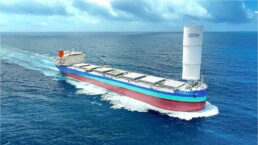
Wind Challenger-Equipped LNG Dual-Fueled Coal Carrier ‘MAIZURU KAZENOMAI’ Delivered
-While Supporting a Stable Energy Supply, Reducing Environmental Impact - Mitsui O.S.K. Lines announced the delivery and entry into service of an…
Subscribe to our newsletter!
if you dont want to swim alone in the ocean of news, sign up for the newsletter, and you will receive daily all the important news of world shipping!
