DNV and WMMF publish guide to support shipowners’ path to net-zero


The maritime industry is experiencing a period of significant transformation, driven by rapidly evolving regulations, increasing commercial pressure, and a global shift towards reducing greenhouse gas (GHG) emissions. In response, DNV and the World Maritime Merchants Forum (WMMF) ESG team have published a new guide to help shipowners navigate these evolving challenges, an effort supported by industry organizations in Hong Kong and worldwide.
The “Net-Zero Guide: Practical Approaches for Global Shipping Companies” provides a structured roadmap for advancing decarbonization. Drawing on data-driven insights and real-world operator experience, the guide offers actionable steps for shipowners to align operational and investment decisions with both international and regional regulations. It also helps companies navigate uncertainties, adopt best practices, and take pragmatic actions that prepare them for future changes in a rapidly evolving landscape.
Knut Ørbeck-Nilssen, CEO, DNV Maritime said: “Shipping’s decarbonization journey continues despite the postponement at the IMO. The reality is that energy efficiency and fuel flexibility or readiness are still considered and implemented on vessels. Continuing on this course will maintain competitiveness and contribute to the sector’s long-term decarbonization goals. The collaboration with World Maritime Merchants Forum (WMMF) on this guide is itself a testament to the importance of working together to pave the way for successful decarbonization.”
Mr. Wang Yong Xin, the President of China Merchants Energy Shipping (CMES) said: “The Net-Zero Guide offers the industry a wealth of practical reference cases in a complex transition environment, helping shipping companies strike a balance between short-term operations and long-term emissions reduction.”
The guide addresses the increasing complexity and cost of compliance, especially for small and medium enterprises (SMEs), and outlines procedures to manage costs while supporting the transition of fleets toward net-zero emissions. It also sets out cost-effective actions, such as energy-efficiency upgrades, phased fuel transitions, and targeted fleet renewal or retrofits, to control expenses and avoid stranded assets. By aligning investments with operational improvements and market expectations, shipowners can strengthen their commercial resilience and position themselves for long-term success.
Shipowners are also urged to embed decarbonization into their core business strategies. This includes linking compliance with fleet investment and financing, while adopting a lifecycle approach to fleet management that balances renewal, retrofits, and operational optimization. Structured competence development and robust change management are essential to building organizational capability and supporting sustainable growth. By leveraging partnerships across the value chain and investing in digitalization and data governance, companies can enhance transparency, ensure regulatory compliance, and unlock long-term efficiencies.



Related News.
European Shipowners call on MEPs to back Commission proposal to include two Indian yards in the EU ship recycling list
The Environment Committee of the European Parliament votes on 4 November on a motion for resolution objecting to the Commission’s proposal to add two…
Oversea signs commercial agreement with UECC following Successful Pilot
Following a successful pilot onboard Auto Advance, UECC has chosen to enter into a commercial agreement with Oversea. The pilot demonstrates how…
First NABEP Crude Cargo Under U.S. Agreement Arrives in Texas
Shipment of 1 million barrels arrived as NABEP production passes 223,000 barrels of oil equivalent per day. Two tankers carrying 1 million barrels of…
LNG carrier prices fall to $245 million, threatening Korean Shipbuilders’ Margins
Prices for high-value vessels, including liquefied natural gas carriers and ultra-large container ships, have begun to decline despite rising…
Vehicle Carrier Safety Forum publishes new Fire Drill Guidelines for vehicle carrying vessels
The Vehicle Carrier Safety Forum has published new Fire Drill Guidelines for Vehicle Carrying Vessels, providing vessel operators with a practical…
Is an Atlantic Basin crude glut on the cards?
Atlantic crude discounts fail to offset high freight to Asia, raising the risk of a regional glut as VLCC availability tightens. Freight…
The future of trade infrastructure in Europe is connectivity
One year after its inauguration, Rijeka Gateway offers a glimpse into the future of European trade. On 10 September last year,…
Allied – Weekly Market Review – Week 43
Please find below the Allied Weekly Report for Week 43 | 2026 ALLIED - Weekly Market Report- Week 43

Intermodal Report – Week 43 2026
Please find below the Intermodal market report for week 43 2026. Intermodal Report Week 43 2026
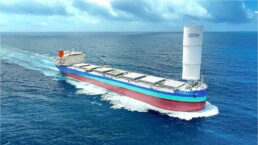
Wind Challenger-Equipped LNG Dual-Fueled Coal Carrier ‘MAIZURU KAZENOMAI’ Delivered
-While Supporting a Stable Energy Supply, Reducing Environmental Impact - Mitsui O.S.K. Lines announced the delivery and entry into service of an…
Subscribe to our newsletter!
if you dont want to swim alone in the ocean of news, sign up for the newsletter, and you will receive daily all the important news of world shipping!
