Tanker rates surge as Russian oil sanctions shift cargo flows
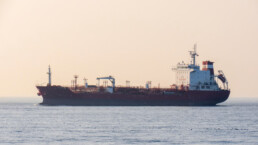

Ton-mile demand increases in most trade scenarios
VLCC rates spike to highest in years after new sanctions
Clean tanker demand likely to benefit from EU ban
Tightening Western sanctions on Russian oil are lifting crude and clean tanker rates, with ton-mile demand for mainstream tankers growing as its consumers turn to other suppliers during the winter months, several shipping and oil industry participants said Nov. 18.
Western authorities have sanctioned Rosneft and Lukoil, Russia’s top two oil producers, while the EU will ban imports of petroleum products made from Russian crude in third countries from January 2026.
Platts’ Global VLCC Index for non-scrubber, non-eco ships stood at $119,807/d on Nov. 17, nearly doubled from the level seen last month before the Rosneft and Lukoil sanctions were announced. Ship earnings in this segment are the highest in recent years. The Global Suezmax Index was $63,136.65/d on Nov. 17, also strong by historical standards, and up from $36,620.14/d on Oct. 3.
“The rates are fluctuating, but the floor this year should be higher than what we saw in the past few years,” said Associated Maritime Managing Director Liu Hongjun. “This is more than seasonal demand. US sanctions on Russia are at play.”
With rising ton-mile demand amid changing cargo flows, Janet Kong, CEO of Hengli Petrochemical International, said tanker rates will likely stay elevated but highly volatile.
“There’s no better time to be in the shipping industry,” Kong said. “If there’s more sanctions, freight rates will go up.”
Sanctions impact
China and India — the two largest buyers of Russian seaborne crude mostly carried by shadow fleet tankers operating outside the G7 price cap regime — have increased imports from the Middle East and Atlantic Basin in recent weeks amid sanctions pressure, according to shipping data from S&P Global Commodities at Sea.
“This has obviously been tying ships up among the voyages … creating a multiplier for tanker earnings,” said Adam Lanning, senior tanker analyst at shipbroker SSY.
The amount of oil in tankers globally is nearing a historic level of 2 billion barrels, the highest in at least eight years, according to CAS.
“At least to some extent, the oil that is now being sanctioned will be replaced by mainstream oil and therefore, creating additional demand for mainstream tankers,” said Giovanni Gavarone, Maersk Tankers’ director for Suezmax and Aframax pools.
“We are reasonably optimistic that the sanctions have a positive impact on freight,” Gavarone said at the World Maritime Merchants Forum in Hong Kong.
Clean tankers
The EU imported 467,000 b/d of refined products from India and Turkey, the No. 3 Russian seaborne crude buyer, in the first half of this year, according to CAS. Lanning said the bloc’s upcoming ban would lead to changes in cargo flows, often resulting in increased demand for product tankers.
“Indian oil that is being shipped to Europe will come under higher scrutiny and may be diverted to Latin America or Asia,” he said. “This may increase overall product tanker ton miles.
“Meanwhile, Middle East oil can be a straight swap for Indian products heading to Europe, so this presents a more neutral impact on the tanker market.”
The EU restriction could come into force when Russia keeps its exports of oil products low due to sanctions and Ukrainian drone attacks on its refineries, leading to more requirements of LR and MR tankers, according to Lanning.
CAS data shows Russia exported 1.99 million b/d of petroleum products in October, marginally up from 1.93 million barrels b/d in September, the lowest since Russia invaded Ukraine in early 2022.
“Already, the US Gulf MR market has witnessed the rally rates as more US oil has been diverted to countries such as Brazil in order to offset this decline in Russian imports,” Lanning said.
Separately, Asian naphtha importers could turn away from Russian supplies due to sanctions while increasing imports from the Middle East on mainstream LR and MR tankers, he added.
Clean tanker rates have been improving on some main trade routes in recent months. The Global Clean Tanker Index MR for non-scrubber, non-eco ships was at $20,429.86/d Nov. 17, the Global Clean Tanker Index LR1 at $23,017.89/d and the Global Clean Tanker Global Index LR2 at $36,066.02/d, according to Platts.
Source: Platts



Related News.

European Shipowners call on MEPs to back Commission proposal to include two Indian yards in the EU ship recycling list
The Environment Committee of the European Parliament votes on 4 November on a motion for resolution objecting to the Commission’s proposal to add two…
Oversea signs commercial agreement with UECC following Successful Pilot
Following a successful pilot onboard Auto Advance, UECC has chosen to enter into a commercial agreement with Oversea. The pilot demonstrates how…

First NABEP Crude Cargo Under U.S. Agreement Arrives in Texas
Shipment of 1 million barrels arrived as NABEP production passes 223,000 barrels of oil equivalent per day. Two tankers carrying 1 million barrels of…
LNG carrier prices fall to $245 million, threatening Korean Shipbuilders’ Margins
Prices for high-value vessels, including liquefied natural gas carriers and ultra-large container ships, have begun to decline despite rising…
Vehicle Carrier Safety Forum publishes new Fire Drill Guidelines for vehicle carrying vessels
The Vehicle Carrier Safety Forum has published new Fire Drill Guidelines for Vehicle Carrying Vessels, providing vessel operators with a practical…
Is an Atlantic Basin crude glut on the cards?
Atlantic crude discounts fail to offset high freight to Asia, raising the risk of a regional glut as VLCC availability tightens. Freight…
The future of trade infrastructure in Europe is connectivity
One year after its inauguration, Rijeka Gateway offers a glimpse into the future of European trade. On 10 September last year,…

Allied – Weekly Market Review – Week 43
Please find below the Allied Weekly Report for Week 43 | 2026 ALLIED - Weekly Market Report- Week 43

Intermodal Report – Week 43 2026
Please find below the Intermodal market report for week 43 2026. Intermodal Report Week 43 2026
Wind Challenger-Equipped LNG Dual-Fueled Coal Carrier ‘MAIZURU KAZENOMAI’ Delivered
-While Supporting a Stable Energy Supply, Reducing Environmental Impact - Mitsui O.S.K. Lines announced the delivery and entry into service of an…
Subscribe to our newsletter!
if you dont want to swim alone in the ocean of news, sign up for the newsletter, and you will receive daily all the important news of world shipping!
