Intermodal Report – Week 46 2025


Intermodal Weekly Market Report
Please find attached below the Intermodal market report for week 46 2025.
Intermodal Report Week 46 2025
The following text is the summary of Intermodal’s Weekly Market Report for smartphone users.
Market Insight
By Nikos Tagoulis, Senior Analyst
Geopolitics drew attention once again in 2025, as hostilities between Ukraine and Russia escalated, casting uncertainty over the Black Sea market. Ukraine deployed a coordinated mix of cruise missiles and strike drones, targeting oil-loading facilities at Novorossiysk port. The attack forced a brief suspension of operations, also affecting briefly the neighbouring CPC terminal. In response, Russia launched a drone strike on Odesa, Ukraine’s primary agricultural export hub, damaging local power facilities. These events follow Russia’s large strike on Ukraine’s natural gas pipeline network in October, a calculated attempt to sever gas supply and heighten economic pressure ahead of winter. Targeting energy infrastructure has been a persistent element of the conflict since the 2022 invasion, with Russia systematically striking power generation and heating systems, while Ukraine has repeatedly targeted Russian refineries, fuel depots, and export terminals.
The tanker market reacted to these developments, with Suezmax TD6 spot rate (Black Sea-Mediterranean), rising by 6% and continuing to climb, surpassing currently $100,000/day. While news of Novorossiysk’s resumption of operations helped ease concerns over supply shortages, the continued hostilities underscore the fragility in the Black Sea, a maritime corridor historically central to both military and commercial strategy and today vital for global Suezmax and Aframax trades, as Novorossiysk alone handles approximately 2% of global oil exports. Moreover, the proximity of the CPC terminal, which moves roughly 80% of Kazakhstan’s crude oil output from the oilfield of Tengiz to Black Sea via pipeline through Russian territory, further amplifies the strategic importance of the area. A prolonged closure caused by escalating hostilities could force Kazakhstan to reroute volumes through the Caspian Sea and the BTC pipeline to Ceyhan, Turkey. While operationally feasible and entailing less geopolitical risk since it avoids Russian territory, this alternative is slower, costlier, and more logistically complex. Despite Novorossiysk reopening and Black Sea trade routes remaining operational, the risk of renewed disruptions persists, as winter amplifies the strategic significance of energy assets, and both Russia and Ukraine have already demonstrated their willingness and capability to strike them.
Additionally, critical factor in such operational interruptions is the duration, as brief closures may trigger short-term spot rate spikes, though market sentiment typically eases once operations resume. A more prolonged disruption would likely lead to more sustained freight increases amid limited regional tonnage as some owners would avoid the region, increased war-risk premiums, and eventually reshape of trade flows.
In parallel with ongoing military operations, Ukraine is addressing energy shortfalls ahead of the winter heating season caused by the Russian strikes on domestic gas pipelines in October. To this end, it has secured an agreement with Greece to import US LNG, with subsequent transit via pipeline using Greece’s regasification terminals and the Vertical Corridor network through Bulgaria, Romania, and Moldova. While more expensive than previous overland sources, the arrangement is critical to meeting Ukraine’s urgent natural gas needs, ensuring winter heating, and simultaneously reinforcing Greece’s strategic role as a key entry point for US LNG into Europe. From a shipping perspective, the deal shifts incremental natural gas volumes from overland to seaborne transport, supporting transatlantic LNG demand and partially absorbing a portion of the expanding US natural gas output.
Looking ahead, the ongoing Russia-Ukraine war continues to pose a risk to Black Sea energy flows as geopolitical tensions and hostilities intensify. At the same time, Ukraine’s urgent gas needs are driving additional US LNG exports, highlighting the link between geopolitics and global energy markets. Overall, geopolitics remains a key driver of energy markets in 2025, with attacks on critical assets, such as oil terminals and power grids, creating persistent uncertainty and prompting market participants to closely monitor developments, as the conflict on the Ukrainian front navigates its fourth year with no meaningful prospects for a ceasefire on the horizon.



Related News.

European Shipowners call on MEPs to back Commission proposal to include two Indian yards in the EU ship recycling list
The Environment Committee of the European Parliament votes on 4 November on a motion for resolution objecting to the Commission’s proposal to add two…
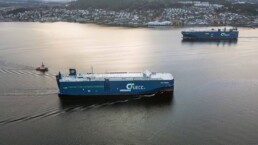
Oversea signs commercial agreement with UECC following Successful Pilot
Following a successful pilot onboard Auto Advance, UECC has chosen to enter into a commercial agreement with Oversea. The pilot demonstrates how…
First NABEP Crude Cargo Under U.S. Agreement Arrives in Texas
Shipment of 1 million barrels arrived as NABEP production passes 223,000 barrels of oil equivalent per day. Two tankers carrying 1 million barrels of…
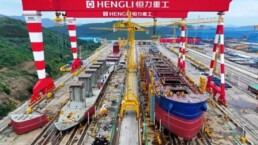
LNG carrier prices fall to $245 million, threatening Korean Shipbuilders’ Margins
Prices for high-value vessels, including liquefied natural gas carriers and ultra-large container ships, have begun to decline despite rising…
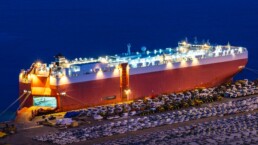
Vehicle Carrier Safety Forum publishes new Fire Drill Guidelines for vehicle carrying vessels
The Vehicle Carrier Safety Forum has published new Fire Drill Guidelines for Vehicle Carrying Vessels, providing vessel operators with a practical…
Is an Atlantic Basin crude glut on the cards?
Atlantic crude discounts fail to offset high freight to Asia, raising the risk of a regional glut as VLCC availability tightens. Freight…
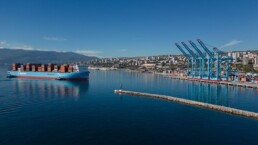
The future of trade infrastructure in Europe is connectivity
One year after its inauguration, Rijeka Gateway offers a glimpse into the future of European trade. On 10 September last year,…

Allied – Weekly Market Review – Week 43
Please find below the Allied Weekly Report for Week 43 | 2026 ALLIED - Weekly Market Report- Week 43
Intermodal Report – Week 43 2026
Please find below the Intermodal market report for week 43 2026. Intermodal Report Week 43 2026
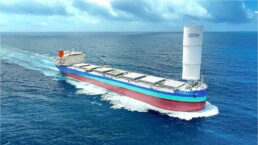
Wind Challenger-Equipped LNG Dual-Fueled Coal Carrier ‘MAIZURU KAZENOMAI’ Delivered
-While Supporting a Stable Energy Supply, Reducing Environmental Impact - Mitsui O.S.K. Lines announced the delivery and entry into service of an…
Subscribe to our newsletter!
if you dont want to swim alone in the ocean of news, sign up for the newsletter, and you will receive daily all the important news of world shipping!
