APM Terminals create a culture of safety using AI
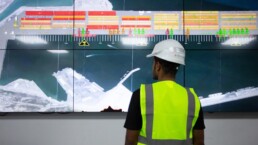

Heavy traffic, distracted drivers and the occasional wandering lion. These are just a few of the risks our terminal workers could face today. Our terminals are sprawling and fast-paced operations, and ensuring the safety of our team – and those within our duty of care – is a commitment that goes beyond policy compliance to our culture.
We’re tapping some exciting AI-tech to help make that a reality.
The vision: from reactive to proactive safety
 Across six select terminals, we’ve piloted and continue to evolve a programme of cutting-edge AI safety solutions, designed to turn information into action and meaningful culture change.
We’ve deployed a system built on computer vision and AI language models to raise safety standards. This technology goes beyond simply recording incidents; it actively works to predict and prevent them. By analysing real-time CCTV footage and detecting potential risks like unsafe proximity to vehicles, speeding or improper personal protective equipment usage, the system equips supervisors with clear, actionable, data-backed insights.
Siddhartha Kulkarni, Tech Platform Lead at APM Terminals says: “In safety, technology has traditionally been used to reactively look at ‘what went wrong?’ Our goal is to create a proactive alert ecosystem that flags safety risks and helps us prevent them from turning into actual accidents.”
The goal of the technology is not to police compliance, but to coach – for example enabling terminal leaders to identify and address dangerous behaviours in real-time. Our Safety culture is rooted in people, and the intent is to empower individuals with passion and care to deliver business priorities safely and effectively.
A toolbox for safer operations
The AI-driven solution combines several layers:
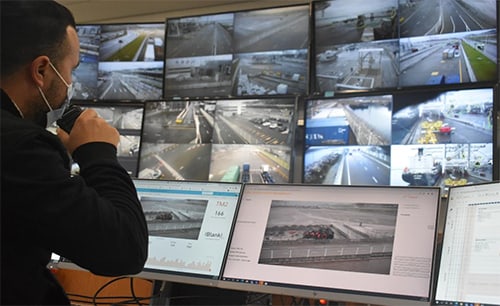
- Smart CCTV
Installed with enhanced detection angles, these systems observe and understand movement across terminals, capturing hazardous behaviors like distracted driving or wildlife intrusions like the regular lion sightings at Pipavav. - AI-based incident detection
Alerts supervisors to specific safety concerns by analysing behaviors, not identities. No facial recognition is used; the focus is on improvement and training. - Integrated reporting & inspections
All detection data is funneled into a central system that informs frontline leaders, allowing for micro-interventions and real-time coaching. - AI chatbot assistant
This internal tool surfaces video snippets and relevant safety data without manual searching, accelerating decision-making and improving training feedback loops.
Designed for each terminal’s real-world needs
Each of the six pilot terminals tested the AI technology in real-world, locally specific scenarios: from managing high-traffic intersections, detecting mobile phone use behind the wheel, and even responding to wildlife incursions like lion sightings. The adaptability of the system to real local operating realities is what makes it powerful – it’s not a one-size-fits-all solution.
The programme is now entering a maturing phase, with a focus on refining workflows, enhancing interfaces, and making the system both usable and more impactful. According to Kulkarni, the approach to this phase is deliberately incremental, with a clear emphasis on “refining the technology, proving its effectiveness, and gradually improving its capabilities before wider implementation”.
Early wins, growing confidence
While still in development, early indicators suggest the program is already making a difference: reducing deviations, increasing visibility, and strengthening frontline safety dialogue. Teams are more engaged, and supervisors are better equipped. Feedback from terminals highlights a clear shift from reacting after incidents to preventing them before they happen. The focus is not just on installing technology, but on building a disciplined, caring, and data-informed safety culture.
Looking ahead: Safety as a scalable system
This year marks a turning point. With the introduction of vision-based large language models, training the AI has become faster, more accurate, and more cost-effective. And as the system gets smarter, so do our people. We’re building a feedback-driven safety ecosystem, one that empowers people.
Technology with a soul
Ultimately, AI is just a tool. What drives safety is people. It’s in the choices they make, the habits they build, and the way they look out for one another. Safety happens when teams stay alert, take ownership, and engage with care and consistency.
This program is about building such stronger safety cultures. That means creating systems that support real-time awareness, empower supervisors, and help everyone make safer decisions in the moment. As Aslak Ross, Head of Safety & Resilience at APMT, puts it: “Modern technology can provide us with abundant amounts of data. What really matters is how we utilize this data to make real behavioural shifts amongst our colleagues. This is why the supporting follow-up and coaching processes are critical to enable lasting positive and caring safety culture.”
We’re not just building safer terminals; we’re reshaping mindsets, strengthening behaviors, and creating a safer future.



Related News.
Intelligent Skies, Secure Seas: Navigating Connectivity, Cyber Resilience, and AI Liability at the 5th CSN Greece ICT Conference
The 5th CSN Greece ICT Conference, held on 19th November 2026 at the Ploes Floating Venue in Paleo Faliro, Athens, successfully convened maritime…

EU moves to ban tankers insured in Russia, repair services at Russian refineries
EU targets Russian-insured tankers, refineries Von der Leyen announces 22nd sanctions package All 27 member states must approve new…
IMO tackling fraudulent registries together
Strong national systems and international information sharing are crucial to tackling fraudulent registries and fraudulent ship registration…
Open letter on freedom of navigation and the protection of seafarers
Dear High Representative Kallas, Dear Foreign Affairs Ministers, European Shipowners | ECSA, BIMCO, the Cruise Lines International Association…

Davies Turner warns of Rising Asia-UK Container Disruption and European Port Congestion
Davies Turner, one of the UK’s largest independent freight forwarding and logistics companies, says that disruption to container shipments from Asia…
Disruptions still dominate tanker market outlook
"This year, tanker markets have been affected by disruption to transits through the Strait of Hormuz, the Houthi blockade of Saudi Arabian Red Sea…
Panama’s President called on to match COP31 Heroism with action at shipping climate talks
As a series of crucial meetings tasked with cutting greenhouse gas emissions from global shipping takes place this week and next, environmental NGOs…

Trafigura appoints Helio Cumbi as Executive Director, Mozambique
Trafigura has appointed Helio Cumbi as Executive Director, Mozambique, and Business Development Lead for East and Southern Africa Oil. Helio is a…
“K” LINE holds FY2026 Global Dry Bulk Meeting
Kawasaki Kisen Kaisha, announces that it held a global meeting for its dry bulk business at the company’s head office on November 9 and 10. The…
MOL launches ‘AQuA’ safety and quality improvement initiative
Standardizing Group-wide Safety and Quality Assessment Criteria to Enhance Vessel Safety and Quality Mitsui O.S.K. Lines, announced the launch of…
Subscribe to our newsletter!
if you dont want to swim alone in the ocean of news, sign up for the newsletter, and you will receive daily all the important news of world shipping!
