US implements scaled back fees on Chinese ships entering US ports
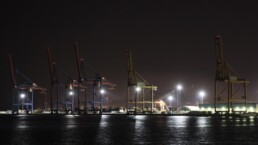

US implements reduced port fees on Chinese vessels
Fees unlikely to negatively impact US coal exports
China retaliates with own fees on US-linked ships
The US on Oct. 14 implemented revised port fees on Chinese-linked vessels that are far less stringent than originally proposed, posing less risk to the US coal industry.
The Office of the US Trade Representative’s initial proposal, which charged up to $1.5 million per entrance of Chinese-built vessels, received major backlash from most US industry. coal producers, with their smaller cargoes and thin margins, saw the fees as an existential threat.
Final rates from the USTR drastically reduced the penalties after metals and mining companies – with the exception of domestic steelmakers – strongly opposed the USTR’s initial fees. The US port fees will charge Chinese owned or operated ships $50/net ton, rising $30 each year through 2028. Vessels will not be charged more than five times per year.
The new, reduced port fees will not have a “widespread negative effect” on the coal industry, Matt Warder, the CEO of Seawolf Research, a management consultancy and financial analytics firm.
“That has been the attitude of producers I’ve spoken with thus far,” Warder told Platts, a part of S&P Global Commodity Insights.
The USTR provided exemptions for vessels below 80,000 deadweight tons in dry bulk capacity, and for vessels arriving at ports empty or in ballast.
Warder stressed that the new fees will not be applied to empty ships arriving in the US for loading – which make up most, if not all, vessels used for coal exports.
The US coal industry relies heavily on international sales, shipping about 98.3 million metric tons of coal in 2024, including 11.9 million mt to China, or 12% of all coal exports, according to S&P Global Market Intelligence data.
The USTR first announced plans to implement port fees on Chinese-affiliated ships entering US ports earlier this year, which was prompted by an investigation under the Biden administration that determined China’s control of global shipbuilding restricts US commerce.
President Donald Trump issued an executive order on April 9 directing agencies to revitalize the domestic maritime industry by strengthening shipbuilding and addressing China’s control of the industry.
In response to the US implementing fees, China’s Ministry of Transport responded on Oct. 10 by announcing their own port fees for vessels owned, operated or built by US interests that dock at Chinese ports. Chinese-built ships will be exempt from the port fees, which mirror US rates, on US-linked vessels.
The retaliatory action comes after Trump threatened to impose an additional 100% tariff on Chinese imports and place export controls on “any and all critical software” by Nov. 1. The threat came just days after China announced it would curb exports of critical minerals.
Source: PLATTS



Related News.

European Shipowners call on MEPs to back Commission proposal to include two Indian yards in the EU ship recycling list
The Environment Committee of the European Parliament votes on 4 November on a motion for resolution objecting to the Commission’s proposal to add two…
Oversea signs commercial agreement with UECC following Successful Pilot
Following a successful pilot onboard Auto Advance, UECC has chosen to enter into a commercial agreement with Oversea. The pilot demonstrates how…

First NABEP Crude Cargo Under U.S. Agreement Arrives in Texas
Shipment of 1 million barrels arrived as NABEP production passes 223,000 barrels of oil equivalent per day. Two tankers carrying 1 million barrels of…
LNG carrier prices fall to $245 million, threatening Korean Shipbuilders’ Margins
Prices for high-value vessels, including liquefied natural gas carriers and ultra-large container ships, have begun to decline despite rising…
Vehicle Carrier Safety Forum publishes new Fire Drill Guidelines for vehicle carrying vessels
The Vehicle Carrier Safety Forum has published new Fire Drill Guidelines for Vehicle Carrying Vessels, providing vessel operators with a practical…

Is an Atlantic Basin crude glut on the cards?
Atlantic crude discounts fail to offset high freight to Asia, raising the risk of a regional glut as VLCC availability tightens. Freight…
The future of trade infrastructure in Europe is connectivity
One year after its inauguration, Rijeka Gateway offers a glimpse into the future of European trade. On 10 September last year,…

Allied – Weekly Market Review – Week 43
Please find below the Allied Weekly Report for Week 43 | 2026 ALLIED - Weekly Market Report- Week 43

Intermodal Report – Week 43 2026
Please find below the Intermodal market report for week 43 2026. Intermodal Report Week 43 2026
Wind Challenger-Equipped LNG Dual-Fueled Coal Carrier ‘MAIZURU KAZENOMAI’ Delivered
-While Supporting a Stable Energy Supply, Reducing Environmental Impact - Mitsui O.S.K. Lines announced the delivery and entry into service of an…
Subscribe to our newsletter!
if you dont want to swim alone in the ocean of news, sign up for the newsletter, and you will receive daily all the important news of world shipping!
