Zeabuz expands into defense and security with new dual-use autonomy platform
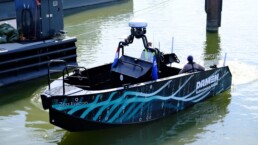

Zeabuz has taken a decisive step into the defense and security domain with the launch of its Dual-Use Autonomy Platform. The launch was unveiled together with Damen Shipyards Group during the Damen Maritime Festival, marking a transformative moment in the company’s evolution and positioning Zeabuz as a technology provider serving both civilian and naval applications.
Zeabuz is a member of both Ocean Autonomy Cluster (OAC) and NORDSEC Defence and Security Cluster, and part of the FI Ocean Spacer Incubator. This strategic positioning reflects the company’s growing role at the intersection of ocean technology, defense, and maritime innovation.
Transforming vessels into force multipliers
The Zeabuz Dual-Use Autonomy Platform is designed to transform naval vessels into force multipliers: remotely instructed, autonomously navigated, and capable of adjusting mid-mission without continuous oversight. The platform has been integrated on the ZeaFalcon, a seven-meter Damen HDPE Uncrewed Surface Vessel (USV) optimized for defense and security missions. It includes a suite of advanced operational features such as autonomous navigation, collision avoidance, remote command and control, autodocking, and connectivity-denied operations.
The system is well suited for a wide range of naval operations, including intelligence, surveillance and reconnaissance, mine countermeasures, anti-submarine warfare, search and rescue, sharp missions, and logistical or littoral support. By enabling remote and autonomous functionality, it allows operators to manage complex missions efficiently and safely.
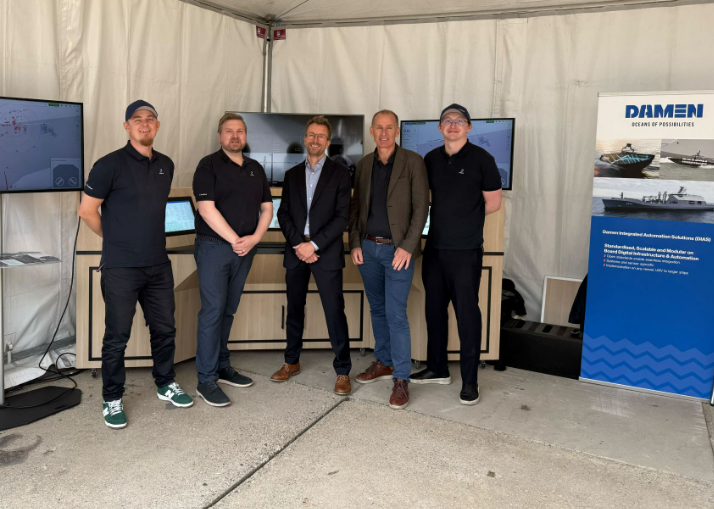 Official launch during Damen Maritime Week. From left: Levi Jamt (Lead Developer Human Machine Teaming), Carl Johansson (VP Commercial & Strategy), Øyvind Smogeli (CEO & CTO), Henrik Stray (COO) & Robin Stokke (Autonomy Engineer).
A response to growing operational needs
“This launch represents a new chapter for Zeabuz,” said Øyvind Smogeli, CEO & CTO of Zeabuz. “Our scalable autonomy platform has already proven its value in commercial operations, and now we are bringing these capabilities to the defense and security sector. By entering the naval market, we are expanding our mission: delivering autonomy that saves lives, strengthens resilience, and enhances operational capacity across the maritime domain.”
The ZeaFalcon demonstrates how advanced autonomy can protect lives and strengthen mission capability at sea. By reducing the need for human presence in high-risk environments, the platform enables safer ISR, SAR and mine countermeasure missions, while allowing a single operator to control multiple vessels simultaneously.
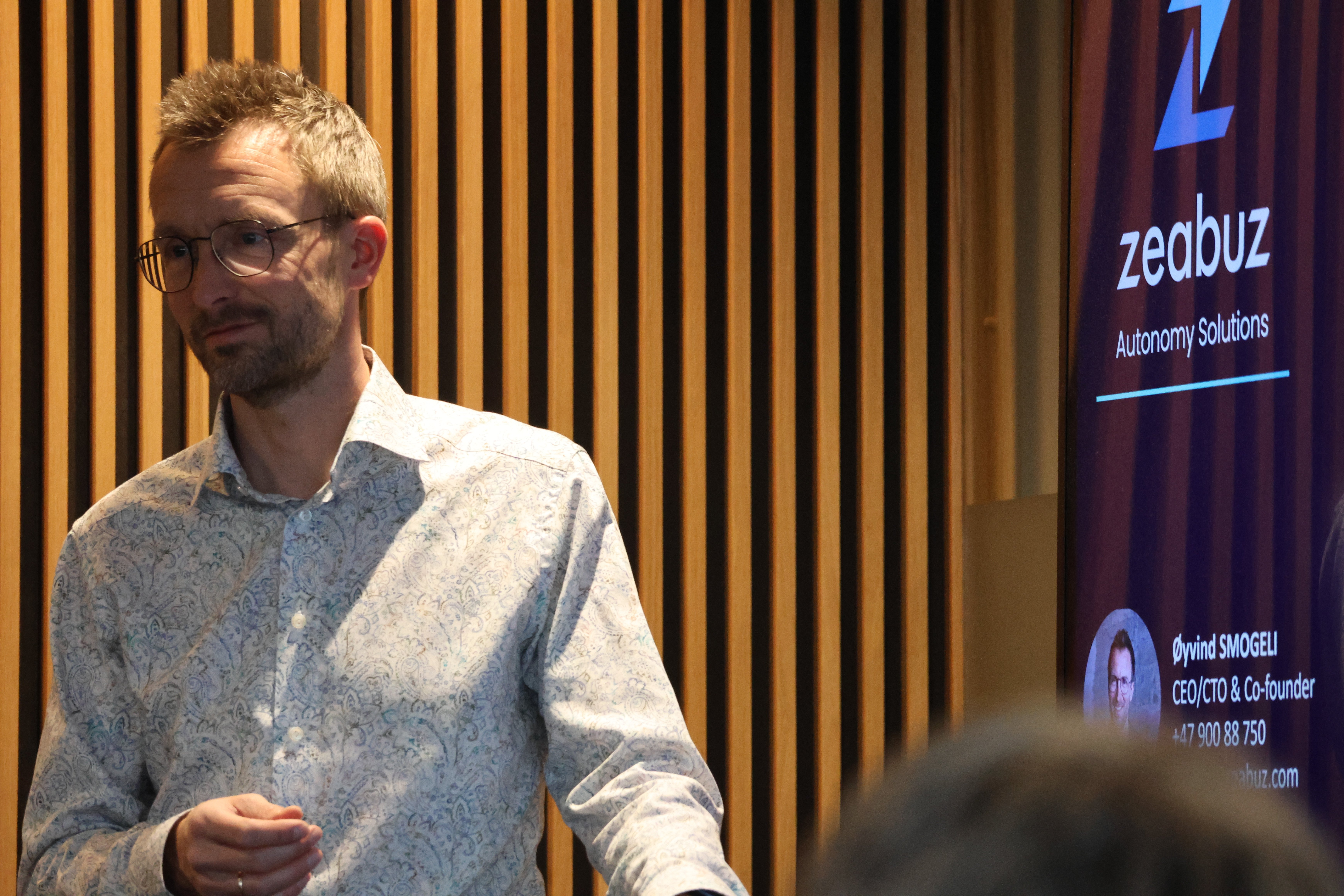 Øyvind Smogeli, CEO & CTO of Zeabuz.Photo: Lars Bugge Aarset/Fremtidens industri
Ready for real missions
With this launch, Zeabuz is making scalable, dual-use maritime autonomy operational and accessible for real naval missions. The company plans to continue developing its defense and security offering in close collaboration with industry and government partners. This will ensure that maritime operators can deploy safe, cost-efficient and reliable autonomy solutions across vessel sizes and mission types, from small uncrewed platforms to large, crewed ships.
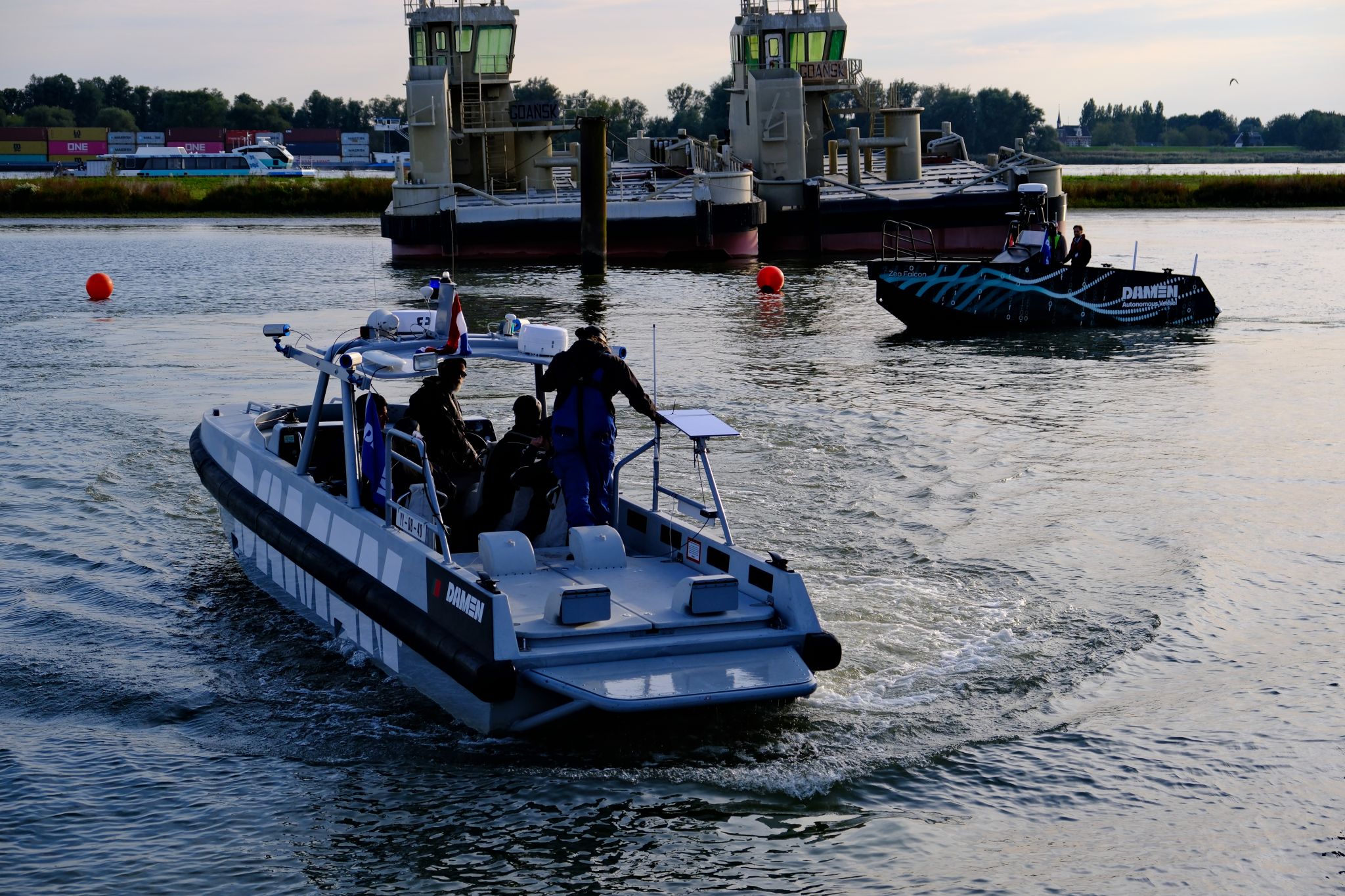
Photo: Zeabuz



Related News.

Poland’s additional national requirements distort competition says Danish Shipping
Poland has introduced a national survey requirement for smaller foreign-flagged vessels operating in Polish waters. This creates significant…

Battery Vessels could help electrify most of Global Shipping Emissions
Battery-electric ships are economical only if the pack is cycled frequently, so they have been confined to short-sea, ferry and harbour vessels…

Mintra and Ledgid explore collaboration to connect Maritime digital identity, learning and workforce development
Mintra® and LEDGID are exploring opportunities to bring together complementary capabilities in digital learning, maritime training, professional…

World Shipping Council calls for global agreement on shipping emissions as industry investment surpasses $200 billion USD
The World Shipping Council (WSC) is calling on governments to agree on binding global greenhouse gas regulations for international shipping without…

What happened to the ITF whistleblower’s complaint?
In January 2026, a whistleblower complained that International Transport Workers’ Federation (ITF) General Secretary Stephen Cotton had manipulated…

Growing regulatory scrutiny puts seafarer wellbeing firmly on maritime safety agenda, VIKAND warns
Seafarer wellbeing is coming under greater regulatory scrutiny as international rules and guidance increasingly recognise crew health and welfare as…

Good Times Bad Times the Premium Stays with the Strait
In October, we wrote that if the transfer network off Oman kept pace, Gulf crude would carry China's refill and keep drawing tonnage east,…

Allied Weekly Market Review Week 47
Pls find below the Allied - Weekly Market Review - Week 47 ALLIED - Weekly Market Report- Week 47


Climate TRACE releases September 2026 Emissions Data
Climate TRACE reported that global greenhouse gas (GHG) emissions for the month of September 2026 totaled 4.7 billion tonnes CO₂e. This remains…
Subscribe to our newsletter!
if you dont want to swim alone in the ocean of news, sign up for the newsletter, and you will receive daily all the important news of world shipping!
