NGOs Slam UN Shipping Body Deferral of Plan to Cut Climate Pollution
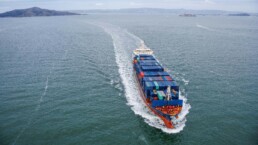

As a special meeting of the International Maritime Organization’s Marine Environment Protection Committee (IMO, MEPC/ES.2) closes in London, the Clean Shipping Coalition (CSC) expressed its huge disappointment in the decision by member states to delay consideration of the adoption of the IMO’s Net-Zero Framework (NZF) for one year and called on member states to use the time to ensure the framework is strengthened and adopted next time round.
“By delaying adoption of its Net Zero Framework, IMO has today squandered an important opportunity to tackle global shipping’s contribution to climate breakdown”, said John Maggs, the Clean Shipping Coalition’s Representative at the IMO. “With climate warming impacts being felt everywhere on Earth, kicking this decision down the road is simply evading reality. Governments serious about climate action must spend the next 12 months rallying every nation that supports the framework, convincing those who are on the fence, or opposing, that its adoption is the only sane way forward.”
”However, all is not lost – not by a long shot, as there is an immediate opportunity to slash GHG emissions from shipping, minimize fuel burn and the overall cost of the energy transition and that is to strengthen and make enforceable the Carbon Intensity Indicator (CII), the IMO’s cornerstone energy efficiency measure”, added Maggs. “There’s no time to waste, at MEPC 84 April 2026 member states need to focus all their attention on transforming the CII into the energy efficiency powerhouse needed to quickly right this ship and put it back on route to being a climate solution.”
“While the Net-Zero Framework is far from perfect, adopting it would have been an important step to deliver on the IMOs commitment and send key signals to an industry that was not only asking for a global framework, but actively supported this deal”, said Maggs.
The IMO’s Net-Zero Framework is aimed at reducing greenhouse gas (GHG) emissions from ships, in line with its GHG Strategy. The NZF includes a global fuel standard (GFS), requiring ships “to gradually reduce how polluting its ship fuel can be (i.e. how much greenhouse gas is emitted for each unit of energy used, across a fuel’s life cycle)”. It also includes a mechanism for setting prices on the GHG ships emit, to encourage the shipping industry to lower emissions as per the global fuel standard.
“Delay costs the climate — and coastal, Indigenous Peoples and Arctic communities are already paying the price for inaction”, said Elissama Menezes, Co-Founder and Director of Equal Routes. “This week’s non-outcome should mean that states and the marine sector should double down on related efforts to reduce the impacts from the triple planetary crisis.”
“Implementing revised Carbon Intensity Indicator (CII) targets to improve efficiency of the global fleet; investing in wind to promote its scaling up; agreeing to comprehensive well to wake LCA guidelines which ensure all methane based fuels aren’t part of decarbonation pathways; and adopting mandatory measures in early 2026 at PPR13 to reduce black carbon from shipping emissions can all be moved on now to support the sector’s zero by 2050 ambitions”, she added.
“The delay leaves the shipping sector drifting in uncertainty. But this week has also shown that there is a clear desire to clean up the shipping industry, even in the face of US bullying”, said Alison Shaw, IMO Manager at Transport & Environment. “The world cannot let intimidation and vested interests dictate the pace of climate action. Climate-ambitious countries must use this moment to build a strong majority in support of meaningful decarbonisation. They will be the ones that benefit from the economy of tomorrow, not the geopolitical power games of the past.”
“Getting the Net-Zero Framework adopted in this MEPC ES.2, however imperfect, was fundamental for shipping to stay within reach of its own decarbonation targets”, said Anaïs Rios, Senior Shipping Policy Officer, Seas At Risk. “Emotions have run high this week at the IMO, with once high-ambitious alliances wavering and strategies eclipsing reason. With talk of unity versus division, no single flag should dictate the world’s climate course. With countries like Saudi Arabia leading efforts to delay, few expected a postponement to prevail but here we are. What matters now is that countries rise up and come back to the IMO with a louder and more confident yes vote that cannot be silenced. The planet and the future of shipping does not have time to waste.”
“The adoption of Net-Zero Framework would have marked a crucial first step toward reducing global shipping emissions and supporting vulnerable countries in the transition“, said Jenny Helle, Expert on Decarbonisation of Aviation and Shipping at Carbon Market Watch. “Far from rushed, it represented years of negotiations, research, and collective effort. It was a clear and urgent demand from both the industry and the public. Yet, due to pressure from the Trump administration and major fossil fuel producing countries, this opportunity for progress was lost. We now urge the public and industry to keep pushing for immediate action to cut emissions from global shipping.”



Related News.

European Shipowners call on MEPs to back Commission proposal to include two Indian yards in the EU ship recycling list
The Environment Committee of the European Parliament votes on 4 November on a motion for resolution objecting to the Commission’s proposal to add two…
Oversea signs commercial agreement with UECC following Successful Pilot
Following a successful pilot onboard Auto Advance, UECC has chosen to enter into a commercial agreement with Oversea. The pilot demonstrates how…

First NABEP Crude Cargo Under U.S. Agreement Arrives in Texas
Shipment of 1 million barrels arrived as NABEP production passes 223,000 barrels of oil equivalent per day. Two tankers carrying 1 million barrels of…
LNG carrier prices fall to $245 million, threatening Korean Shipbuilders’ Margins
Prices for high-value vessels, including liquefied natural gas carriers and ultra-large container ships, have begun to decline despite rising…
Vehicle Carrier Safety Forum publishes new Fire Drill Guidelines for vehicle carrying vessels
The Vehicle Carrier Safety Forum has published new Fire Drill Guidelines for Vehicle Carrying Vessels, providing vessel operators with a practical…
Is an Atlantic Basin crude glut on the cards?
Atlantic crude discounts fail to offset high freight to Asia, raising the risk of a regional glut as VLCC availability tightens. Freight…
The future of trade infrastructure in Europe is connectivity
One year after its inauguration, Rijeka Gateway offers a glimpse into the future of European trade. On 10 September last year,…
Allied – Weekly Market Review – Week 43
Please find below the Allied Weekly Report for Week 43 | 2026 ALLIED - Weekly Market Report- Week 43

Intermodal Report – Week 43 2026
Please find below the Intermodal market report for week 43 2026. Intermodal Report Week 43 2026
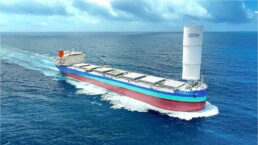
Wind Challenger-Equipped LNG Dual-Fueled Coal Carrier ‘MAIZURU KAZENOMAI’ Delivered
-While Supporting a Stable Energy Supply, Reducing Environmental Impact - Mitsui O.S.K. Lines announced the delivery and entry into service of an…
Subscribe to our newsletter!
if you dont want to swim alone in the ocean of news, sign up for the newsletter, and you will receive daily all the important news of world shipping!
