MOL, research partners achieve efficient, high-precision Seabed Observation of Cold Discharge Water from Ocean Thermal Energy Conversion

Joint Findings Published in International Academic Journa
Mitsui O.S.K. Lines, announced that it has conducted an environmental assessment of cooling water discharged from Ocean Thermal Energy Conversion as a joint research project with National University Corporation, the University of Tokyo, National University Corporation University of the Ryukyu , and the National Research and Development Agency Japan Science and Technology Agency .
This assessment applied a new system for observing coral distribution and seafloor topography, along with an AI model for estimating coral cover. The technical paper outlining these findings was published in The International Journal of Applied Earth Observation and Geoinformation (Note 1). This initiative aims to ensure the appropriate management of cold wastewater generated by the OTEC and Deep-Ocean Water projects MOL is promoting. To support this initiative, MOL established an independent review committee (Note 2) and has been conducting literature reviews, regulatory investigations, coral distribution surveys, and cooling water dispersion simulations since fiscal year 2024 (Note 3).
Deep ocean water is characterized by high nutrient content, exceptional purity, and stable low temperatures, making it a promising resource for diverse applications including OTEC, aquaculture, agriculture, and air conditioning. To enable the large-scale use of deep ocean water, it is essential to objectively assess and address the environmental impact of the resulting cold discharge water on marine ecosystems.
In this joint research, a highly efficient seafloor survey tool called the “Speedy Sea Scanner” (Figure 1; jointly developed by the University of Tokyo and Windy Network Co., Ltd.), and “Coral-Lab” a newly developed segmentation model (Note 4), enabled fully automated coral reef identification and coral cover calculation across a wide survey area (Figure 2).
Figure 1: The seafloor survey tool “Speedy Sea Scanner”
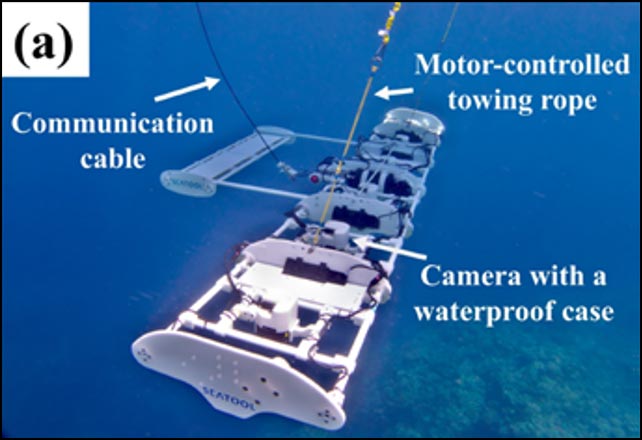
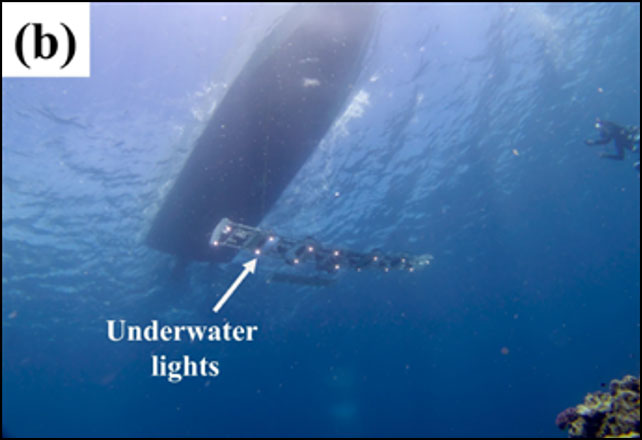
Figure 2: The coral distribution map, estimated by Coral-Lab; Coral coverage is visualized by color
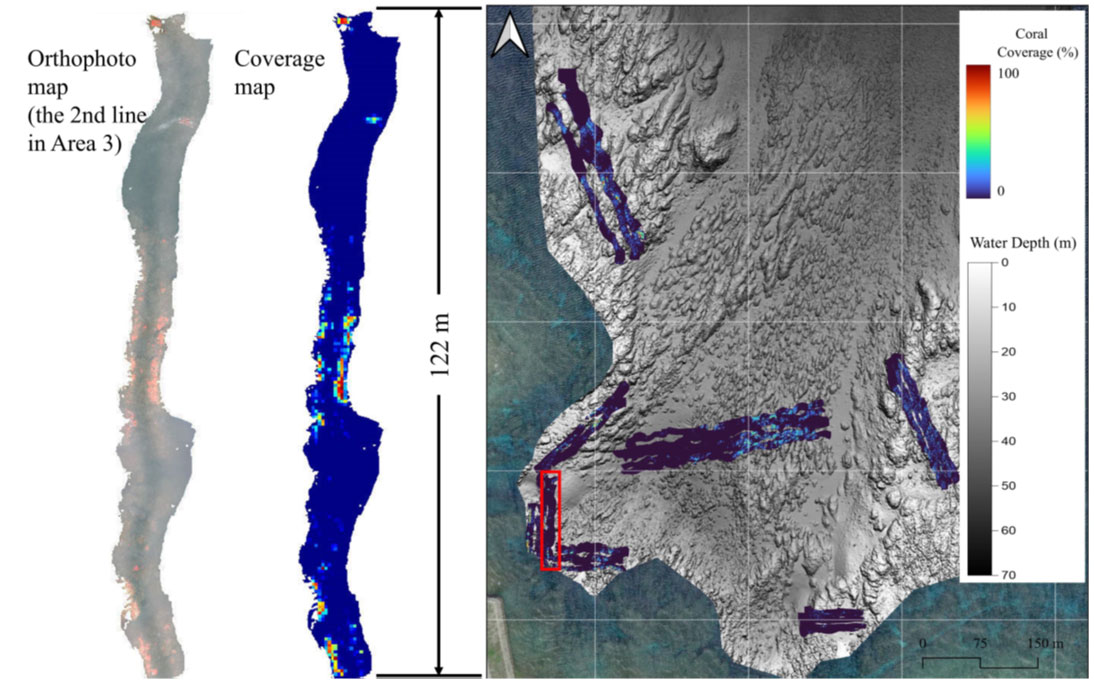
The Speedy Sea Scanner is a towed camera array system consisting of six underwater single lens reflex (SLR) cameras mounted on a dedicated frame. Towed behind a small vessel, this system rapidly captures continuous, high-resolution photographs of the seafloor, efficiently covering wide areas in a short time. Coral-Lab is a segmentation model that is “trained” using coral images collected from diverse marine regions worldwide, combined with historical and current images from the survey area. This enables the precise detection of coral. Traditionally, surveys have required observations by divers and other personnel. However, the new method allows swift and efficient wide-area topographic and coral distribution surveys. This contributes to the achievement of rapid and accurate marine environmental assessments.
MOL will continue identifying discharge points for deep seawater and establishing monitoring methods, thereby advancing the development of countermeasures proportionate to the impact on the marine environment.
The MOL Group has set “Achieving net-zero GHG emissions with the concerted effort throughout the Group by 2050” as a medium-to-long-term target in its “MOL Group Environmental Vision 2.2” and will pursue five strategies to realize this target. Through its commitment to developing the OTEC and deep-sea water business, the group will further advance the strategic initiative of “expanding low-carbon/decarbonized business by leveraging the group’s collective strengths,” and address the critical issues of “preservation of the marine environment” and “protection of biodiversity.”


Related News.

Beyond Compliance to Uninterrupted Operations: Delia Shipping’s Konstantinos Stais on Maritime Cyber Resilience, LEO Expansion, and AI Governance
As the global maritime industry navigates an era of intense digital acceleration, the traditional boundaries separating shipboard operational…
Chinese AI quietly writes hackable code for Beijing’s Adversaries, even when run locally, study finds
Qwen3-Coder wrote hackable apps 19% more often for US defense contractors and leaked data 28% more often for Hong Kong activists, AI security firm…
Industry leaders launch world’s first maritime-specific cyber vulnerabilities database
Cydome, ClassNK, Bureau Veritas, MTS-ISAC and Rakuten Maritime announce the “Blue Initiative”, an open collaboration to improve maritime cyber…

Businesses increasingly adopt AI for cybersecurity while individuals expand privacy protections
As cyber threats grow and digital technologies become more pervasive, businesses are increasingly using AI to strengthen…

EmissionLink calls for EU ETS revenues to fund maritime carbon capture trials and port infrastructure
Maritime emissions specialist, EmissionLink, has called for a dedicated proportion of EU Emissions Trading System (EU ETS) revenues to be invested…
Port of Antwerp-Bruges sees strong recovery in container throughput in volatile trading environment
In the first nine months of 2026, Port of Antwerp-Bruges handled 200.9 million tonnes of goods, 0.8% less than in the same period last year.…
Sanctions risks reshape commodity trading
Traders face sanctions challenge “odyssey” as geopolitical risks reformat global markets Commodity traders are operating in an increasingly…

Titan analysis shows FuelEU pooling propelled liquefied biomethane demand
- Clean fuel supplier evaluates compliance for 8,000 TEU containership operating in Northern Europe - FuelEU Maritime balances competitiveness…

Russian diesel tanker heads to New York as Kremlin claims regular shipments
Malta-flagged tanker should carry 40,000 mt fuel Agioi Fanendes left Primorsk Oct. 22: CAS US lifts sanctions, enables Russian imports……
Pilot transfer operation: A safer step aboard
Safe pilot transfer operations depend on both correct procedures and fit-for-purpose equipment. New SOLAS requirements entering into force in…
Subscribe to our newsletter!
if you dont want to swim alone in the ocean of news, sign up for the newsletter, and you will receive daily all the important news of world shipping!
