IMAS technology for unmanned surface vessels
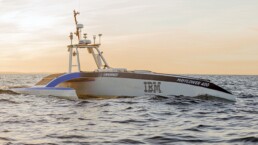

Addressing the growing challenges of high-speed USV operations
Once a niche technology, Unmanned Surface Vessels are now at the center of a profound transformation in the maritime industry. From offshore surveying and environmental monitoring to defense operations, USVs offer compelling advantages in efficiency, cost reduction, and human safety. However, as these autonomous and remotely operated vessels become more prevalent in our oceans and waterways, they bring unique operational challenges that require innovative solutions.
The remote operation of vessels at high speeds creates a distinct set of risks that traditional maritime safety approaches fail to address adequately. Hefring Marine’s Intelligent Marine Assistance System (IMAS) technology offers a solution designed to enhance USV operations and mitigate these emerging risks.
The high-speed USV challenge
The growing demand for faster, more efficient USV operations has created a critical safety gap. As USVs operate at increasingly high speeds to meet operational requirements, remote operators face unprecedented challenges in maintaining safe vessel control. Without the physical feedback and environmental awareness that comes from being present on a vessel, remote pilots must rely entirely on raw sensor data and video feeds that often provide incomplete situational awareness.
This information gap becomes particularly problematic during high-speed operations, where several critical factors converge to create dangerous scenarios:
1. Appropriate operating speed: Remote operators must maintain speeds that allow safe and accurate vessel control, taking into account the challenges of driving at high speed without the intuitive feel of being onboard. Operating at an appropriate speed ensures there is reduced risk of misjudgment and enhances overall safety.
2. Reduced reaction time: High-speed operations compress decision-making windows. Remote operators must process sensor data, assess risks, and execute control inputs within seconds, a challenge compounded by communication latencies and the cognitive load of interpreting multiple data streams simultaneously.
3. Sea conditions and speed: When operating remotely, it can be challenging to accurately assess sea state and conditions through cameras and sensors alone. At higher speeds, even minor misjudgments of wave height can have significant impacts on vessel stability and safety. Maintaining an appropriate speed provides a greater margin for handling unexpected changes in sea state.
Recent events highlight concerning trends in USV incident rates, with collision events increasing as deployment expands and operational speeds increase. A striking example occurred on June 23, 2025, near Channel Islands Harbor off California’s Ventura coast, when a Navy-operated unmanned surface vessel, apparently during a tow operation, received an unintended engine command. The USV accelerated unexpectedly and flipped the support towboat, capsizing it in the marina. Although emergency responders rescued the captain and no medical attention was accepted, the Navy immediately paused the exercise and implemented a safety stand‑down to investigate the root cause of the inadvertent command.
IMAS: A comprehensive solution for high-speed USV safety
Hefring Marine’s Intelligent Marine Assistance System (IMAS) was initially developed to enhance safety on high-speed manned vessels. This proven technology has now been specifically adapted for the unique requirements of USVs, creating an intelligent safety layer that bridges the awareness gap for remote operators during high-speed operations.
IMAS technology integrates seamlessly with existing USV control systems to provide:
Dynamic speed management: IMAS continuously monitors vessel speed in relation to environmental conditions, visibility,, providing real-time speed recommendations that optimize both safety and operational efficiency. The system helps remote operators maintain appropriate speeds for current conditions without sacrificing mission objectives.
Real-time risk assessment: IMAS continuously analyzes vessel speed against dynamic safety parameters, automatically adjusting recommendations as conditions change. This ensures that speed control remains appropriate even as weather and visibility evolve during operations.
Building the future of USV operations
Hefring Marine is actively working with maritime authorities and industry partners to help establish the standards and training requirements for safe USV operations. Their recent partnerships with Marine AI and Seabot Maritime demonstrates its commitment to building robust USV safety capabilities from the ground up, ensuring that as the industry grows, it does so with safety as a foundational priority.
As maritime authorities worldwide develop new regulations for USV operations, advanced safety systems like IMAS will be essential for meeting emerging compliance requirements, earning public trust, and enabling these vessels to reach their full potential. By addressing the unique challenges of high-speed, remote operations, IMAS not only supports regulatory compliance through comprehensive data logging for incident investigation and operational improvement, but also positions USV operators to safely capitalize on the speed and efficiency advantages that make these vessels so valuable across maritime applications.



Related News.

Poland’s additional national requirements distort competition says Danish Shipping
Poland has introduced a national survey requirement for smaller foreign-flagged vessels operating in Polish waters. This creates significant…

Battery Vessels could help electrify most of Global Shipping Emissions
Battery-electric ships are economical only if the pack is cycled frequently, so they have been confined to short-sea, ferry and harbour vessels…

Mintra and Ledgid explore collaboration to connect Maritime digital identity, learning and workforce development
Mintra® and LEDGID are exploring opportunities to bring together complementary capabilities in digital learning, maritime training, professional…

World Shipping Council calls for global agreement on shipping emissions as industry investment surpasses $200 billion USD
The World Shipping Council (WSC) is calling on governments to agree on binding global greenhouse gas regulations for international shipping without…

What happened to the ITF whistleblower’s complaint?
In January 2026, a whistleblower complained that International Transport Workers’ Federation (ITF) General Secretary Stephen Cotton had manipulated…

Growing regulatory scrutiny puts seafarer wellbeing firmly on maritime safety agenda, VIKAND warns
Seafarer wellbeing is coming under greater regulatory scrutiny as international rules and guidance increasingly recognise crew health and welfare as…

Good Times Bad Times the Premium Stays with the Strait
In October, we wrote that if the transfer network off Oman kept pace, Gulf crude would carry China's refill and keep drawing tonnage east,…

Allied Weekly Market Review Week 47
Pls find below the Allied - Weekly Market Review - Week 47 ALLIED - Weekly Market Report- Week 47


Climate TRACE releases September 2026 Emissions Data
Climate TRACE reported that global greenhouse gas (GHG) emissions for the month of September 2026 totaled 4.7 billion tonnes CO₂e. This remains…
Subscribe to our newsletter!
if you dont want to swim alone in the ocean of news, sign up for the newsletter, and you will receive daily all the important news of world shipping!
