Oil boom conceals a green energy jackpot
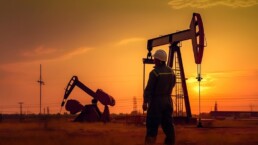

The fracking boom has already delivered one titanic surprise, making the United States the world’s largest oil producer in recent years. Long considered an environmental villain, this technology may have one more unexpected twist in store, inadvertently serving as a tool for accessing carbon-free electricity while undercutting costly alternatives like nuclear power. The big barrier to getting there is one massive surge of capital to work out the final kinks.
Meet geothermal power. The fundamental principle — generating energy from heat deep down in the Earth — has been in use for over a century. Pipe water underground, boil it off into steam, and use that to spin electricity-generating turbines. The difficulty of finding the precisely ideal geology for traditional methods, however, means it has remained a niche source of generation. Few areas of the globe produce enough heat, close enough to the surface. California accounts for two-thirds of U.S. geothermal power production, but this represents a measly 5% of the state’s total electricity supply.
This is where fracking comes in. Energy companies figured out that they could fracture rock by injecting water, sand and chemicals at high pressure, freeing vast deposits of fossil fuels trapped in shale formations. Over the past 20 years, that’s nearly tripled U.S. oil production. It also set off a race to improve drilling technologies. Wells are now longer – about a quarter of new wells in the Permian oil basin extend more than three miles horizontally, while harvesting oil in dozens of areas simultaneously – and the time it takes to drill down by one foot has been cut in half.
The shale boom has probably already passed its peak. These drilling techniques, and the roughneck workers manning today’s oil drills, can be put to greener uses. Over 75% of the investment required for an advanced geothermal project involves capacity and skills commonly used by oil firms, according to the International Energy Agency. Moreover, the overlap means the technology has a large amount of support in Washington. While President Donald Trump’s landmark tax and spending bill slashed subsidies for solar and wind, it kept investment and production incentives for geothermal.
Drillers today have no problem reaching down to 8,000 feet, where vast swaths of the earth underneath the United States are hot enough to produce power. Moreover, smashing rock can release a lot of trapped water, making it yet cheaper to create the steam loop.
It’s not a coincidence that oil executives have recently founded a clutch of geothermal firms. Sage Geosystems CEO Cindy Taff spent over 30 years with Shell. Fervo Energy founder Tim Latimer was a drilling engineer in the Permian. Eavor’s CEO and co-founder Robert Winsloe spent decades in and around global oil patches.
Continuing progress led the U.S. government to estimate in May that Nevada and neighboring states are capable of producing about 10% of the nation’s electricity from geothermal. Today’s capacity weighs in at about a tenth of that. Further reduction in cost, and deeper wells, theoretically mean production capacity might be far larger than all local electricity demand.
That demand is now sharply rising, following more than a decade of stagnation thanks to the proliferation of power-hungry data centers feeding artificial intelligence. In response, investors, utilities and governments are taking a fresh look at novel sources of energy. Right now, solar panels and batteries dominate construction because they are usually the cheapest and quickest options available. Natural gas fills in with on-demand power. Far-out ideas like space-born solar and nuclear fusion entice rich backers with more money than sense.
Yet advanced geothermal potentially combines key advantages from these various sources. It can ramp up predictably and when needed like gas, but with essentially no emissions. At the moment, utilities are building batteries to store solar energy for hours when the sun isn’t shining. Problem is, storing that charge for even a full day is so costly as to be impractical. For a multi-day stretch of gloom and low wind – what the Germans call Dunkelflaute – the currently dominant sources of green power can’t yet deliver the goods.
Squint, and geothermal also looks cheap. The Department of Energy reckons that the average lifetime expense of energy from a project could fall to $65 per megawatt hour by 2030. True, that’s still 30% higher than what NextEra Energy, the nation’s largest renewables developer, expects combined solar and batteries to cost by then. But since it’s always-on, geothermal mostly needs to compete with other sources that are available around the clock. The end-of-decade estimate comes in 20% cheaper than NextEra’s predicted cost for new natural gas plants, and about half the price of a small nuclear reactor.
The key to reaching this goal will be building and sustaining momentum. Initial projects are the costliest, beset by delays and yet-to-be-discovered pitfalls. Costs only begin to fall as bigger deployments continuously ramp up. The history of solar and wind shows that determined buyers with plenty of capital are needed to kickstart the cycle.
The data-center boom will probably drive someone to pick up the mantle. Utilities like Southern California Edison and tech giants Meta Platforms and Alphabet have signed deals with Fervo and Sage for hundreds of megawatts of geothermal power. There’s plenty of demand ready to be tapped if projects prove reliable. U.S. electricity use is projected to rise by 50% by 2050, according to the National Electrical Manufacturers Association.
What remains is the massive amount of required capital. The IEA’s projections for geothermal to hit 5% of global electricity generation at the end of the next decade calls for $1 trillion in cumulative spending by 2035, with most on advanced geothermal. There’s a lot of uncertainty in these projections, because projects require large upfront investment, and therefore the cost of financing and how intensively they are used helps dictate how attractive they are. An even larger effect comes from the typical green energy virtuous cycle where cost per watt falls as the industry scales. The IEA estimates the cost of a 300-megawatt project could fall from $4 billion for a first-of-its-kind plant to as low as $1 billion in 2035. That’s a decline of more than 12% annually, and an assumed pace of building about 40 gigawatts of projects per year by then, or roughly the power produced by 40 typical nuclear power plants. That would translate to an annual cost approaching $140 billion.
Those are chunky sums, even by infrastructure project spending. But it’s certainly possible if power demand keeps growing and costs fall enough to make generating energy from under the earth’s crust appealing. It would mean more annual spending than is currently spent on wind power. Yet for the draw of zero-emission, on-tap energy, it’s just about plausible.
Source: Reuters



Related News.

Navigating the Multi-Orbit Era: In Conversation with Intellian’s Jon Harrison at SMM 2026
At SMM 2026 in Hamburg, the rapid evolution of maritime satellite communications took centre stage. Across the exhibition halls, discussions among…
Cyprus ports need joint energy and investment strategy, shipping agents chief says
Cyprus needs a coordinated strategy for shipping, energy and environmental protection to support port investment and modernisation, Cyprus shipping…

MASO Public Affairs introduces MASO Regulatory Intelligence
A new subscription service helping businesses understand what is changing and what it means for them MASO Public Affairs introduces MASO Regulatory…

Anglo-Eastern helps turn CMBTECH’s ammonia ambition into an operational reality
From early feasibility study and risk-based design to newbuilding supervision, crew readiness and technical management, Anglo-Eastern drew on its…

Escalation of attacks threatens to derail recovery in Middle East oil exports
World oil demand is forecast to fall by 2.5 mb/d y-o-y in 4Q26 and 2.6 mb/d on average in 2026. As the Iran war manifests itself through restricted…

New study finds shipping pays twice its share to EU ETS earmarked revenues should triple to help build market for sustainable fuels and technologies
Shipping is responsible for around 10% of EU ETS emissions but pays almost 20% of the ETS bill. Unlike other sectors, it has never received free…

MSARC strengthens maritime mass rescue readiness through training and national live exercise off Dakar, Senegal
Joint MSARC–FHAS programme combines three days of SAR training with a national multi-agency live exercise The Maritime Search and Rescue Council ,…

Sogese report deliveries are still being delayed as container freight rates fluctuate
FOR IMPORTERS Spot rates into the Mediterranean are back at January levels, Far East to Europe reliability sits at pandemic lows, and nearly…
Glencore begins trading on Australian Securities Exchange
Glencore has begun trading on the Australian Securities Exchange under the ASX code GLC. Gary Nagle, Glencore’s CEO, said it was an exciting day for…
BIMCO Shipping Number of the Week
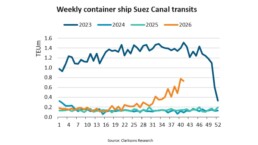
Suez Canal container ship transits exceed 50% of pre-disruption levels "During the first two weeks of October, weekly container ship capacity…
Subscribe to our newsletter!
if you dont want to swim alone in the ocean of news, sign up for the newsletter, and you will receive daily all the important news of world shipping!
