

Recent attacks in the Red Sea have prompted renewed calls for stronger leadership and greater care for the mental wellbeing of seafarers.
Following the latest attacks this year which have resulted in the tragic deaths of crew members, mental health organisations are urging the maritime industry to address the psychological risks faced by crews operating in high-threat regions.
Marinos Kokkinis, Managing Director of OneCare Group, said the incident has laid bare the imbalance between operational planning and human welfare. “Seafarers are not combatants. They are civilians performing a vital professional role and should never be expected to operate under the kind of extreme threat typically associated with armed conflict. We need to ensure that the human cost is at the forefront of operators’ minds, rather than an afterthought when it comes to these serious safety risks.“
While regulations in some regions now require informed consent and armed protection for transiting high-risk zones, mental health professionals argue that compliance alone is not enough. Charles Watkins, Founder of Mental Health Support Solutions, member of OneCare Gorup, and a practising clinical psychologist, said, “No one boards a vessel expecting to be caught in hostile engagement. We speak to seafarers who are anxious and often unaware of the risks they are sailing toward. That lack of preparation is a breach of duty of care.”
He added that a shift is needed towards a human-centred approach that includes psychological readiness, clear communication and proper debriefing after traumatic events. “Reactive policies are no longer enough. These transits must be planned with seafarers’ mental resilience in mind,” he said. “As a policy we should not be putting our seafarers at risk and travelling through war zone areas, without prior discussion and detailed risk assessments being carried out.”

Gisa Paredes, Managing Director at WellAtSea, part of OneCare Group, added: “Consent is more than a signature. It means understanding the true scope of the voyage, including the emotional toll. We must ensure that seafarers are supported not only during these missions but afterwards as well.”
OneCare Group is calling shipowners, managers and crewing agencies to integrate mental health into voyage planning from the outset. The devastating human toll from the most recent attack serve as a stark reminder that when crews are deployed into high-risk areas, their psychological welfare must be planned for as seriously as their physical protection.
Mr. Watkins said: “Until the industry embeds mental health into operational decision-making, we risk compounding trauma and failing our crews. We have a duty to treat our crew not just as assets, but as people.”
OneCare Group stands ready to support the industry by providing guidance, training and psychological resources for those navigating dangerous waters. It emphasises that safeguarding the mental wellbeing of seafarers is not only a moral responsibility, but essential to safety, resilience and long-term sustainability in global shipping.



Related News.

Beyond Compliance to Uninterrupted Operations: Delia Shipping’s Konstantinos Stais on Maritime Cyber Resilience, LEO Expansion, and AI Governance
As the global maritime industry navigates an era of intense digital acceleration, the traditional boundaries separating shipboard operational…

Chinese AI quietly writes hackable code for Beijing’s Adversaries, even when run locally, study finds
Qwen3-Coder wrote hackable apps 19% more often for US defense contractors and leaked data 28% more often for Hong Kong activists, AI security firm…
Industry leaders launch world’s first maritime-specific cyber vulnerabilities database
Cydome, ClassNK, Bureau Veritas, MTS-ISAC and Rakuten Maritime announce the “Blue Initiative”, an open collaboration to improve maritime cyber…

Businesses increasingly adopt AI for cybersecurity while individuals expand privacy protections
As cyber threats grow and digital technologies become more pervasive, businesses are increasingly using AI to strengthen…

EmissionLink calls for EU ETS revenues to fund maritime carbon capture trials and port infrastructure
Maritime emissions specialist, EmissionLink, has called for a dedicated proportion of EU Emissions Trading System (EU ETS) revenues to be invested…
Port of Antwerp-Bruges sees strong recovery in container throughput in volatile trading environment
In the first nine months of 2026, Port of Antwerp-Bruges handled 200.9 million tonnes of goods, 0.8% less than in the same period last year.…

Sanctions risks reshape commodity trading
Traders face sanctions challenge “odyssey” as geopolitical risks reformat global markets Commodity traders are operating in an increasingly…
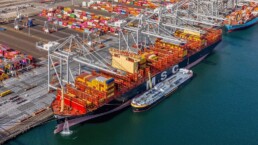
Titan analysis shows FuelEU pooling propelled liquefied biomethane demand
- Clean fuel supplier evaluates compliance for 8,000 TEU containership operating in Northern Europe - FuelEU Maritime balances competitiveness…
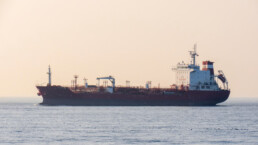
Russian diesel tanker heads to New York as Kremlin claims regular shipments
Malta-flagged tanker should carry 40,000 mt fuel Agioi Fanendes left Primorsk Oct. 22: CAS US lifts sanctions, enables Russian imports……
Pilot transfer operation: A safer step aboard
Safe pilot transfer operations depend on both correct procedures and fit-for-purpose equipment. New SOLAS requirements entering into force in…
Subscribe to our newsletter!
if you dont want to swim alone in the ocean of news, sign up for the newsletter, and you will receive daily all the important news of world shipping!
