The shipshape struggle in shipboard maintenance says Skuld claims trend
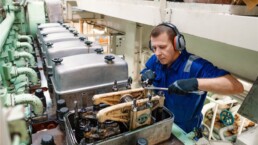

Shipboard maintenance is critical in maintaining the seaworthiness of a vessel.
Based on Skuld’s claims trend over the years relating to cargo damage, navigational accidents (collision and grounding), pollution, crew injury and fatality, many of these cases were identified due to technical failures.
These technical failures are often traced to inadequate or poor maintenance practices.
It is worth recognising that proper maintenance is necessary for operational efficiency and safety while helping to extend the vessel’s lifespan. Regular maintenance, including inspections, tests and repairs, help minimise downtime, prevent accidents, boost performance and reduce operational costs.
The International Safety Management (ISM) Code, mandated by SOLAS, emphasises the importance of a comprehensive Planned Maintenance Schedule (PMS) as an essential element of a ship’s Safety Management System (SMS).
The code requires shipping companies to ensure that all shipboard maintenance is carried out in line with manufacturers’ recommendations, relevant regulations and company policies.
A typical PMS incorporates preventive maintenance, corrective maintenance and predictive maintenance.
Typical tasks included in PMS are routine checks, testing, lubrication and greasing, repairs, servicing, inspection, analysis, and part replacement.
At the heart of the PMS lies the dedicated ship’s crew, whose hands-on expertise is essential for executing the critical maintenance tasks.
Despite the best crew, well-intended regulations, policies, and industry best practices, incidents related to technical failures continue to occur on vessels. So why is this happening?
A deeper dive into the realities of actual shipboard maintenance work reveals a host of challenges faced by the ship’s crew.
Solving these challenges calls for bold action in confronting the causes and implementing effective, practical solutions.
The road to breakdown is paved with neglect
Facts gathered by Skuld from incident investigations and crucially, firsthand accounts from the ships’ crew and technical manager experiences, reveal the systemic barriers that crews face when performing shipboard maintenance:
- Insufficient manning, time constraint and operational demand
Vessels often operate with minimal crew and are expected to operate with quicker turnaround, restricting the time available for proper maintenance work. This can lead to delays or a reduction in maintenance work, which, over time, will increase the risk of hull and machinery failure. - Fatigue and stress
The demanding schedule and workload can result in fatigue and stress on the crew. This results in loss of focus and reduced performance, which can affect the quality of maintenance work. - Weather
Unfavorable weather can restrict and delay maintenance work and additionally accelerate wear and tear to a vessel. - Budget constraints
When the ship’s financial belts are tightened, it often results in postponed maintenance schedules and limited availability of essential spares and consumables. This can compromise operational reliability and lead to high-impact mechanical failures.
In addition, any unpaid wages will only demoralise the crew, which will, in turn, have a serious consequence on their work performance. - Lack of spare parts and tools
It is important to maintain a robust inventory of ship-specific spare parts and maintenance tools on ships. Without this, the vessels’ crews lack essential resources needed for timely and critical repairs and maintenance. - Lack of crew training and familiarity
The crew may lack expertise and specialised training to handle complex maintenance tasks or when new technologies, fuels and regulations are introduced.
More complex or specialised tasks often require the involvement of specialist shore-based technicians and specialised workshops.
Ship operators often struggle to retain experienced crew, making it challenging to maintain consistency in maintenance practices. - Older ships
Ageing ships may have outdated machinery, making it harder to find spare parts or carry out proper repairs or maintenance.
Older vessels acquired on the secondhand market are often delivered with deferred maintenance and lack reliable PMS records. In many cases, existing documentation is outdated or inaccurate, which can escalate into costly setbacks. - Poor communication between ships and shore
Poor communication can interrupt the entire maintenance process, causing misunderstandings, delays, increased downtime, and additional expenses. - Shipboard ergonomic challenges
The ship and its systems are most often not designed to fit the crew. As a result, crew members may be faced with hazardous, restricted-access areas, limited mobility, exposure to extreme conditions—such as excessive noise, heat, and vibration—and a lack of specialised tools and impractical procedures.
Take care of the crew and they will take care of the ship
In summary, it is very important to understand that shipboard maintenance is often hindered by real-world challenges such as a lack of manpower, time constraints, commercial pressure, poor ergonomics, harsh environment and limited resources.
While the crew plays a critical role in a ship’s safe and efficient operation, it’s equally important to acknowledge that maintenance demands often surpass what they can reasonably manage by themselves. Ignoring this reality can only lead to unintended consequences.
The maritime industry must acknowledge the inconvenient truths that prevent crews from performing proper maintenance work. Solutions must be rooted in realistic, honest assessments of these challenges.
These solutions involve empowering the ship’s crew, actively listening to their concerns, providing timely and adequate resources, and fostering open communication and consistent support.
When a ship’s crew feels heard, equipped, and respected, they perform not just competently but with commitment.
Equally important, effective shipboard maintenance begins with adapting the work to the worker. When work is adapted to the worker, rather than forcing the worker to adapt to poorly designed tasks and environment, effective and sustainable maintenance work becomes achievable.
If you need further insights or advice related to shipboard maintenance and related loss prevention matters, you can consult Skuld’s Loss Prevention team.



Related News.

Greece has the most to lose from delays in shipping’s green transition, new analysis finds
UCL and WWF Greece report finds the IMO Net-Zero Framework offers Greek ship owners the clarity they need, and the best protection against a…

Snow Land joins Cool Carriers as the world’s first reefer with a gate rudder, a new chapter for sustainable and efficient reefer shipping
Cool Carriers, the world’s largest operator of specialised reefer vessels, took delivery of Snow Land from Kitanihon Shipbuilding in Japan on 12…

IBIA launches Marine Energy Outlook Survey as Annual Convention in New York
IBIA - The International Bunker Industry Association officially launched its Marine Energy Outlook Survey during the IBIA Annual Convention in New…

Why did ITF staff vote to strike again?
Staff at the International Transport Workers’ Federation (ITF) headquarters in London have voted to give their union a strike mandate. According to…

Nearly half of maritime crew tickets booked a week ahead are cancelled
Two new C Teleport reports show when maritime and aircrew teams book crew flights, how often they cancel, and what late booking costs, with a…

Kpler completes $1.5bn+ Sixth Street investment and continues accelerating growth
Investment backs Kpler's bold ambition to shape the future of global trade intelligence. Kpler, a leading provider of global physical trade…

How SAL and DNV are strengthening heavy-lift shipping
From classification and newbuilding support to operational tools and advisory expertise, SAL and DNV have been collaborating for decades. The…

PSA Singapore breaks ground on Tuas Port Phase Two to strengthen Global Trade Connectivity
PSA Singapore marked the groundbreaking of Tuas Port Phase Two, a significant step in the development of the world’s largest fully automated…

 …

BIFA welcomes UK–EU trade progress and calls for clarity on implementation
The British International Freight Association (BIFA) has welcomed progress made at today's UK–EU Summit in Brussels, highlighting the potential…
Subscribe to our newsletter!
if you dont want to swim alone in the ocean of news, sign up for the newsletter, and you will receive daily all the important news of world shipping!
