World Biodiesel Day – MOL Group successfully completes another SAF and HVO production test


On the occasion of World Biodiesel Day, MOL Group highlights a recent milestone in its energy transition journey. Sustainable aviation fuel has been successfully produced for the first time at INA’s Rijeka Refinery during a pilot project to process biocomponent, as well as a significant volume of renewable diesel HVO . This marks the second successful SAF and HVO production test within MOL Group, following an earlier pilot at Slovnaft’s Bratislava refinery. These underscore the company’s technological readiness and strategic commitment to alternative fuel development in meeting EU climate targets and enhancing regional energy security.
The successful pilot project at the Rijeka Refinery was implemented in cooperation with Chevron Lummus Global (CLG), the licensor of the refinery’s Hydrocracking Unit, with the aim of testing the co-processing of 5% POME (Palm Oil Mill Effluent – a by-product of palm oil production) with fossil feedstocks. During the pilot, 1,000 tonnes of biogenic feedstock were processed. The entire process was certified by the independent auditor Bureau Veritas d.o.o., in line with the ISCC (International Sustainability and Carbon Certification) standard for sustainable biofuels.
The preparation of the pilot project took eight months due to the complexity of processing a new type of feedstock and its specific physical and chemical properties. During the test run, more than 400 samples were collected for detailed analysis conducted at INA’s Central Testing Laboratory (CIL), while the biogenic content (C14 analysis) was carried out by accredited external laboratories – the Ruđer Bošković Institute in Zagreb and Isotoptech Zrt. in Debrecen.
Earlier this year, MOL Group’s Bratislava Refinery also conducted successful production tests of a diesel fuel containing HVO and SAF. HVO was produced using oil from cashew nut shells and the biocomponent produced this way was processed together with crude oil. In case of SAF, partially refined cooking oil was processed with the traditional raw material. The test proved that the Bratislava Refinery’s production unit used for the production of standard aviation kerosene is also suitable for producing sustainable aviation fuel.
MOL Group had been using the co-processing method at the Danube Refinery in Százhalombatta for years: the process reduces the emissions of traditional fuels by mixing plant residues, as the bio and fossil components are processed simultaneously directly during production.
Renewable fuels play a key role in MOL Group’s SHAPE TOMORROW strategy. The company is already a key player in both the Hungarian and regional biofuel markets, with hydrotreated vegetable oil produced from waste, i.e., renewable feedstock, being among the most climate-friendly fuel options, and ranks among the pioneers in Europe when it comes to the production of aviation biofuels.
“MOL Group already produces diesel and sustainable aviation fuel from renewable feedstocks and is ready to expand the production. This readiness underscores our strategic commitment to sustainable mobility—whether in road or air transport. For us, becoming a complex mobility service provider means offering an increasingly diverse range of fuels, thus creating all the necessary conditions for a smart energy transition for our customers. We are already playing a leading role in this process in the region, and we are determined to maintain this position through continued investments and innovation.” – said Csaba Zsótér, Senior Vice President, Fuels at MOL Group.
MOL Group is continuously researching and developing new possibilities for the production and use of biofuels. In partnership with Budapest Airport, Wizz Air, and Airport Fuel Supply Llc., MOL Group launched commercial testing of SAF in 2022 in Hungary. Building on this, the company now sells SAF as part of its regular operations in Hungary, Slovakia, and Croatia, in quantities equivalent to approximately 14 kilotons of biocomponents.
SAF can only be produced from classic renewable feedstocks (such as materials of vegetable origin) or waste, but it should meet the same technical and environmental specifications as conventional kerosene. Currently, very few refineries worldwide are equipped to produce sustainable aviation fuel. The current and projected global supply of SAF falls significantly short of demand, as reflected in prices. This is why MOL Group’s developments are of strategic importance, both from a climate protection and supply security perspective.



Related News.

ISLAND OIL: Unveiling of the Sculpture “Cyprus’s Journey Through the Ages” in Protaras – A Tribute and Landmark to Cyprus’s Historical Memory and Cultural Heritage
In a modest ceremony marked by a moving atmosphere, the sculpture “Cyprus’s Journey Through the Ages”, created by acclaimed Cypriot sculptor…

World Maritime Day 2026 from Policy to Practice – powering Maritime Excellence
Global regulations will deliver safer, more resilient shipping when they are implemented worldwide. The international maritime community marks…

Diana Shipping announces Time Charter Contract for m/v DSI Polaris with Dai An Ocean Shipping
Diana Shipping , a global shipping company specializing in the ownership and bareboat charter-in of dry bulk vessels, announced that, through a…

Chief Economists Expect Global Economy to Stabilize, but Fiscal Constraints, Rising Living Costs and AI Investment Uncertainty Threaten Growth
The global economy is stabilizing, but the fiscal support that cushioned successive shocks since 2020 is unlikely to play the same role in the year…
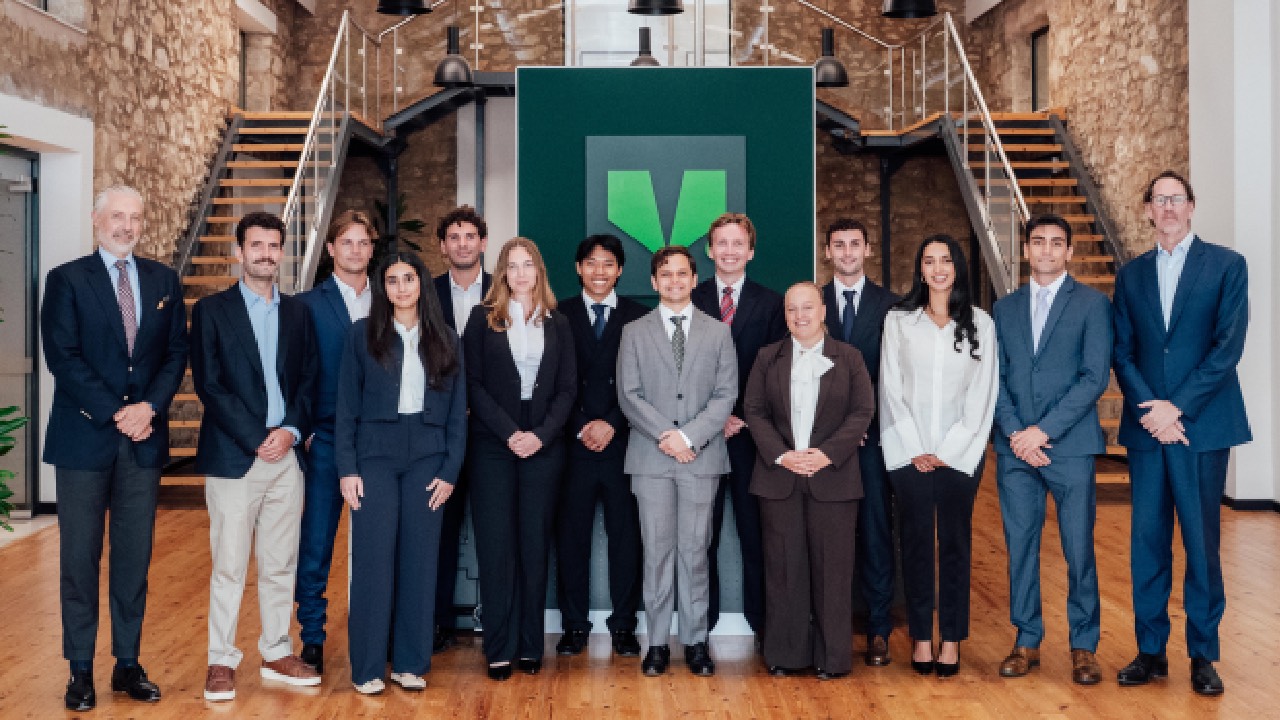
V. welcomes its new graduate cohort as programme expands across the group
Twelve graduates from nine nationalities join 11th year of V.’s expanded international management programme. V., the global ship manager and marine…

From Policy to Practice: Why Seafarers Are the Key to Maritime Excellence
The shipping industry is no stranger to regulation. Seafarers and ship operators work within a vast framework of international conventions, national…

Intermodal Report – Week 38 2026
Please find below the Intermodal market report for week 38 2026. Intermodal Report Week 38 2026 Market Insight By Nikos Tagoulis, Head of…

Allied – Weekly Market Review – Week 38
Please find below the Allied Weekly Report for Week 38 | 2026 ALLIED - Weekly Market Report- Week 38

Record year on the Northeast Passage but Arctic shipping remains very limited
In 2025, a record 103 transit voyages were made via the Northeast Passage. However, this is still equivalent to only around a day and a half of…

[xclusiv] S&P Report 21th September 2026
Please find below the [xclusiv] latest Weekly S&P Report [xclusiv] 2026_09_21 Market Commentary: VLCCs: Freight Boom Reprices the Fleet The VLCC…
Subscribe to our newsletter!
if you dont want to swim alone in the ocean of news, sign up for the newsletter, and you will receive daily all the important news of world shipping!
