Provaris commences fully funded FEED for Proprietary LCO2 Tank paving the way for future commercialisation
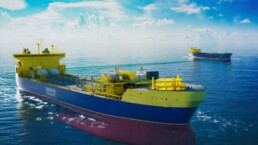

- FEED scope to mature proprietary LCO2 tank through structural engineering and hull integrationdesign for Yinson’s development of a Floating Storage Injection Unit (FSIU) for offshore LCO2 injection.
- Yinson funding commitment continues under the Joint Development Agreement with 100% funding of the FEED phase.
- Advancing commercialisation steps towards 2026 includes the development of a Joint Venture Company for the equal ownership and licensing rights of the tank design and fabrication IP.
- New market opportunities for LCO2 shipping identified from an Asian Road Show with engagement with K-Line and major Asian shipowners confirms demand for alternative large-scale LCO2 ship designs.
- First-mover advantage and scalable market opportunity with Provaris’ large-scale capacity tanks enabled through its layered-plate design and robotic-fabrication design to drive down lower cost per tonne of LCO2 directly addressing industry cost and scale barriers.Provaris Energy has received approval from its development partner Yinson Production to commence the Front End Engineering Design development phase for its proprietary large-scale low-pressure liquid CO2 ) Tanks for integration with Yinson’s Floating Storage Injection Unit .
Under the Joint Development Agreement, Yinson, will fund 100% of the FEED phase, covering four major engineering and integration packages to be delivered in two phases, with the first deliverables scheduled for December 2025.
The strategic funding allows Provaris to accelerate development without increasing its cash burn, while retaining 50% ownership of the intellectual property (IP) in the planned Joint Venture. The LCO2 tank design and associated fabrication methodology also de-risks the H2 tank applications positioning Provaris as a dual-market technology provider (H2 and CO2).
Provaris Chief Technical Officer, Per Roed said: “Commencing the FEED phase is a major step forward in validating our design and moving towards a market-ready solution. There is growing interest from the maritime industry in our layered plate, robotic fabrication and laser welding technology to unlock the limitations of traditional Type C tank design. We are building not just a tank for Yinson’s LCO2 project, but a platform for multiple applications, including compressed hydrogen. The data and experience gained through Yinson’s program will strengthen our ability to deliver Class-approved, large scale storage solutions required to establish large-scale shipping and storage required for carbon capture supply chains globally.”
Provaris Managing Director and CEO, Martin Carolan added: ”This Yinson-funded FEED launch is a pivotal moment for Provaris moving us from concept towards commercial readiness with the backing of a global leader in offshore production. We are delighted with the progress of the technical design and integration with Yinson’s project team, which is a testament to the co-operation established under the partnership.
Shipping is a crucial component of the carbon capture and storage (CCS) value chain and our recent road show in Asia, which included meetings with major ship owners, has provided valuable insights for our assessment of the potential for the LCO2 tank to be suitable to meet the growth in demand for specialised larger capacity low- pressure LCO2 shipping; aligned with industry forecasts of significant growth in CCS as a key lever in reducing carbon emissions globally.
Focus of the FEED Development Phase
The FEED program will take Provaris’ LCO2 tank design from concept design towards commercial and operational readiness. The tank development focus will be on continued compliance with maritime codes and regulations, including integration of the tank for Yinson’s FSIU and suitability for LCO2 carriers, as well as optimisation of the tank design related to steel weight and automated fabrication. Fabrication of the innovative tank design will be based on extensive use of robots for material handling and laser welding processes.
The FEED scope includes:
- > Structural / Parametric analysis: including global finite element modelling.
- > Static and Fatigue Structural design: modelling for key sub-regions of the tank.
- > Development of experimental test procedures :, for sections of the tank to be fabricated at Provaris’ robotic cell facility in Norway and subsequently tested.
- > Ongoing engagement with Class: targeting FEED Design Approval in mid-2026.The Design package from the earlier phase remains under review by a leading Marine Classification Society. This independent review is a critical step in reinforcing the tank’s credibility and suitability for global maritime operations. Any updates from this process will be integrated into the FEED scope to ensure full compliance and market readiness.
Yinson and “K” LINE are jointly developing market solutions for the transportation and injection of liquefied CO2, leveraging each party’s respective core expertise. The collaboration will target carbon capture and storage (CCS) projects being developed mainly in Europe. Further details available here.
Illustration of a FSIU in the foreground, receiving cargo from a LCO2 carrier in the background (Source: Yinson Production AS)
Asian Road Show confirms Strong Market Opportunities for Provaris Tank design in LCO2 carriers
In partnership with our market leading r adviser, Clarksons, Provaris management recently completed a targeted road show Asia to assess emerging focus on LCO2 applications and requirements for the maritime and offshore sectors.
Meetings with major ship owners included a review of the Provaris tank designs and the concept design for a low-pressure large scale LCO2 carrier to be integrated with the Provaris LCO2 tank which we believe has application in rapidly developing European and Asian CO2 and H2 markets.
Market discussions indicate a clear preference for large scale LCO2 tanks of 40,000 to 50,000 bcm capacity aligned with h Provaris’ concept design which has the key benefits of fewer, larger tanks and resulting increasing hull utilisation and cargo capacity, based on the same hull specifications. This follows our target of providing “more for less”.



Related News.
OL Shipping Group in Tokyo: Capt. Eberhard Koch calls for realistic solutions to Maritime Decarbonisation
An intensive and engaging couple of days in Tokyo brought together leading figures from the international maritime community, providing a valuable…
Regatta for Peace one of the largest ever in Cyprus
Cyprus will host the first European stop on a global sailing journey leading up to the 2027 America’s Cup in Naples. More than 120 sailors…
The propulsion technology powering the marine energy transition
The marine industry is under increasing pressure to future-proof fleets, balancing the need to reduce emissions and improve efficiency. Propulsion…
Signal Ocean acquires Lgmar
Signal Ocean announced the acquisition of Lgmar, the Athens-based company behind Telix, a maritime email and communication platform in daily use…

Canada clean power push challenged by interprovincial grid limits, says GlobalData
Canada is entering a pivotal phase of power-sector expansion as federal tax credits, the phase-out of coal-fired generation, and accelerating…

Maritime safety depends on human factors and leadership, not procedures alone
Interim survey findings point to a gap between seafarers’ perceptions of risk and injury data Seafarers may misjudge when and where they are most at…
New BIMCO contracts tackle ship recycling and energy-saving retrofits
BIMCO adopted two new contractual solutions designed to help you manage important operational and regulatory challenges: the revised…
Stena Line to acquire vessel and make changes to its network
Stena Line has reached an agreement to acquire the RoRo vessel Somerset from CLdN. Subject to closure and transfer, the vessel would begin operating…
DORIC WEEKLY INSIGHT 16 OCTOBER 2026
Please find below the DORIC Market Insight for the week ending 16th October 2026. Weekly Report 16.10.2026
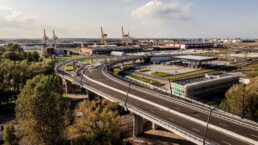
Important information for port clients and freight carriers effective November 1, a new traffic overpass and port checkpoint will open for traffic to the Port of Riga on Kundziņsala
Starting November 1 of this year, a new traffic overpass connecting Tvaika Street to Kundziņsala will open to facilitate traffic to and from the Port…
Subscribe to our newsletter!
if you dont want to swim alone in the ocean of news, sign up for the newsletter, and you will receive daily all the important news of world shipping!
